David Mamet

EMILY: I have to get out everything she’s [Richard’s mother] ever given us. Thirty-five years worth of fish lamps and dog statues, lion tables, and stupid naked angels with their … butts!
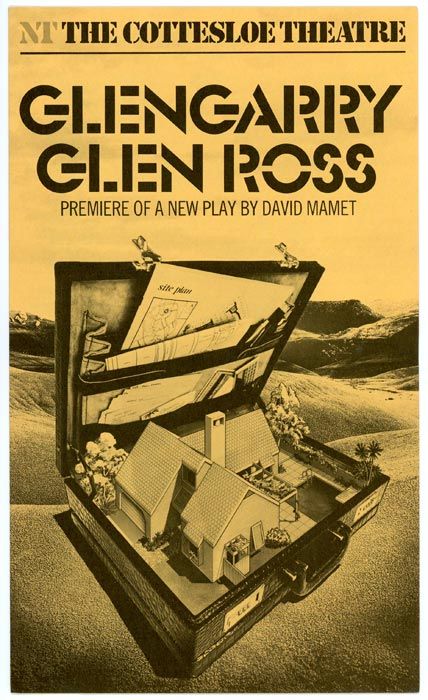
LORELAI: Whoa! Stupid naked angel butts? What, did David Mamet just stop by?

Lorelai is probably referring to David Mamet’s 1983 play Glengarry Glen Ross. It shows two days in the lives of four Chicago real estate agents prepared to do anything, no matter how illegal or unethical, to sell some undesirable real estate. It won the 1984 Pulitzer Prize, and in 1992 was made into into a highly-acclaimed film, with the screenplay written by Mamet.

The play is notorious for its use of profanity, and Lorelai is teasing her mother for her uncharacteristic use of the word “butts”. Maybe the butt model conversation affected her.

David Mamet is one of Amy Sherman-Palladino’s own favourite playwrights.

Emily’s statement suggests that she and Richard have been married for thirty-five years, so since 1965-1966.

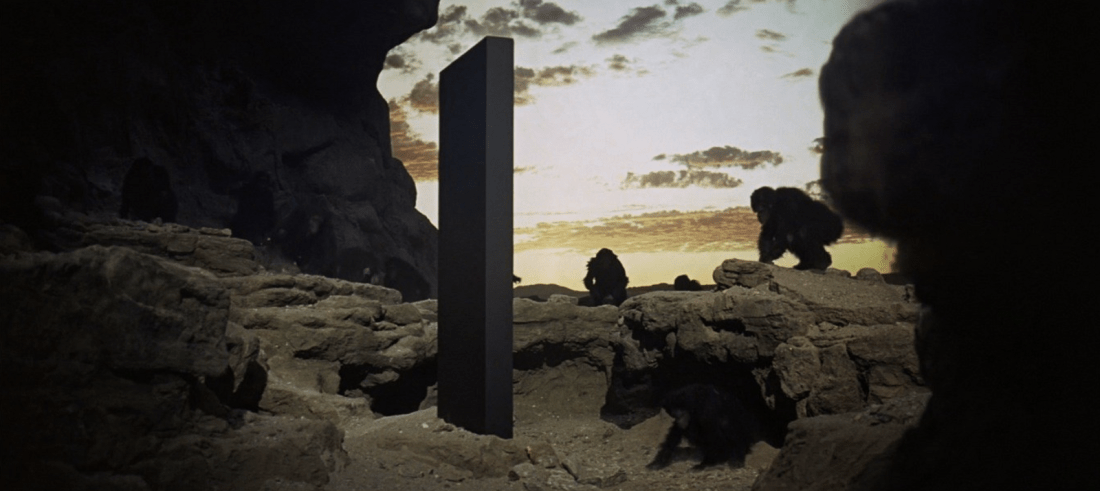
“The monolith from 2001”

ANDREW: [bringing a very large and heavy book] Here you go.
CHRISTOPHER: Holy mother. This is the monolith from 2001.

Christopher is referring to the 1968 science-fiction film 2001: A Space Odyssey, directed by Stanley Kubrick, and partially inspired by a short story called “The Sentinel” by British sci-fi author Arthur C. Clark, who co-wrote the screenplay.

The film features a mysterious flat black monolith which seems to have affected human evolution from prehistoric times by somehow artificially speeding up intellectual development. The Compact Oxford English Dictionary is nowhere near as as large as the monolith in the film, but has similar intellect-stimulating properties. The writer may have referenced the film as it was now 2001.

On release, 2001: A Space Odyssey received mixed, or even polarised, reviews from critics, but gained a cult following. It went on to become the #1 film of 1968, and won the Academy Award for Best Visual Effects. It is now regarded as one of the greatest and most influential films of all time.

Softball

Rory asks her dad to accompany her to a local softball game that Dean is playing in. Luke is a player on the opposing side, meaning that Stars Hollow has at least two softball teams! This episode provides another inside-joke by alluding to Scott Patterson’s professional baseball career – he was a baseball pitcher in real life, and also the pitcher at the softball game in this episode.

Softball is a variant of baseball, played with a larger bat on a smaller field. It was invented in Chicago in 1887, giving it a connection with Dean’s home town. It’s a popular sport for amateurs as it can be adapted to almost any skill level, and the rules can be changed to suit the circumstances (in Stars Hollow, the rules are almost Wonderland-level – they stop when they get tired, and the first team to get even one run wins). The softball season usually begins in February, so this game is relatively early in the season.

Pitcher: During the baseball scene Luke is the “pitcher”, meaning he is is the one pitching balls to the opposing team’s batter.

On-deck circle: When the softball scene opens, Dean is standing in the “on-deck circle”, the area where a player stands when they are next up to bat.

Strikeout: The batter ahead of Dean “strikes out” by failing to hit the ball three times in a row. Luke notes that he is the second member of Dean’s team to do so.

Fielders: The players on the non-batting team who aren’t pitching spread out in order to catch the ball, thus potentially catching the batter “out”. When it is Dean’s turn to bat, he suggests that Luke sends his “boys a little further into the field”. He means that he is planning to hit the ball a long way, so that the fielders on Luke’s team had better get further out onto the field.

Whiffing: Luke suggests that the only reason his fielders would need to get further out is so they can get a better view of Dean “whiffing”. In baseball and softball, whiffing means to swing at the ball without hitting it – in other words, to strike out.

The softball scenes were filmed at the Hartunian Baseball Field in the Sepulveda Basin Recreation Area in Encino, Los Angeles. You can see some very un-Stars Hollow-like homes overlooking the field, which are in Encino Village.

Joan and Melissa Rivers

EMILY: Lorelai, you’re being morbid.
LORELAI: I’m being morbid? … Joan and Melissa Rivers here think I’m being morbid.

Joan Rivers, born Joan Molinsky (1933-2014) was an American comedian, actress, writer, producer, and television host. She was known for her controversial comedic persona, which was often viciously insulting towards celebrities and politicians. Actress Melissa Rivers (born Melissa Rosenberg in 1968) is her daughter, who worked alongside her mother on several occasions.

Joan and Melissa Rivers appeared as themselves in the 1994 television movie Tears and Laughter: The Joan and Melissa Rivers Story, which we learn in the next season is favourite viewing for a mocking Lorelai and Rory.

In the film Joan and Melissa recreate the anguish they went through after the suicide of Joan’s husband and Melissa’s father, Edgar Rosenberg – who had often been the butt of his wife’s jokes during her comedy routine, and whose death was also milked for humour by Joan.

Lorelai equates Richard and Emily’s glee at getting their hands on their dead acquaintance’s house at a good price as being in a similar vein of poor taste.

Joan Rivers was one of Amy Sherman-Palladino’s favourite comedians, and her later TV show, The Marvelous Mrs. Maisel, is about a female comedian in the 1950s who is partly inspired by Rivers.

“I can’t eat like that and look like her”

MICHEL: But I can’t eat like that and look like her. [gestures to Lorelai eating a rich omelette]

Michel surely speaks for most of the audience at this point: it drives many fans up the wall that Lorelai lives on sugary, fatty food and still looks amazing – thanks to the magic of television. In reality, Lauren Graham has reportedly been on a diet to stay slim since she was eleven years old (so if you want to look like Lorelai, start dieting at the beginning of puberty).

Sure it’s fiction, but sometimes people ask how Lorelai could eat such an unhealthy diet and remain slender in real life. The average person definitely wouldn’t, but here are some ways it might be possible, in any combination of factors:

1. Genes. Around 5% of the population are lucky enough to be genetically predisposed to remain slim no matter what they eat. Lorelai could be one of those fortunate few. These people tend to remain around the same size as adults as they did in high school, and Lorelai still wears clothes from when she was 17, so it seems possible.

2. Coffee. Lorelai drinks massive amounts of very strong coffee every day, and coffee is known to speed up the metabolism and suppress the appetite, leading to overall weight loss. Furthermore, it is a diuretic, so that coffee drinkers can keep off the “water weight” that doesn’t actually weigh much, but gives a bloated, puffy appearance.

3. She burns up all the excess calories. Although Lorelai rarely does any formal exercise, she walks a lot around Stars Hollow, and she is later said to have an extremely brisk natural walking pace. She is also a very busy, animated person who may be burning up excess calories through everyday physical movement without even thinking about it. This would also give her a reasonable level of very basic physical fitness – Lorelai seems to accomplish all her daily tasks with ease, and rarely seems tired.

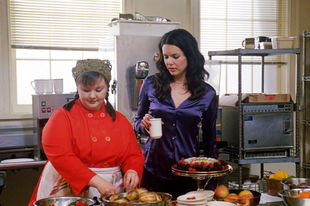
4. Binge eating. Lorelai may binge on huge quantities of unhealthy food once or twice a month, but in between eat very little. To outsiders, it would look as as if she was eating 5000+ calories a day, but it could average out to as little as 1200 calories a day, and some days she might eat only eat 400-800 calories. Her fridge often seems to be empty, suggesting there’s a lack of food constantly at hand to tempt her. Those snacks that Sookie makes her at the inn, such as muffins and omelettes, could be all she eats on some days thanks to her appetite-suppressing coffee.

5. It’s all talk, no action. We constantly hear about Lorelai’s huge appetite, but we never actually see her eat anything much. She’ll sit down in front of a burger and fries, but be suddenly called away or storm off before she takes a bite. Or she and Rory will have a table filled with sugary snacks, then in the next scene the table will be cleared and the snacks are gone. Did they eat them all? Or just take a handful and put the rest away? Lorelai and Rory always have tons of leftovers from their junk food binges, suggesting they don’t really eat that much in one sitting. People with big appetites don’t usually have leftovers – they eat everything at once.

6. She’s “skinny obese”. Even if Lorelai is eating far less calories than it looks like, there’s no denying her diet is generally unhealthy (luckily she gets more nutritious food at Friday Night Dinners and from Sookie). People who eat poorly but maintain a normal weight by whatever means can have what is called “skinny obesity” – they look perfectly fine, but their internal organs are surrounded by toxic fat. Michel does warn Lorelai that her diet could kill her, but she isn’t concerned. On the other hand, there’s no evidence that Lorelai’s poor diet is making her unwell: she’s energetic, vibrant, looks healthy, and never seems to have any illness more serious than a headache or allergies.

(See here for more on the purpose of junk food in the themes of Gilmore Girls).
Research on Donna Reed

DEAN: As amazing as this whole thing was, I mean, the music, the outfit, the dinner, I hope you know that I don’t expect you to be Donna Reed. And I don’t want you to be Donna Reed. That’s not what I meant. This just totally got blown out of proportion. I’m actually pretty happy with you.
RORY: I know, and I appreciate that, but aside from this actually being fun, I did a little research on Donna Reed.
DEAN: You did research on Donna Reed.
RORY: Look. See, she did do the whole milk and cookies wholesome big skirt thing, but aside from that, she was an uncredited producer and director on her television show, which made her one of the first women television executives. Which is actually pretty impressive.

After her argument with Dean, Rory looked up Donna Reed on Internet Movie Database (IMDd); this was first formed in 1990, began as a website in 1993, and incorporated in 1996. By this stage at least, she must know Donna Reed was real!

Donna Reed and her husband Tony Owens had a production company named Todon (made from both their names) which produced The Donna Reed Show, and Donna Reed helped develop the show. I can’t find any reference to her actually directing any episodes, though presumably as it was her show she would have had a fair amount of creative control.

Rory’s research actually supports her original argument that The Donna Reed Show is sexist, since Donna Reed’s role as an executive producer was uncredited, with her husband receiving the credit. Oddly enough, she somehow seems to think it negates her argument.

However, this episode of Gilmore Girls wants to make an important point about the history of women in television which is generally overlooked. As a female producer herself, Amy-Sherman-Palladino often had to fight to get her ideas taken seriously, and people who had only seen her name on scripts sometimes assumed it was a female pseudonym adopted by a man – Aaron Sorkin was one suggestion.

Sunday Best

Troubadour Bus

This is the song that the town troubadour is singing when Rory gets off the bus and is met by Dean. It is the first appearance of the troubadour in the show, played by indie rock singer Grant Lee Phillips, and named Grant in the credits.

It is ambiguous whether the troubadour is actually meant to be the real Grant Lee Phillips who (like many other other celebrities) also exists in the Gilmore Girls universe, or whether Phillips is playing a fictional character who just happens to have the same first name. Perhaps he is a sort of parallel universe version of himself.

Sunday Best was a bonus track on the Australian release of Phillips’ 2001 album Mobilize, however that was months after this episode aired.

River City

TAYLOR: When standards slip, families flee and in comes the seedy crowd. You got trouble, my friends.
LORELAI: Right here in River City!

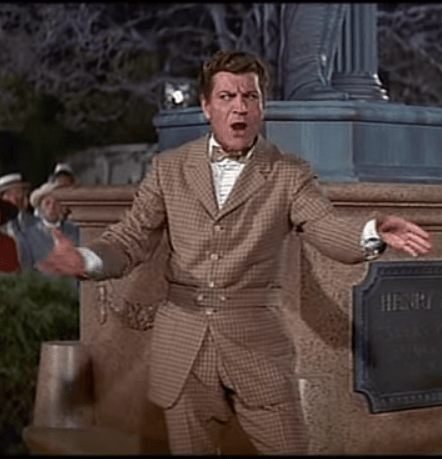
A reference to the 1962 musical film The Music Man, adapted from the hit 1957 Broadway musical of the same name, written by Meredith Willson. Directed by Morton DaCosta, and with Robert Preston in the title role, the film is set in River City, Iowa (based on Mason City) in 1912.

The film is about a conman named Harold Hill who tries to swindle a town by claiming he is raising funds to pay for a marching band. In the song Ya Got Trouble, Harold convinces the townspeople that the pool hall is seducing their boys into sin and vice so that they will sink money into the marching band to save them. The song says repeatedly, “Ya got trouble right here in River City!”.

The Music Man was the #5 film of 1962, and won an Academy Award for its score. Critically acclaimed, it is regarded as one of the best musical films of all time. It was filmed on the same Warner Brothers lot as Gilmore Girls.

Roller Disco

LANE: I’m gonna get a soda, anybody want anything?
LORELAI: Yes, the night of my 14th birthday back so I can right the green-hot-pant-roller-disco outfit wrong.

A roller disco is a skating rink where the dancers wear roller skates to move to disco music (or any modern dance music). The concept originated in the 1970s and peaked around 1980, although they are still held now as retro entertainment.

Lorelai’s 14th birthday was in 1982, so she was already slightly behind the trends when she chose her roller disco outfit (it actually fits better with Amy Sherman-Palladino’s 14th birthday in 1980). It’s not clear whether her birthday was celebrated at a roller disco, or she just thought it would be a good outfit to wear to her party. Let’s hope the first one.

Jess and Sean’s Apartment Building

When the scene cuts to the exterior of Jess and Sean’s apartment building, sharp-eyed viewers will notice it is the same one used for Monica’s apartment building in the sit-com Friends. In real life, this building is at 90 Bedford Street, on the corner of Grove Street in Greenwich Village, and two college students could only live there thanks to rent control – just like Monica and Rachel.