The Metamorphosis

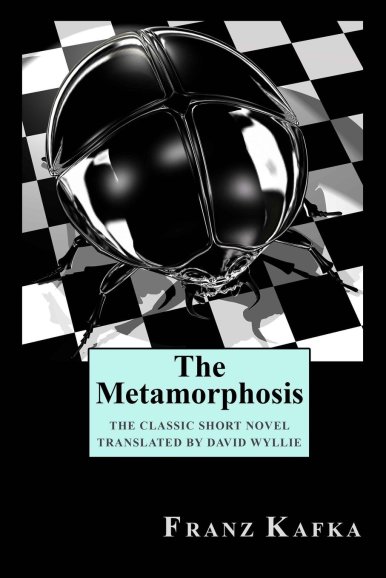
This 1915 absurdist novella by Czech author Frank Kafka is the book that Rory buys Dean for Christmas.

The story is about a travelling salesman named Gregor Samsa who wakes one morning to find that he has been transformed into a large and verminous beetle-like insect, becoming a disgrace to his family and an outsider in his own home. Both harrowing and comical, the book is a meditation on human guilt and isolation. Translated into English in 1933, The Metamorphosis is one of the most influential literary works of the twentieth century.

Rory believes that the book is a “romantic” present. Lane quite rightly tries to talk her out of this, describing the book as a “confusing Czechoslovakian novel”. She urges Rory to consider what Dean will think of the present, and says that she is giving Dean something that she would like, comparing it to Dean giving Rory a football for Christmas.

Lane’s counsel is sound, and she is hinting that once again Rory is using literature to keep others at an emotional distance, since she identifies the potential Christmas gift as saying “let’s be friends”. It’s a genuinely terrible present for Dean, and shows that Rory is still trying to turn her boyfriend into someone he isn’t.

We never discover if Rory took Lane’s advice or gave the book to Dean anyway. At the end of the scene she sounded unconvinced but also unsure, so you could argue it either way.

Rory’s idea of a book by a famous Czech author was probably inspired by her grandfather’s recent trip to Prague. In the last episode Emily told her that Richard was going to bring her back something special, and my bet is that he brought her something from the gift shop at the Kafka Museum, probably a book (possibly even this book). Rory may have thought that since she loved getting a book by Kafka as a present, Dean would as well.

Rory’s attraction to The Metamorphosis is obvious: like Gregor Samsa, she feels that she has become an object of disgust to her family, and is likewise suffering from feelings of intense shame and isolation – she is not speaking to her mother, and has not even spoken to Dean since they overslept at Miss Patty’s.

The Metamorphosis begins with Gregor Samsa oversleeping, and then finding he is trapped in a waking nightmare without reason or explanation. We can be sure that this is exactly how Rory feels, and the ending where Samsa voluntarily dies rather than burden his family any further shows just how deep her feelings of depression are. Quite possibly Rory has wished herself dead.

Rory might be playing her situation for laughs by making jokes about The Miracle Worker and Narcolepsy Boy, but make no mistake, she is suffering horribly. Like The Metamorphosis, there is both comedy and misery in equal measure.

By giving Dean the book, Rory was hoping to show him exactly how she feels; the “romantic” part of the present is her sharing her deepest emotions and fears with Dean, reaching out and laying herself completely bare to him. Unfortunately, Lane is right, and Dean would have no way to interpret it as anything other than a strange, confusing book about a big bug.
The Fallout From Falling Asleep

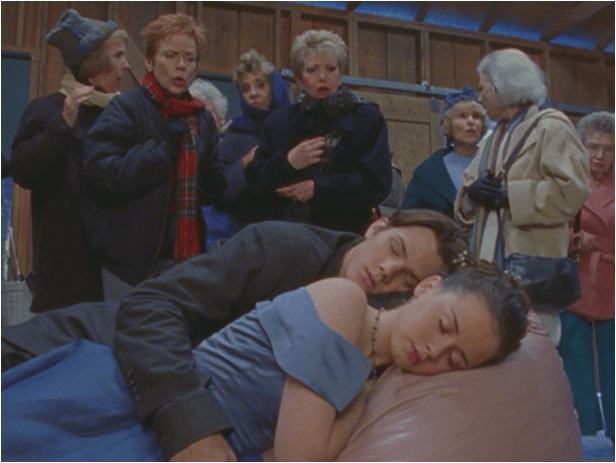
After Rory and Dean accidentally spend the night at Miss Patty’s dance studio together (another mention of the problem of time), all hell breaks loose.

For all that Lorelai and Emily are proud of Rory – so mature, so smart, so cautious – we discover that deep down both of them are terrified that at some point something will switch on inside her and she will become another teenage Lorelai who sleeps with boys and gets pregnant. It takes very little to bring all those fears to the surface, showing that they really don’t trust her at all.

Lorelai, who always touts herself as the cool mom who treats Rory as her best friend, finds that at crisis point she shrieks at and shames Rory in the same way her mother did to her. And the mother and daughter who “never fight” are now not speaking to one another.

The Portable Dorothy Parker

DEAN: So, uh, what are you reading?
RORY: The Portable Dorothy Parker.

Dorothy Parker (1893-1967) was an American poet, short story writer, newspaper critic, and satirist, famous for her acerbic wit and her membership of the Algonquin Round Table, a group of writers known for their hard-drinking, wisecracking ways.

The Portable Dorothy Parker, a collection of her poems, stories, and journalism pieces, was first published in 1944. It was first revised in 1973, with an introduction by Brendan Gill, a critic for The New Yorker born in Hartford, and educated at Yale. I believe Rory is reading the 1976 Penguin edition.

Rory greatly admires Parker’s wit, and we know Amy Sherman-Palladino does too, because her production company is named Dorothy Parker Drank Here – the logo can be seen at the end of every Gilmore Girls episode.

The fact that Rory takes a book everywhere, even to a dance with her boyfriend, may indicate that although her love of reading is perfectly genuine, she is using books as a coping mechanism in social situations, possibly using them to keep others at a distance.

Double Indemnity

This is the movie that Lorelai and Emily watch on TV while Rory is at the dance. Double Indemnity is a 1944 film noir, directed by Billy Wilder, and based on James M. Cain’s 1943 novella of the same name; Raymond Chandler co-wrote the screenplay with Wilder. The original novella was partly based on a true story – a 1927 high-profile murder by a married woman and her lover, in which the criminals were soon arrested and convicted.

The film stars Fred MacMurray as an insurance agent, and Barbara Stanwyck as a flirtatious housewife who wants her husband dead so she can collect the insurance money. Unable to resist her charms, the insurance agent uses his knowledge to make her husband’s murder look like an accident, triggering the “double indemnity” clause so that she will receive double the amount.

Double Indemnity was an immediate hit on release, and had good reviews from critics. Its reputation has grown over the years, and it is now considered one of the greatest in the film noir genre, and is sometimes cited as the first film noir ever made.

Emily mentions that she loves Barbara Stanwyck’s husky voice, and Lorelai says Emily’s voice is somewhat like Stanwyck’s. Lorelai teases that Emily could have gotten Fred MacMurray to kill Richard if she’d really wanted to.

Although Emily usually gets annoyed with Lorelai’s constant jokes, for once she is able to accept the teasing with little complaint – perhaps because it is complimentary for a change.

Mashed banana on toast

Despite Emily’s prickly demeanour, you can see that she just loves this opportunity to nurse Lorelai and mother her – the months that Lorelai was healing from a broken leg and never even told her obviously bothered her a lot. She makes Lorelai tea and heats up her burrito for her, even making the mashed banana on toast that Lorelai apparently liked when she was little, even though they both decide that it actually tastes horrible.

And despite Lorelai’s grouchiness, there is a part of her that enjoys being mothered by Emily too, as her “Thank you, Mommy” comment shows. Mind you, she’s pretty out of it on prescription medication by that stage.

“Of the manor born”

LOUISE: Who’s the dish? … He’s not of the manor born, that’s for sure.

Of the manor born means that someone is from an upper class or wealthy family. It is a common mishearing or deliberate pun on To the manner born, which means that someone is familiar from birth with a particular set of customs or behaviours.

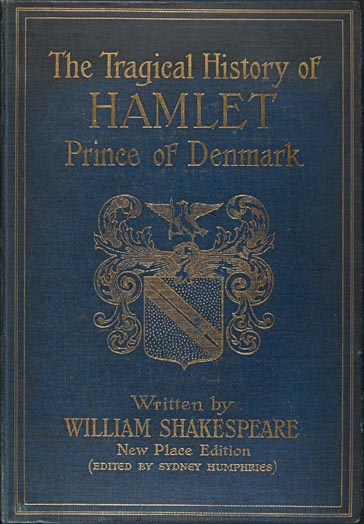
The phrase is a quote from William Shakespeare’s Hamlet, which says, “But to my mind, though I am native here / And to the manner born, it is a custom / More honour’d in the breach than the observance.”

Louise likes to make literary quotes to show her intelligence, but she only chooses the most hackneyed, and in this case doesn’t even use it correctly.

The Outsiders

RORY: And these kids at my school – awful. Have you seen The Outsiders?
DEAN: Yeah, I have.
RORY: Just call me Ponyboy.

The Outsiders is a 1983 teen drama film directed by Francis Ford Coppola, adapted from the popular novel of the same name by S.E. Hinton. The movie looks at the conflict between the Greasers, tough working-class teens, and the Socs, a gang of wealthier kids.

The main protagonist is Ponyboy Curtis (C. Thomas Howell), who is one of the Greasers, but is good at school and loves literature; while hiding out after his friend Johnny killed a Soc to defend him, Ponyboy reads Gone With the Wind and recites Robert Frost’s poem Nothing Gold Can Stay.

Rory feels the social difference between she and her Chilton classmates very strongly, identifying herself with a teenager from the wrong side of the tracks, albeit one who loves reading.

It is worth noting that Rory doesn’t ask Dean if he’s read The Outsiders, even though it is a very well known book for teenagers, and often set as a school text. By now she may have got the idea that Dean isn’t much of a reader.

Either that, or Rory hasn’t read it herself, rejecting it as beneath her reading level, or something that is too typically teenage to bother with.

Tacos and Burritos

Sookie brings the Gilmore girls some tacos and burritos for dinner, which are both popular traditional Mexican dishes. Unusually for Sookie, she seems to have bought them (maybe from Al’s Pancake World or the anonymous take-out window place?) rather than making something herself.

A taco is a corn or wheat tortilla (flatbread) folded or rolled around the filling; in the US, they are often made commercially as a hard corn shell. A burrito is a wheat tortilla which is wrapped around the filling into a cylinder shape. Sookie got extra hot sauce, so the Gilmores must like their food spicy – as the fiesta burger demonstrated.

The Group

This 1963 novel by Mary McCarthy is what Rory is reading while waiting in line to buy tickets to the winter formal. Tristan teases her for this by saying “how novel”.

The Group is about eight young women, educated and from wealthy backgrounds, and their lives after graduation during the 1930s. It explores the various issues they have to face, such as sexism, child-rearing, financial problems, family strife, and sexual relationships, mostly revolving around the men in their lives, whether husbands, lovers, fathers, or employers.

Striving for independence, they are hampered by an era where women are restricted in their options, and although the novel is not a feminist work, it casts a sharp eye on female lives and ideas, and shows how the personal is political. The novel is partly autobiographical and spent more than two years on the best-seller list when it was published.

Rory may have been drawn to the novel because it examines the choices of educated young women after graduation – especially because the women in “the group” are characterised as intellectuals sensitive to art and beauty, rather than politically aware or active. The literary one of the group, Libby MacAusland, and her subsequent disastrous career may have been of interest to Rory as well.

(Unexpected connection: Mary McCarthy is the sister of Kevin McCarthy, who starred in Invasion of the Body Snatchers).

“Gentleman caller”

The Golden Girls

RORY: He’s my … gentleman caller.
LANE: Okay, Blanche.

Rory is referring to Tennessee William’s 1944 play The Glass Menagerie, where the mother Amanda, a faded Southern belle, is obsessed with finding a suitor, or “gentleman caller”, for her daughter Laura, who has crippling shyness.

I believe Lane’s response is likely a reference to the sitcom The Golden Girls, which originally aired from 1985 to 1992. It featured four older women sharing a house together in Miami, Florida; Blanche Devereaux (played by Rue McClanahan) was a slightly man-crazy Southern belle who’d grown up on a plantation. The character was inspired by Blanche DuBois in A Streetcar Named Desire, and Scarlett O’Hara in Gone With the Wind.

The Golden Girls was a ratings winner which received numerous awards, and is considered one of the best TV sitcoms of all time. It continues to gain new viewers in syndication, and has aged extremely well.

EDIT: Edited in response to reader Holly, who suggested it was more likely that Lane was referring to Blanche in The Golden Girls than to Blanche in A Streetcar Named Desire.