MAX: I must say, I’ve been a teacher for ten years now, and it wasn’t until today I realized, it must be really hard to be a girl.
Max became a teacher in 1993, and somehow the needs and challenges of female students were never discussed during his training. Max has a sister, has had several girlfriends, and almost became Rory’s stepfather – yet somehow he has never considered that some things might be harder for girls.
PARIS: Pack your chastity belt, Gilmore – you’re going to Harvard!
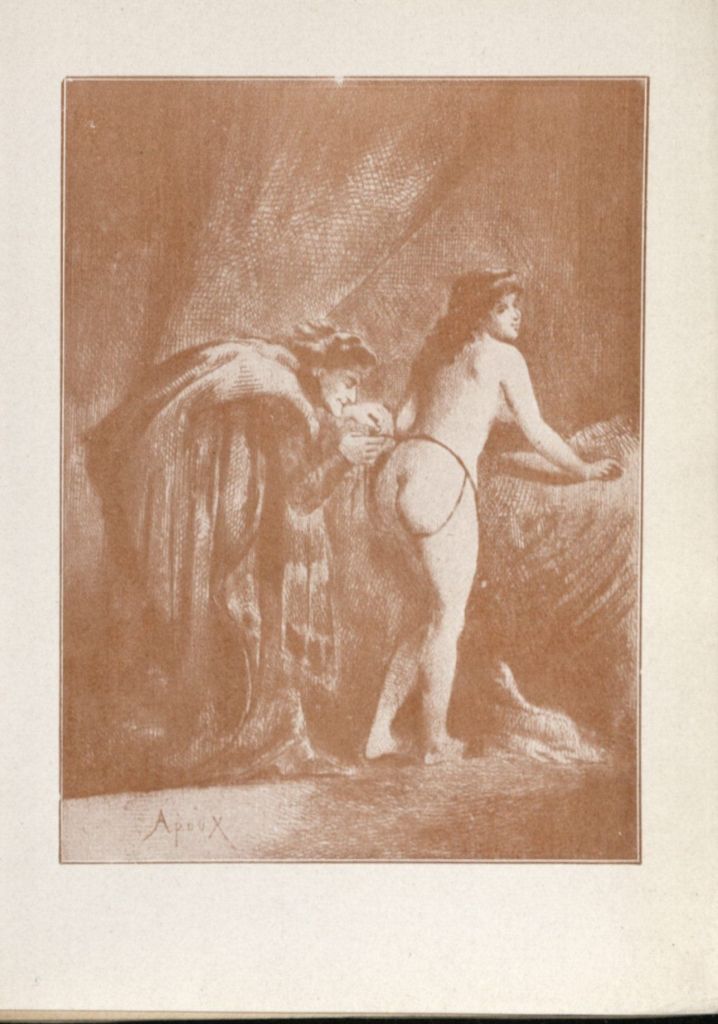
A chastity belt is a locking item of clothing designed to prevent sexual intercourse or masturbation. Such belts were historically designed for women, ostensibly for the purpose of chastity, to protect women from rape or to dissuade women and their potential sexual partners from sexual temptation. Use is mentioned from the Renaissance, but in such a way that it might have been a joke, and there’s a good chance some chastity belts from the past are actually fakes. They were typically used in the 19th century by women as anti-rape devices.
PARIS: I’m being punished. I had sex, so now I don’t get to go to Harvard.
Gilmore Girls really does seem to enjoy punishing girls and women for having sex. The consequences can be dire, and this is perhaps the first big example of that (after Lorelai getting pregnant with Rory, which happens before the show opens).
RORY: Just for the record, I’m a girl and we are supposed to throw like this. [throws the ball]
“You throw like a girl” is an insult given to someone, usually male, who throws a ball or object in a manner which is judged to be feeble or incompetent. “The girlie throw” is one which uses the space around the thrower in a restricted manner, with only the hand and forearm being utilised in the movement.
Rory is taking ownership of “throwing like a girl”, and not seeing it as a flaw that needs to be changed or fixed about herself. And in fact, she is successful at the bottle toss game, unlike Jess.
LORELAI: Dad, I explained this to Mom and I’ll explain it to you. I’m not sixteen, I don’t live with you anymore, I’ve been making my own decisions, romantic and otherwise, for a long time now and you can play all the golf you want but the subject better be letting chicks into the Augusta Golf Club because my love life is officially off limits.
Augusta National Golf Club in Augusta, Florida, first opened in 1932. Since 1934, the club has played host to the annual Masters Tournament, one of the four men’s major championships in professional golf, and the only major played each year at the same course. It is considered to be one of the best golf courses in the US.
There was a controversy over the club’s refusal to admit female members to the club. Following the discord, two club members resigned, and pressure on corporate sponsors led the club to broadcast the 2003 and 2004 tournaments without commercials. The controversy was discussed by the International Olympic Committee when re-examining whether golf meets Olympic criteria of a “sport practiced without discrimination with a spirit of friendship, solidarity and fair play”.
The club extended membership to Condoleezza Rice and Darla Moore in 2012, so it now has at least two female members. The Augusta National Women’s Amateur Championship began being co-hosted by Augusta National in 2019.
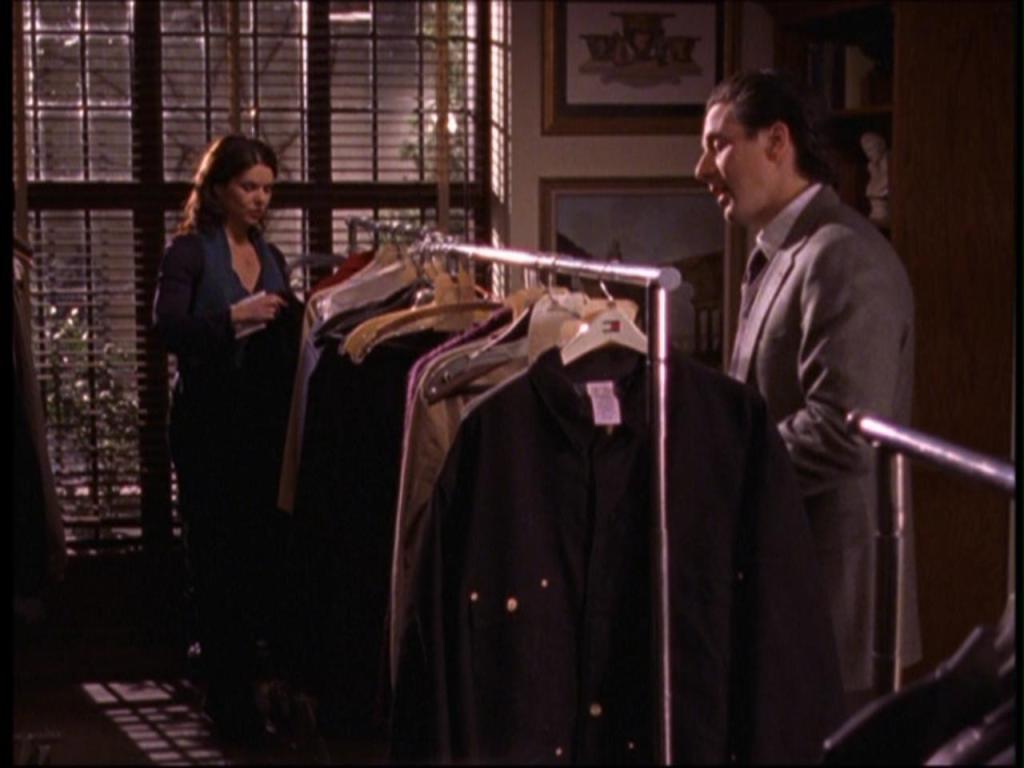
MICHEL: Well, you’ve tried to convince them of your virtue, perhaps it’s time to offer them a lap dance … You know in Thailand, women do this trick with a Ping-Pong ball that is a big crowd pleaser.
Lap dance: An erotic dance performed at strip clubs where the dancer, who may be nude or topless, has body contact with a seated client, grinding in his lap. They have been around since the 1970s, and are legal in Connecticut – apparently Hartford is known in some circles for being extremely relaxed and tolerant in this regard.
Ping-pong show: Michel refers to a type of entertainment performed in some strip clubs, where women use their pelvic floor muscles to expel objects from their vagina. Although a variety of objects can be used, ping-pong balls are the iconic choice. They are common in Thailand, where they are performed for tourists. Human rights concerns have been raised with the practice, and it has been denounced as inherently misogynistic and racist.
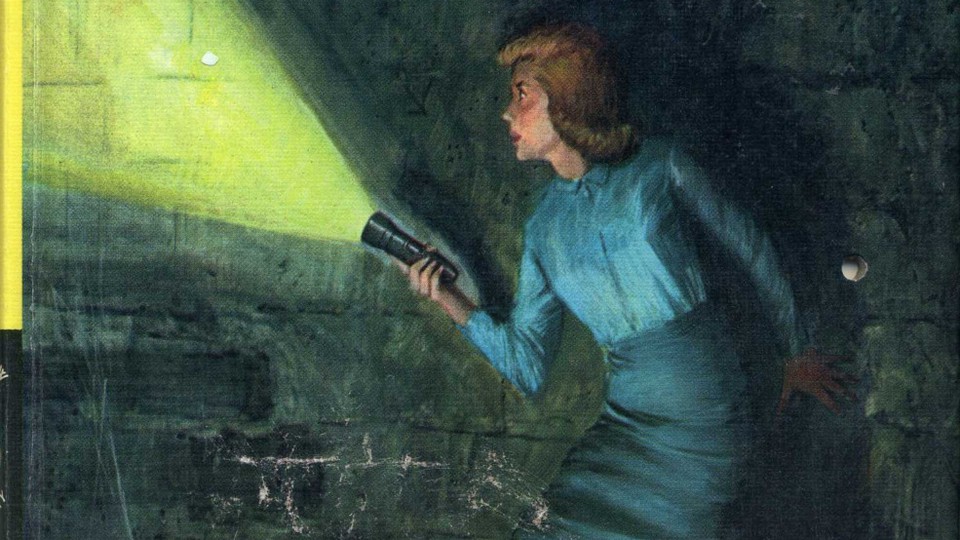
LOUISE: I just thought we really connected the other day in the supply closet. MADELINE: Boys. A Nancy Drew mystery.
Nancy Drew, previously discussed, the heroine of an extremely popular and long-running series of mystery novels aimed at a young female readership.
Nancy Drew was a strong, independent super-girl who was rich, attractive, and multi-talented; perfectly groomed, she remained cool in a crisis, and was sweet and wholesome. She understood psychology, spoke French, painted pictures, was a skilled driver and horsewoman, and capable of running a motorboat. She could shoot, swim, row, was brilliant at golf and tennis, a gourmet cook, expert seamstress, good dancer, and naturally knew first aid.
A cultural icon, Nancy Drew has inspired of generations of girls and women, with Oprah Winfrey, Hillary Clinton, Barbara Walters, Laura Bush, and Barbra Streisand among many who quote her as an early influence.
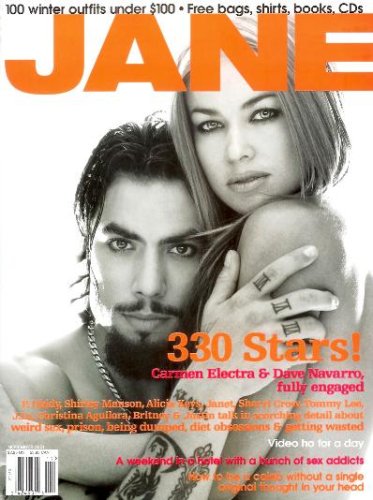
While waiting for the group project meeting to start, Madeline reads Jane magazine (1997-2007). This was a women’s fashion magazine founded by Jane Pratt, aimed at the 18-34 market, and designed for those young women who had grown up with Sassy (1988-1996), a feminist magazine for teenage girls which had Pratt as the first editor. Jane’s reputation was for being witty, quirky, trashy, and occasionally thoughtful, with a readership who saw themselves as “wild and crazy” party girls.
It folded because it’s young readership were now getting more interested in digital platforms, such as Jezebel. Jane Pratt went on to found the infamous xoJane online magazine (2011-2016).
Madeline is reading the November 2001 issue with Carmen Electra and Dave Navarro on the front cover. This issue actually had a double front cover, and you can see Madeline holding up the one with Shirley Manson, P. Diddy, and Alicia Keys on it. The magazine that month had interviews with other music stars, including Jennifer Lopez, Janet Jackson, Sheryl Crow, and Tommy Lee.
Indignant that the school has dared to suggest her daughter is less than perfect, Lorelai marches into the headmaster’s office in high dudgeon to put him straight on the Gilmore Girl philosophy of not doing anything you don’t feel like.
Headmaster Charleston pulls the wind from her sails by immediately getting out her file (really? Schools keep files on parents? What kind of school is this?). The file is worryingly thin, denoting a lack of parental involvement. Lorelai has only been to one bake sale a year ago, and was observed to not stay afterwards to talk to other parents. Seriously, how does he know all this stuff? Why does he care?
Perhaps tactfully, Headmaster Charleston does not bring up the fact that Lorelai got rather too involved in the school by having a serious relationship with Rory’s teacher. That’s all forgiven and forgotten, but failing to hang out after a bake sale? That’s on your permanent record, Missy!
Now, usually when Lorelai is told to do something, she gets stroppy and calls everyone a Fascist, but this is Rory’s future, so after a few futile attempts to explain she’s too busy, she meekly leaves with a list of organisations at Chilton she might join.
Just as the school wouldn’t listen when Rory was slightly late to a test because she lives out of town and got hit by a deer, there is no attempt to understand that Lorelai is a single mother who works and studies, and is also doing about a million volunteer jobs in Stars Hollow already. Do fathers have to do any of this volunteer stuff for Chilton, or are their lives considered far too busy and worthwhile to be called upon in this way? If so, one of the more realistic things in the show!



 The Annotated Gilmore Girls