Miss Congeniality

LORELAI: Ah, this is why the Miss Congeniality act when Rory wanted to beg out of dinner.

The “Miss Congeniality” award is one given at many beauty pageants, including Miss Universe and Miss World, given to the contestant judged to be the friendliest and most welcoming.

Lorelai might have thought of this because of the 2000 action comedy movie Miss Congeniality, directed by Donald Petrie and starring Sandra Bullock in the title role. The film had come out the previous December, suggesting that Lorelai and Rory might have seen it during the winter.

“Me and Morrie”

EMILY: So are we having a nice chat?
LORELAI: Yeah, we’re having a great conversation, me and Morrie.

Lorelai is referring to the best-selling 1997 memoir Tuesdays With Morrie by Mitch Albom. The memoir describes how Albom, a sports journalist in Detroit, reconnected with his terminally ill sociology professor from Brandeis University, Morrie Schwartz. Meeting at Morrie’s house in Boston each Tuesday, Morrie is able to keep teaching Mitch valuable lessons about living and dying.

On the Best Seller List for 205 weeks, Tuesdays with Morrie is one of the best-selling memoirs of all time, and was made into a highly-praised television movie in 1999 with Hank Azaria and Jack Lemmon as Mitch and Morrie. In the next season, Lorelai seems to indicate that she was thinking of the book though.

Lorelai humorously contrasts her awkward silence with her father with the meaningful conversations shared by Mitch and Morrie. It’s obviously even harder for Lorelai and Richard to communicate after their argument the previous week.

Misery

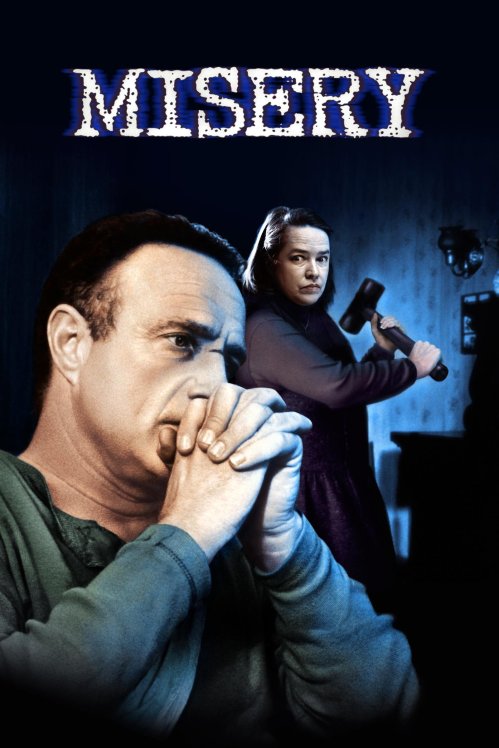
LORELAI: Oh God. Mom has gone a little crazy with the figurines here, huh? A little Kathy Bates. Although you probably haven’t seen Misery, which is a good thing because Rory couldn’t sleep alone for a week after we watched it.

Misery is a 1990 thriller film directed by Rob Reiner, and based on the 1987 novel of the same name by Stephen King. The movie is about a popular romance novelist (James Caan) who is held captive by a crazed fan (Kathy Bates) so he can continue writing about her favourite character, named Misery. The movie was a success, and Kathy Bates won Best Actress at the Academy Awards for her role.

Lorelai is referring to the numerous figurines owned by Kathy Bates’ character, which the writer must be careful not to disarrange when he manages to sneak out of the room where he has been confined. Lorelai must feel that she is in a similar position, and the film also gives us a clue as to how trapped and tortured Lorelai felt when she lived with her parents.

Rory would have only been six when the film came out, so she and Lorelai must have rented it on video at some point when she was older. We don’t know how old she was (it might have been quite recently), but either way it was still too scary for her, and she had to sleep in Lorelai’s bed for a week afterwards.

Lady and the Tramp

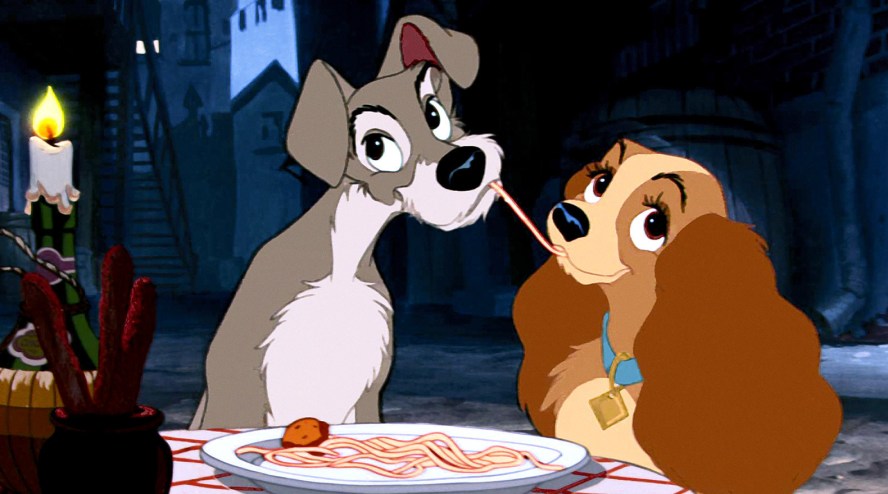
LORELAI: Wow, it’s gonna be just like Lady and the Tramp. You’ll share a plate of spaghetti, but it’ll just be one long strand, but you won’t realize it until you accidentally meet in the middle. And then he’ll push a meatball towards you with his nose, and you’ll push it back with your nose, and then you’ll bring the meatball home, and you’ll save it in the refrigerator for years and . . .

Lady and the Tramp is a 1955 animated musical film made by Walt Disney. Loosely based on the short story, “Happy Dan, the Whistling Dog”, by Ward Green, it tells the story of a cocker spaniel named Lady who lives with an upper-middle class family in the early twentieth century. Lady meets a stray mongrel named Tramp, and they have many adventures together, eventually falling in love.

Lady and the Tramp was the #6 film of 1955, and is now regarded as a classic. It was released on video in 1987 when Rory was three years old; Lorelai might have bought it for her then. It was re-released on video in 1998 when Rory was 14, which is another possibility.

Lorelai is describing the most famous scene from the film: the two dogs share a plate of spaghetti at an Italian restaurant where Tramp has been begging for scraps, and accidentally share a kiss as they swallow opposite ends of the same strand of spaghetti. She goes on to imagine Rory saving a meatball as a memento of her dinner date, something which Rory tries to do.

Miss September and Johnny Depp

LORELAI: And he’s staring at her like she’s Miss September, and she’s looking at him like he’s Johnny Depp, and I was just babbling like a moron. What is wrong with me?!

American men’s magazine Playboy features a nude or semi-nude centrefold model as their Playmate of the Month, with each one known as Miss January, Miss February, and so on.

John “Johnny” Depp II (born 1963) is an American actor, producer, and musician. He rose to prominence in the police show 21 Jump Street, airing from 1987 to 1991, where he became a popular teen idol. Depp played the title role in the dark fantasy Edward Scissorhands (1990), which established him as a major film star, and gained critical praise for his performances in films such as What’s Eating Gilbert Grape (1993), Ed Wood (1994), and Donnie Brasco ( 1997). He is regarded as one of the biggest stars in Hollywood.

Belle Watling

RORY: I’m assuming your locker’s in there somewhere also.
PARIS: Yup. Right behind Belle Watling.

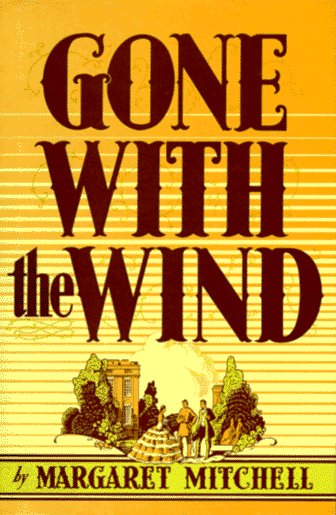
Belle Watling is a character in the 1936 best-selling historical novel Gone With the Wind by American author Margaret Mitchell. Set in the south during the American Civil War, it won Mitchell the Pulitzer Prize, and was the #1 book of both 1936 and 1937 before being adapted into a hit film in 1939. It is still one of America’s favourite books, and is considered one of the Great American Novels.

In the novel, Belle Watling is a prostitute and the local brothel owner, so Paris is just saying that Summer is behaving like a whore by kissing Tristan so openly in public.

Chucky

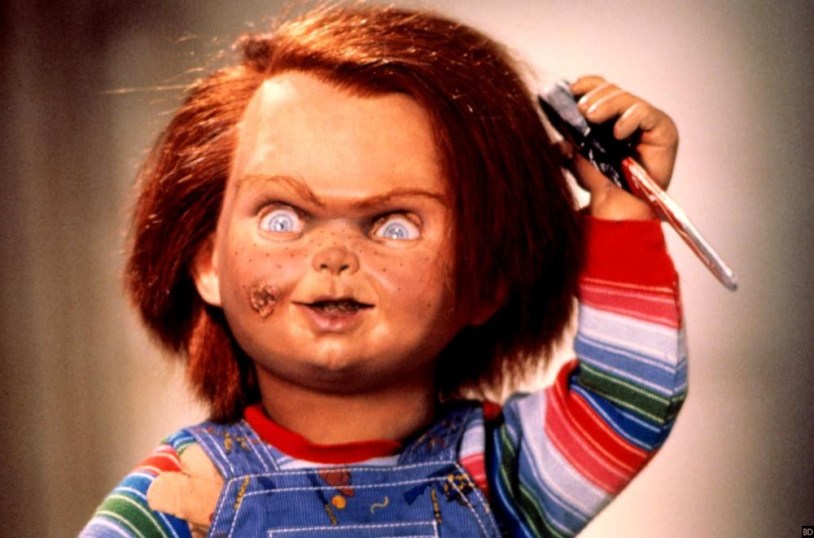
LORELAI: The pan, Chucky. Please.

Chucky is the villain in the 1988 horror film Child’s Play, directed by Tom Holland. In the film, a serial killer named Charles Lee Ray (Brad Dourif) is fatally shot, but transfers his soul via a voodoo spell into a doll called Chucky. After being given to a little boy, Chucky, who is animated by the spirit of Charles Lee Ray, goes on to commit murders and other violent crimes – the doll’s movements are performed by animatronics, child actors, or little people, but it is voiced by Dourif.

Child’s Play was a commercial success and got reasonable reviews; there have so far been six sequels in the franchise.

Lorelai is basically calling Rory a “little horror” (jokingly).

“Funny, funny girl”

LORELAI: Okay. I need a pan.
RORY: And a fire extinguisher.
LORELAI: Funny, funny girl.

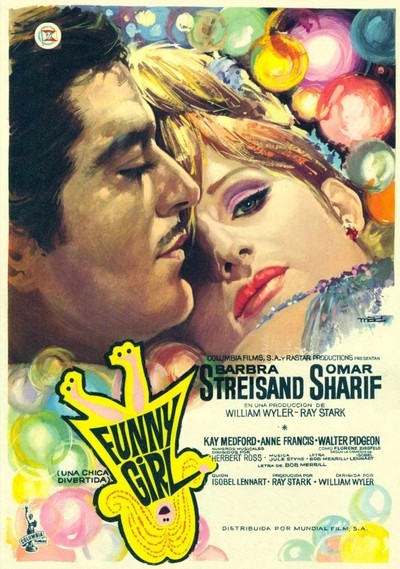
Lorelai may be alluding to the 1968 biographical musical film Funny Girl, directed by William Wyler and based on the 1963 stage musical of the same name with book by Isobel Lennart, music by Jule Styne, and lyrics by Bob Merrill.

Funny Girl stars Lorelai’s favourite actress Barbara Streisand, reprising her Broadway role to portray actress and comedian Fanny Brice (1891-1951), a star of vaudeville, film, radio, and television who rose to fame as a Ziegfield Follies girl in the 1920s.

Funny Girl was the #2 film of 1968, and acclaimed by critics; Streisand won a Best Actress Award for her role in the film at the Academy Awards. Regarded as one of the best musical films of all time, it is notable for being the first film where a Jewish woman is portrayed as smart, funny, talented, and beautiful.

We later learn that Funny Girl is Lorelai’s favourite film.

“Relocated to a plastic bubble”

DEAN: Well, what if it’s for a really special occasion?
RORY: Well, that special occasion better include my being relocated to a plastic bubble if my grandmother’s gonna let me out of dinner.

Rory is referring to the disease severe combined immunodeficiency, a rare genetic disorder where the sufferer remains extremely vulnerable to infectious disease due to having an immune system so compromised it is effectively absent. It is sometimes called “bubble boy disease”, because high-profile patients became known for living in sterile environments.

The disease became well known after the 1976 television film The Boy in the Plastic Bubble, directed by Randal Kleiser, and with John Travolta in the title role. The film was inspired by the real-life cases of David Vetter (1971-1984) and Ted DeVita (1962-1980); DeVita actually had severe aplastic anemia, which is able to be better treated now.

Although the movie wasn’t shown on television during Rory’s childhood, bootleg copies were widely available on video, and Lorelai may have obtained one.

Star-Crossed Lovers and Other Strangers

The title references two different works. One is William Shakespeare’s Romeo and Juliet, previously and frequently mentioned. In the play, Shakespeare refers to the main characters as “star cross’d lovers”, meaning that their relationship is destined to fail no matter how hard they try. The phrase comes from astrology, meaning that the stars are working against them (in the same sense that we say “don’t cross me”, to mean “don’t interferere with my plans”).

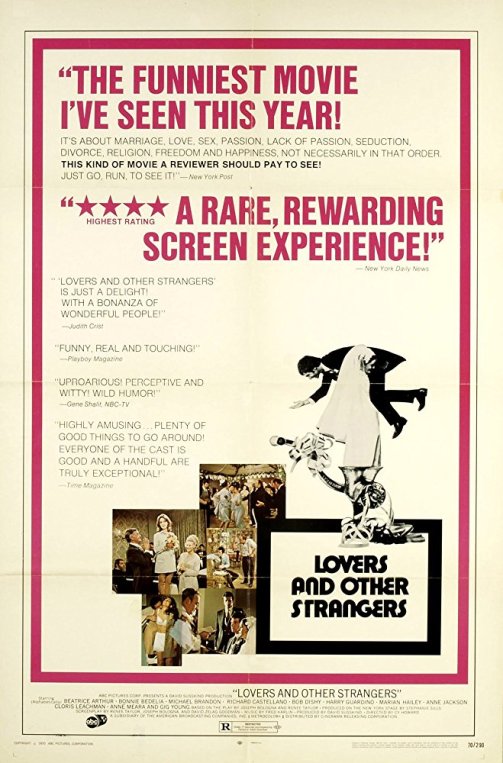
The other reference is to the 1970 comedy film Lovers and Other Strangers, directed by Cy Howard and based on the play of the same name by Renée Taylor and Joseph Bologna, who also co-wrote the screenplay for the film.

The movie revolves around the upcoming wedding of Mike (Michael Brandon) and Susan (Bonnie Bedelia), and the spotlight it shines upon the marriages of their family members. The film is notable for being the screen debut of actress Diane Keaton, who plays Mike’s sister-in-law. Lovers and Other Strangers was well-reviewed and successful at the box office; it won the Academy Award for Best Original Song (For All We Know).