Mencken’s Chrestomathy

EMILY: Richard, don’t you dare get on that phone. They’ll be here any second.
RICHARD: I’m not getting on the phone. I’m going to give Rory that first edition of Mencken’s Chrestomathy.

Mencken’s Chrestomathy was earlier discussed as a book that Richard called Rory about after they first bonded at Richard’s country club. A first edition is difficult to find and would most likely cost more than $100 today.

The special family dinner may be Friday June 1, meaning that the school year just finished for Rory, and they are celebrating the end of her first year at Chilton, and the success she attained during it.

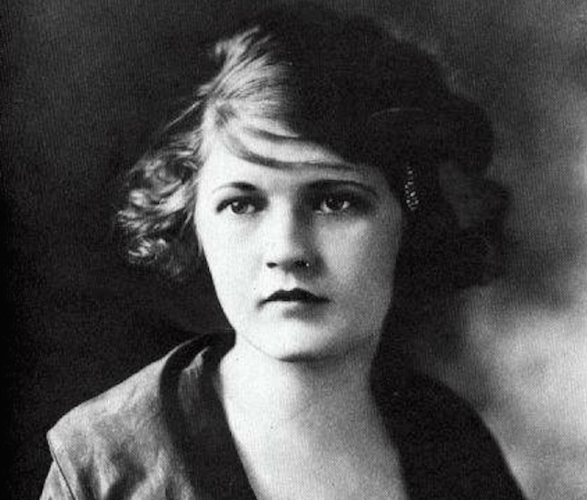
Zelda Fitzgerald

RORY: Did you pick out your ring?
LORELAI: Yup, he’s gonna surprise me with it tomorrow.
RORY: Twenties Deco?
LORELAI: Supposedly ripped right off of Zelda Fitzgerald’s cold dead hand.

Zelda Fitzgerald, born Zelda Sayre (1900-1948) was an American socialite, writer, artist, and the wife of author F. Scott Fitzgerald. The couple became icons of the Jazz Age, and her husband dubbed Zelda “the first American flapper”.

The Fitzgeralds’ marriage deteriorated, and Zelda was admitted to psychiatric care, diagnosed as schizophrenic. She spent the rest of her life in and out of sanatoriums. Like Amy Sherman-Palladino, Zelda studied ballet as a child, and as an adult, became obsessed with it again to the detriment of her health.

Lorelai is joking about her engagement ring being Zelda Fitzgerald’s, just that it is from the 1920s. It is telling that she links her engagement ring with a woman who had a famously disastrous marriage.

Stephanie Seymour in the Guns N’ Roses Video

RORY: So, what kind of dress are you thinking of?
LORELAI: Um, the one Stephanie Seymour wore in the Guns N’ Roses video.

Lorelai is referring to the music video to the 1992 power ballad November Rain, written by Axl Rose and from Guns N’ Roses’ 1991 album Use Your Illusion I. The song got to #3 on the charts, and at over eight minutes long, is the longest song to ever get into the Top Ten.

The music video, directed by Andy Morhan, shows Axl Rose getting married to his then-girlfriend, model and actress Stephanie Seymour, intercut with a live performance of the song. Seymour is wearing a traditional white wedding dress with a long train and a veil, but the front of the dress puffed up to be as short as a mini skirt. On a budget of over one million dollars (with $8000 spent on the dress), the video won the MTV Award for Best Cinematography.

The song is about a man’s unrequited love for a woman who no longer loves him in return, another foreshadowing of what is to come between Lorelai and Max. (The name Axl even looks and sounds a little like the name Max). The music video is based on the short story Without You by Del James, a friend of Rose’s; in the story the girl shoots herself, but the music video is ambiguous whether the Stephanie Seymour character’s death is a suicide or a murder. Yet another love leads to death reference in Gilmore Girls!

In 1993, Stephanie Seymour abruptly left Axl Rose to be with someone else – a foreshadowing of Lorelai’s future behaviour.

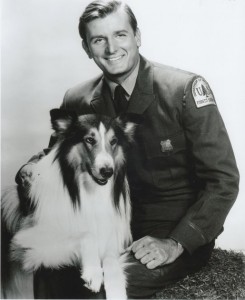
Ranger Bob

LORELAI: Everything about me repulses that man [Luke]. My coffee drinking, my eating habits. Remember when I called him Ranger Bob last week? He hated that!

Lorelai may be referring to Forest Ranger Bob Erickson (Jack De Mave) from the family television series Lassie, which follows the adventures of a long-coated collie dog, and aired from 1954 to 1973.

The show was inspired by the 1943 movie Lassie Come Home, about a dog who travels from Scotland to Yorkshire to be reunited with the boy she loves (Roddy McDowall), based on the 1940 novel of the same name by Eric Knight. Sequels followed, and so did appearances by Pal, the dog who played Lassie, at fairs and rodeos throughout the US in the 1950s. All the subsequent Lassies were played by Pal’s descendants, and like Pal, they were all male.

Ranger Bob was from the years between 1964 and 1970 where Lassie helped the US Forest Service, with Bob Erickson becoming part of the show in 1968 as one of Lassie’s carers. Ranger Bob worked alongside Forest Ranger Scott Turner (Jed Allen), but it would be perhaps too self-referential for Lorelai to call Luke “Ranger Scott”, as Luke is played by Scott Patterson. Calling Luke “Ranger Bob” may have been referencing his healthy outdoor lifestyle and love of camping.

Reruns of Lassie were shown on Nickelodeon from 1984 to 1996, and the show is still on American television today.

Books, Periodicals, and Comics Referenced in Season One

Novels

Emma by Jane Austen

Alice’s Adventures in Wonderland by Lewis Carroll

Don Quixote by Miguel de Cervantes

Timeline by Michael Chrichton

David Copperfield by Charles Dickens

Great Expectations by Charles Dickens

Little Dorrit Charles Dickens

A Tale of Two Cities by Charles Dickens

Madame Bovary by Gustave Flaubert

Mistress of Mellyn by Victoria Holt

The Hunchback of Notre Dame by Victor Hugo

Finnegan’s Wake by James Joyce

Ulysses by James Joyce

The Metamorphosis by Franz Kafka

The Witch Tree Symbol by Carolyn Keene

On the Road by Jack Kerouac

To Kill a Mockingbird by Harper Lee

The Group by Mary McCarthy

Moby Dick by Herman Melville

Gone With the Wind by Margaret Mitchell

The Bell Jar by Sylvia Plath

Swann’s Way by Marcel Proust

Harry Potter and the Goblet of Fire by J.K. Rowling

Chikara!: A Sweeping Novel of Japan and America by Robert Skimin

The Grapes of Wrath by John Steinbeck

Anna Karenina by Leo Tolstoy

War and Peace by Leo Tolstoy

Adventures of Huckleberry Finn by Mark Twain

Short Stories

Fairy Tales by Hans Christian Anderson

Grimm’s Fairy Tales by Jakob and Wilhelm Grimm

Poetry

Mother Goose Nursery Rhymes

Poems, Chiefly in the Scottish Dialect by Robert Burns

Complete Poems by Emily Dickinson

An Essay on Criticism by Alexander Pope

Shakespeare’s Sonnets by William Shakespeare

New Poems of Emily Dickinson edited by William Shurr et al

Drama

Love for Love by William Congreve

The Mourning Bride by William Congreve

The Crucible by Arthur Miller

The Comedy of Errors by William Shakespeare

Hamlet by William Shakespeare

Macbeth by William Shakespeare

Measure for Measure by William Shakespeare

Richard III by William Shakespeare

Romeo and Juliet by William Shakespeare

The Glass Menagerie by Tennessee Williams

A Streetcar Named Desire by Tennessee Williams

Non-Fiction

Tuesdays With Morrie by Mitch Albom

The Second Sex by Simone de Beauvoir

Kitchen Confidential by Anthony Bourdain

Mommie Dearest by Christina Crawford

Out of Africa by Isak Dinesen

Women Who Run with the Wolves by Clarissa Pinkola Estés

Stiffed: The Betrayal of the American Man by Susan Faludi

The Art of Eating by M.F. K. Fisher

James Joyce’s Ulysses by Stuart Gilbert

The Walter Hagen Story by Walter Hagen

Partial Portraits by Henry James

The Unabridged Journals of Sylvia Plath edited by Karen V. Kukil

To the Christian Nobility of the German Nation by Martin Luther

John Adams by David McCullough

The Days of H.L. Mencken by H.L. Mencken

A Mencken Chrestomathy by H.L. Mencken

The Total Woman by Marabel Morgan

Who’s Who and What’s What in Shakespeare by Evangeline M. O’Connor

The Portable Dorothy Parker by Dorothy Parker

The Republic by Plato

Etiquette by Emily Post

Everybody’s Autobiography by Gertrude Stein

Hell’s Angels by Hunter S. Thompson

Walden by Henry David Thoreau

Secrets of the Flesh: A Life of Colette by Judith Thurman

A Room of One’s Own by Virginia Woolf

Reference

The Bible

The Compact Edition of the Oxford English Dictionary

The Oxford Shakespeare

Webster’s Dictionary

Newspapers

Barron’s

The Financial Times

The Hartford Courant

The New York Times 

The Wall Street Journal

Magazines

CosmoGirl

Cosmopolitan

Glamour

GQ

Highlights for Children

InStyle

Ms.

The New Yorker

Playboy

Comics

Archie

Mister Miracle

Superman

Authors

Francis Bacon

Honore de Balzac

Elizabeth Barrett Browning

Judy Blume

Charlotte Bronte

Colette

Dante

Fyodor Dostoevsky

Sigmund Freud

Václav Havel

Homer

Ben Jonson

Stephen King

Christopher Marlowe

John Muir

Friedrich Nietzsche

Edna O’Brien

George Sand

Jean-Paul Sartre

John Webster

Edith Wharton

Walt Whitman
Secrets of the Flesh: A Life of Colette

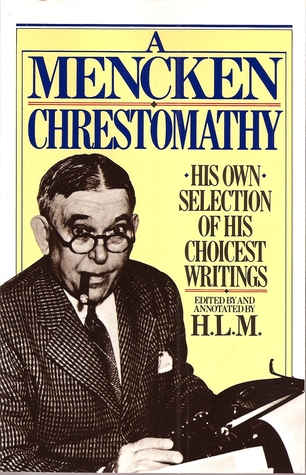
When Tristan grabs Rory’s books from her in a pathetic attempt to hold them hostage until she agrees to go the concert with him, this is one of the books we can see in the pile.

Colette, born Sidonie-Gabrielle Colette (1873-1954) was a novelist, short-story writer, journalist, actress and mime. Her works, which are often about married life and female sexuality, were semi-autobiographical, and highly critical of conventional roles for women. Colette is regarded as one of France’s great women writers, with one of her best known works the novella Gigi (1944), which was adapted into a film and a musical.

Judith Thurman is a journalist who became a staff writer for The New Yorker in 2000, and writes about fashion, literature, and culture. Her Colette biography was first published in 1999 and reprinted in 2000; it won The Los Angeles Times Book Award and the Salon Book Award in the biography category of each.

Thurman also wrote an award-winning biography of Isak Dinesen in 1983, which was used as the basis for the film Out of Africa, previously discussed.

It is not surprising that Rory would want to read a biography of an unconventional female writer, written by someone who is doing what Rory would love to do – we know she is a fan of The New Yorker. Reading a biography of Colette suggests that she has already read novels by Colette, and as we know she loves Isak Dinesen, she has probably read the earlier biography by Judith Thurman as well.

“There is no there there”

MAX: I kind of picked something up there.
LORELAI: Okay. Well, drop it back on the ground and kick it under the couch, because there is no there there.

Lorelai’s comment is a famous quote from Everybody’s Autobiography, a 1937 memoir by American author Gertrude Stein which continues on from the 1933, The Autobiography of Alice B. Toklas. The quote refers to Stein’s disappeared childhood home in Oakland, California.

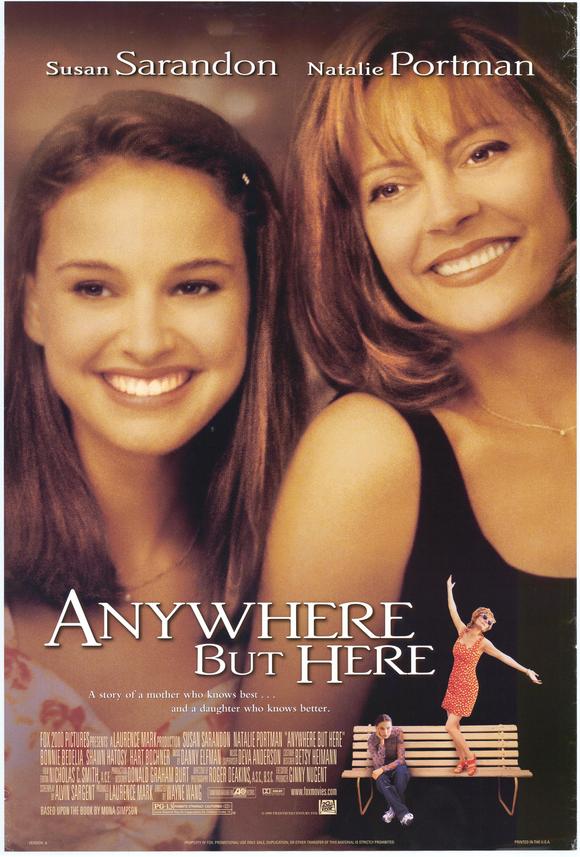
Anywhere But Here

LUKE: It’s just like all the other times Rachel. You’re the anywhere but here girl, you’re restless, you’re bored, it is what it is.
RACHEL: That’s not it.

A possible reference to the 1999 comedy-drama film Anywhere But Here, directed by Wayne Wang, and based on the prize-winning novel of the same name by Mona Simpson. The story is about an eccentric mother and her practical teenage daughter, with Susan Sarandon and Natalie Portman in the main roles. The film was successful and received good reviews.

It seems a bit unlikely as a film that Luke would go to see, but fits in with the timeline and themes of Gilmore Girls. If would certainly be very interesting if Luke had made an effort to see a film about a mother and teenage daughter.

Sad Lonely Guys (Natural Loners)

LORELAI: Lee Harvey Oswald.
LUKE: John Muir.
LORELAI: The Unabomber.
LUKE: Henry David Thoreau.

Lorelai and Luke disagree about the romantic ideal of the male loner, with Lorelai seeing them as sad, lonely misanthropes, and Luke as mystical hermits of the wilderness. Luke sees himself as the latter, while Lorelai is worried he could be the former.

Lee Harvey Oswald (1939-1963) was an American ex-Marine and Marxist defector to the Soviet Union, described as quiet and withdrawn. According to four federal investigations, he assassinated President John F. Kennedy in 1963; there is a strong public belief that he didn’t act alone. Oswald was murdered by nightclub owner Jack Ruby while he was being transferred from the city gaol to the county gaol, and never stood trial or gave testimony.

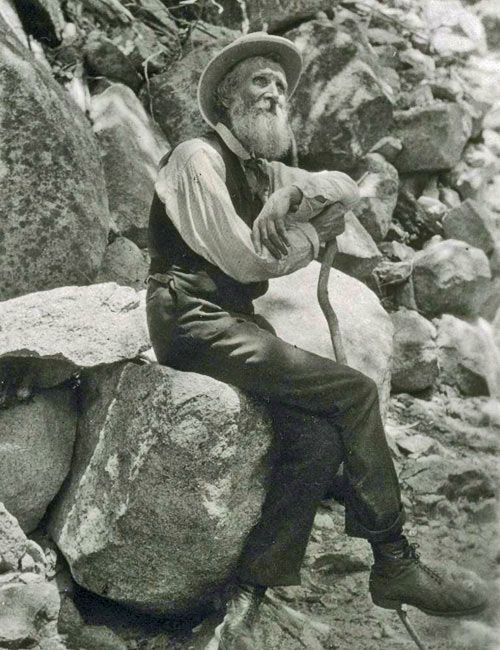
John Muir (1838-1914) [pictured] was a Scottish-American naturalist, author, environmental philosopher, glaciologist, and early advocate for the preservation of wilderness in the United States. His essays and books about nature have inspired millions, and his activism helped preserve Yosemite National Park, Sequoia National Park, and other wilderness areas. He co-founded The Sierra Club, a prominent conservation organisation, and he has many things named in his honour, including the John Muir Trail in the Sierra Nevada, and the John Muir Way in Scotland. He is known as “Father of the National Parks”, and has been described as a patron saint of the environmental movement. As a young man, Muir spent many years hiking alone in the wilderness, but in middle age he married and had children, although still needing to spend time in the wilderness to refresh his spirit.

Ted Kaczynski, known as the Unabomber, and previously discussed.

Henry David Thoreau (1817-1862) was an American author, poet, naturalist, and philosopher whose writings are early examples of environmentalism, and who advocated hiking, canoeing, and the preservation of wilderness (although when he actually went deep into the wilds, he came back with a new appreciation for civilisation). Thoreau is best known for his book Walden, or, Life in the Woods, which describes living a simple life in natural surrounds. It is based on a period of over two years that Thoreau spent living in a wooden cabin near Walden Pond among woods near Concord, Massachusetts. The book is both a memoir, and a spiritual quest to discover a better way to live. It tells of how Thoreau managed to enjoy his solitude in the woods, but also the companions that he met, and the friends who came to visit him, and how he enjoyed that too.

That Luke selects Muir and Thoreau as his models of loners, one who married and had a family, and the other who enjoyed friendship and companionship, suggests that he does not wish to be completely alone or isolated in life.

Stretch Cunningham and Dick Tracy

LORELAI: Hey, who was the guy who used to run the auto body shop?
(We pan up to see Luke lying on the roof with a hammer.)
LUKE: The Stretch Cunningham guy?
LORELAI: No, the Dick Tracy guy.

Jerome “Stretch” Cunningham was a recurring character on the 1970s sitcom All in the Family, played by James Cromwell. Stretch was a friend and co-worker of main character Archie Bunker. (Both Sally Struthers, who played Babette, and Liz Torres, who played Miss Patty, were also in All in the Family; possibly why it was referenced several times on Gilmore Girls).

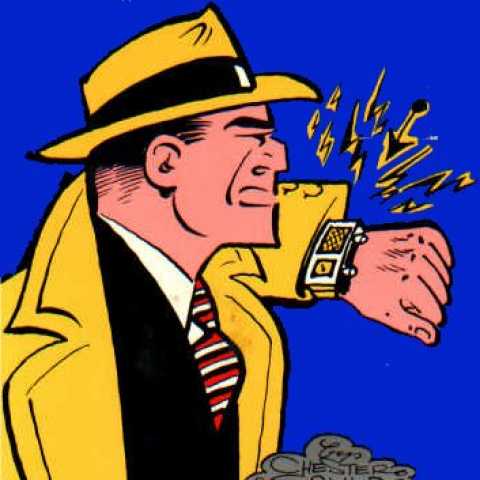
Dick Tracy is a fictional police detective who first appeared in the Dick Tracy comic strips created by Chester Gould in 1931. The Dick Tracy stories have been adapted into radio serials, comic books, novels, and films – most recently in 1990, with Warren Beatty in the title role.

There is a real mystery as to what the barely-remembered auto mechanic actually looked like. Lorelai first says he is tall and skinny, then corrects herself to say he was short and fat, and that the tall, skinny guy was actually his employee. Then she decides that he looked like Dick Tracy, who isn’t short and fat. Did the auto mechanic (who we learn was named Jim Dunning) look like a short, stocky version of Dick Tracy?