Emily in Wonderland

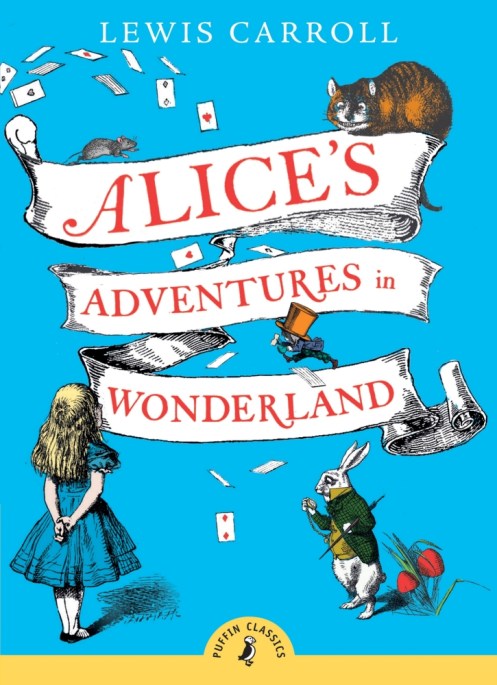
The title is a reference to the children’s book Alice’s Adventures in Wonderland by Lewis Carroll, commonly shortened to Alice in Wonderland; both book and author have been previously discussed.

Just as Alice finds herself transported to a strange world where nothing makes sense, Emily’s visit to Stars Hollow will likewise be a voyage into the unknown, the strange, and the frankly disturbing. Down the rabbit hole, indeed!

“Let them eat cake”

PARIS: God, this is so weird. I can’t stop smiling.
RORY: Good, then it’s a good time to talk about our over-taxed peasants.
PARIS: Oh, let them eat cake.

Paris is referring to Marie Antoinette, the wife of King Louis XVI, and the last queen of France before the French Revolution.

“Let them eat cake” is a phrase popularly ascribed to Marie Antoinette upon being told the peasants were starving and had no bread to eat. The phrase supposedly demonstrates either an indifference to their plight, or a complete lack of understanding of it. It doesn’t fit with what we know of Marie Antoinette, who was quite concerned with the poor, and donated generously to charitable causes.

She almost certainly did not say it. It comes from Jean-Jacques Rousseau’s Confessions (1782), where he mentions a “great princess” who once said it. Not only does he not name the princess, but that part of his autobiography covers the years when Marie Antoinette would have been a little girl in Austria. He may have invented the anecdote entirely.

Cabaret

SOOKIE: Call her now. Ooh, page her, or page her and have her call my cell phone, and we can sing the money song from Cabaret. You be Liza, I’ll be Joel.

Cabaret is a 1972 musical drama film directed by Bob Fosse, and loosely based on the 1966 Broadway musical Cabaret by John Kander and Fred Ebb; this was adapted from the 1951 play I Am a Camera by John Van Drouten, and the 1939 memoir The Berlin Stories by Christopher Isherwood, which the play was based on.

Set in Berlin during the Weimar Republic of 1931, the film is about a young American named Sally Bowles (Liza Minnelli), and her bohemian life as a cabaret dancer at the Kit Kat Club. The musical shows the growing rise of the Nazi Party, as the club at first harrasses the National Socialists and then eventually allows them to dominate the audience.

The “money song” from the film is Money, Money, containing the refrain, “Money makes the world go round”. It’s sung by Liza Minelli and Joel Grey, who plays the Master of Ceremonies at the club, and acts as the storyteller of the film.

Cabaret was an immediate box office smash, and received rave reviews from critics as a completely different kind of musical – cynical, kinky, political, and bleak. It was the #7 film of 1972 and received eight Academy Awards, including Best Director, Best Actress for Liza Minelli, and Best Supporting Actor for Joel Grey. It holds the record for the most number of Oscars won by a film that did not win Best Picture. Cabaret is regarded as one of the best musical films of all time, and it turned Liza Minelli into a gay icon.

Cabaret was first released on DVD in 1998, so Lorelai and Sookie might have rented it quite recently.

“Neither a borrower nor a lender be”

TRIX (to Lorelai): You know Shakespeare once wrote, “Neither a borrower nor a lender be”.

The quote Trix refers to is from Shakespeare’s play Hamlet, earlier mentioned. In the play, Polonius is giving advice to his son Laertes, including this maxim. In fact Shakespeare doesn’t seem to be endorsing Polonius’ views, as he’s portrayed as a boring old windbag who’s wrong about pretty much everything.

Hannibal Lecter

RORY: You said you were going to swear off girls – it’s funny.
TRISTAN: You don’t think I can?
RORY: No, I think you can, I just think it would be hard for you. It’d probably involve some kind of lock up facility, one of those Hannibal Lecter masks.

Dr. Hannibal Lecter is a character in a series of suspense novels by Thomas Harris, first appearing in the 1981 Red Dragon as a highly intelligent and cultured cannibalistic serial killer.

Rory is almost certainly thinking of the 1991 horror-thriller film The Silence of the Lambs, directed by Jonathan Demme, and based on the 1988 novel of the same name by Thomas Harris. In the film, Dr. Hannibal Lecter (Anthony Hopkins) is incarcerated for his crimes, and while being tranferred to another psychiatric facility is forced to wear a mask that acts like a muzzle (it doesn’t work).

The Silence of the Lambs was the #4 film of 1991 and won five Academy Awards, including Best Picture and a Best Actor for Hopkins. Hannibal Lecter is often regarded as one of the most frightening villains in cinema history.

Interestingly, the director of the sanitarium where Hannibal Lecter is confined is named Dr. Frederick Chilton, a self-important, incompetent man who is easily outwitted by Lecter. The film strongly suggests that Lecter will eventually murder and eat Chilton in revenge.

This is possibly where the name Chilton came from for Rory’s school, to suggest a strict and pompous confinement, yet with a certain laxness as well, giving the possibility of escape.

David Mamet

EMILY: I have to get out everything she’s [Richard’s mother] ever given us. Thirty-five years worth of fish lamps and dog statues, lion tables, and stupid naked angels with their … butts!
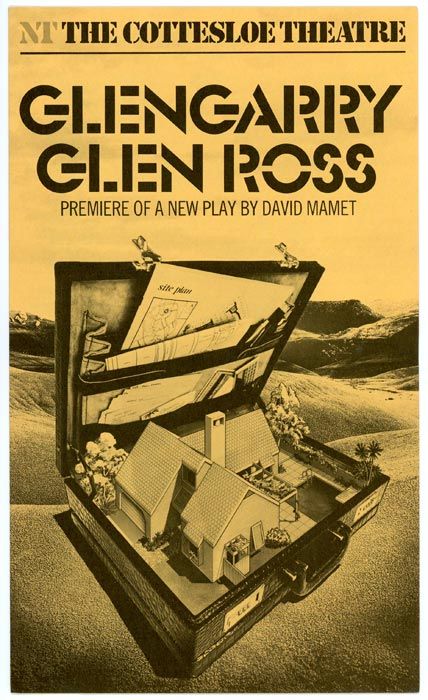
LORELAI: Whoa! Stupid naked angel butts? What, did David Mamet just stop by?

Lorelai is probably referring to David Mamet’s 1983 play Glengarry Glen Ross. It shows two days in the lives of four Chicago real estate agents prepared to do anything, no matter how illegal or unethical, to sell some undesirable real estate. It won the 1984 Pulitzer Prize, and in 1992 was made into into a highly-acclaimed film, with the screenplay written by Mamet.

The play is notorious for its use of profanity, and Lorelai is teasing her mother for her uncharacteristic use of the word “butts”. Maybe the butt model conversation affected her.

David Mamet is one of Amy Sherman-Palladino’s own favourite playwrights.

Emily’s statement suggests that she and Richard have been married for thirty-five years, so since 1965-1966.

The Art of Eating

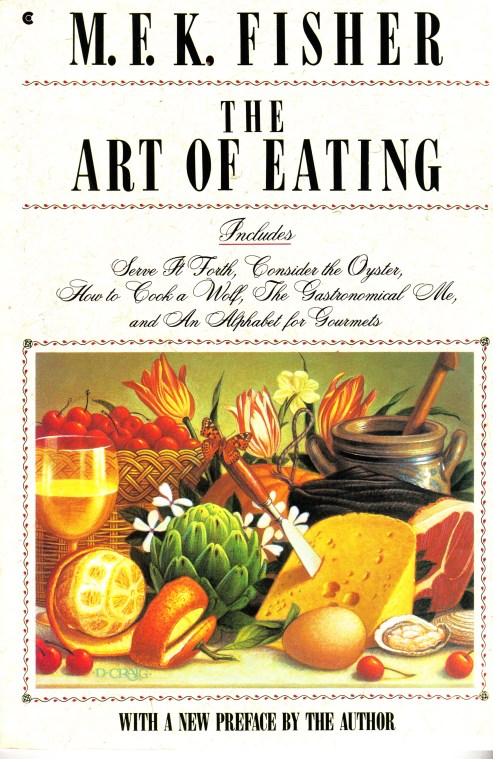
This is the book that Rory reads at Madeline’s party; she mentions to Tristan that the party gave her a chance to catch up on her reading.

The Art of Eating is a book of essays by M.F.K. Fisher, first published in 1954. Mary Frances Kennedy Fisher was one of America’s greatest food writers, and wrote 37 books on food in her lifetime, which combine food literature, travel, and memoir.

The Art of Eating collects five of her most famous books into one volume: How to Cook a Wolf (1942), Consider the Oyster (1941), Serve it Forth (1937), The Gastronomical Me (1943), and Alphabet for Gourmets (1949). The books includes portraits of quirky family and friends, travel notes from Fisher’s time in France, and tips on surviving World War II, interspersed with recipes.

Although it might seem strange that the junk food loving Rory would read a book on gourmet food, M.F.K. Fisher has a wonderful and witty prose style that any aspiring writer could admire. Her life of travel and adventure is something Rory would love to have, and throughout the series both Rory and Lorelai showed a great interest in biography and memoir of all kinds. It is also reminiscent of Lorelai’s fascination with the Food Network after breaking up with Max.

(Another odd link between Rory and the author is that Fisher and her first husband celebrated their three-month wedding anniversary by going out to a good restaurant. It strangely seems to fit with Rory’s situation, as she and Dean just celebrated their three-month anniversary at a bistro. Perhaps the fact that it was Fisher’s first husband is also relevant – Dean is just her first boyfriend).

The Bell Jar

LORELAI: You’re going to a Chilton party?
RORY: Yes I am.
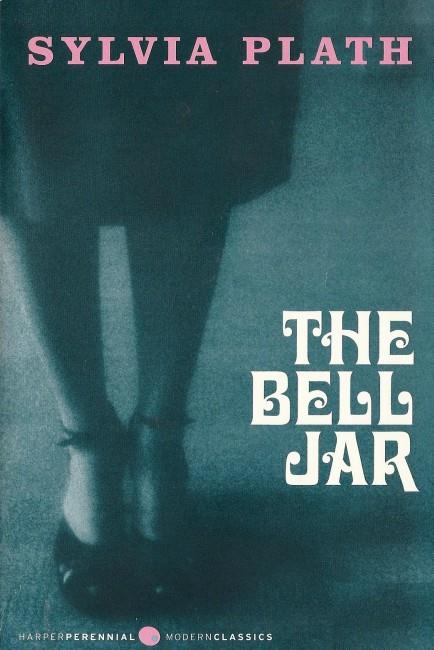
LORELAI: Honey, why don’t you just stay home and read The Bell Jar? Same effect.

The Bell Jar is the only novel written by American poet Sylvia Plath, and first published under the pseudonym Victoria Lucas in 1963. It is semi-autobiographical, detailing the nervous breakdown of a college student named Esther Greenwood in the 1950s, including a suicide attempt which sees her committed to a psychiatric hospital.

Plath killed herself about a month after the novel’s initial publication in the UK, and it was first published under her name in 1967. It wasn’t published in the US until 1971, and was adapted into film in 1979. Although early reviews were lukewarm, it’s now often a set text in high school and college courses.

Lorelai is suggesting that going to the party will be depressing, like reading The Bell Jar, although the book is actually rather witty, with a critical eye on 1950s society, and many moments of black comedy. Esther’s journey is ultimately one of hope and healing; a tragic counterpoint to the events which shortly followed the book’s publication.

Sad Movies

Lorelai suggests a number of sad movies they could rent so that Rory can wallow in her grief.

Love Story is a 1970 romantic drama directed by Arthur Hiller, and based on the best-selling 1970 novel of the same name by Erich Segal, who also wrote the screenplay. The story is about a wealthy Harvard student named Oliver (Ryan O’Neal) who falls in love with a working-class Radcliffe student named Jennifer (Ali McGraw). Despite his family’s opposition, Oliver and Jennifer marry, but unfortunately she soon dies of a terminal illness.

Love Story was the #1 film of 1970 and remains one of the highest-grossing films of all time, but was panned by critics. It is considered to be one of the most romantic films ever made.

The Champ is a 1979 sports drama directed by Franco Zefferelli, a remake of a 1931 film directed by King Vidor. It’s about an ex-boxing champion named Billy (Jon Voigt), who has custody of his young son T.J. (Ricky Schroeder).

Little T.J.worships his father, who he calls “The Champ”, and Billy begins working on a comeback to earn more money for him. T.J.’s mother Annie (Faye Dunaway) comes back into his life; now wealthy, she wants to regain custody of her son. Billy wins his fight, but unfortunately he dies from his injuries in front of a distraught T.J. The Champ received poor reviews, but is considered to be the saddest movie in the world.

An Affair to Remember is a 1957 romance directed by Leo McCarey, and is a remake of McCarey’s 1939 film Love Affair. It is about a painter named Nickie (Cary Grant) who meets a woman named Terry (Deborah Kerr) on a transatlantic ocean liner. They fall in love, even though both of them are involved with other people.

Arranging to meet atop the Empire State Building, Terry is unfortunately mangled in a car accident on her way there, and ends up in a wheelchair. Nickie believes she has rejected him, as Terry doesn’t want him to know she is disabled. It isn’t a tragedy and ends on quite a hopeful note. The #20 film of 1957, it is considered one of the most romantic films of all time.

Ishtar is a 1987 adventure comedy directed by Elaine May, and starring Warren Beatty and Dustin Hoffman as two untalented singer-songwriters who get caught up in political unrest while on tour in North Africa. Shot on location and massively over-budget, Ishtar is an infamous box office failure that was panned by critics and earned May a Worst Director at the Golden Raspberry Awards; she never directed another film.

Lorelai includes the film as a joke, to suggest that they might rent Ishtar in order to cry over how bad it is – indeed, Ishtar quickly became regarded as the worst film ever made. However, since the film was released on Blu-Ray on 2013 its reputation has been rehabilitated to some extent, gaining a cult following, and praise from film makers such as Martin Scorcese and Quentin Tarantino.

Old Yeller is a 1957 family drama produced by Walt Disney, and based on the 1956 award-winning children’s book of the same name by Fred Gipson. Set in Texas in the late 1860s, it is about a boy named Travis (Tommy Kirk) and his faithful hound, a golden retriever cross named Old Yeller. Unfortunately, Old Yeller gets rabies and Travis has to shoot him.

Old Yeller was the #4 film of 1957, and warmly praised as sentimental family film. It’s a film that Americans, especially baby boomers, remember with fondness as having one of the most tear-jerking scenes ever, and has become something of a cultural icon. Lorelai wonders if it might be more of a crying film for guys; it’s definitely one for animal lovers, which Rory doesn’t seem to be.
Who’s Afraid of Virginia Woolf?

This is the play that the Stars Hollow Elementary School is currently performing; Rory suggests that she and Lorelai might see it as a reward for getting all their Saturday morning chores done. It doesn’t seem as if they ever did, however.

Who’s Afraid of Virginia Woolf? is a black comedy by American playwright Ed Albee, first staged in 1962. It is about a middle-aged couple named George and Martha who have a volatile relationship. A drunken night they spend with a young couple named Nick and Honey reveals a poignant secret in George and Martha’s marriage.

Who’s Afraid of Virginia Woolf? won the Tony Award for Best Play, while its Broadway stars Uta Hagen and Arthur Hill won Best Actress and Best Actor. It was successfully adapted to film in 1966 with Elizabeth Taylor and Richard Burton in the lead roles.

Needless to say, it is completely inappropriate as a play for elementary school children to even watch, let alone take part in. Not only is it unusually long with complex dialogue to memorise, but the characters are utterly vicious to one another. It heavily features alcohol use/abuse, and discusses death, murder (including murder of children by their parents and vice versa), and sexual themes, including infidelity.

It seems too much even for quirky Stars Hollow, so perhaps Rory used it jokingly as a hypothetical activity. It’s definitely a joke by the writer (Amy Sherman-Palladino).