The Outbreak of the Peloponnesian War

RICHARD: Oh, I must say, I am a very spoiled man. Chuck Berry, and the complete History of the Peloponnesian War.

LORELAI: Well, sure, ’cause a partial history would skip all the dirty stuff.

RICHARD: I especially like the way you wrapped the books in a bow tie. It’s very, very clever.

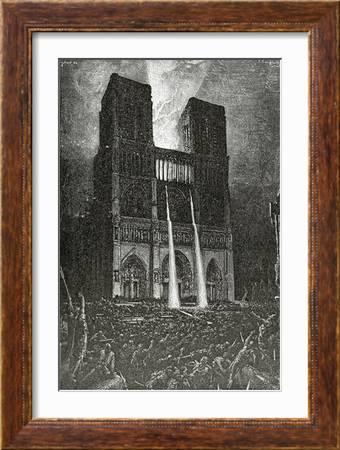
The Outbreak of the Peloponnesian War, a historical account of the Peloponnesian War (431–404 BC), which was fought between the Peloponnesian League (led by Sparta) and the Delian League (led by Athens). Written by historian and classical scholar Donald Kagan, a professor at Yale University, the book comes in four volumes. Lorelai has bought Richard all four volumes, hence it is the “complete” version. Lorelai has wrapped the books in the bow tie which was her original present for her father – Rory almost certainly suggested the books.
“Slow and steady wins the race”

DEAN: Let’s take this one day at a time.

RORY: Slow and steady wins the race.

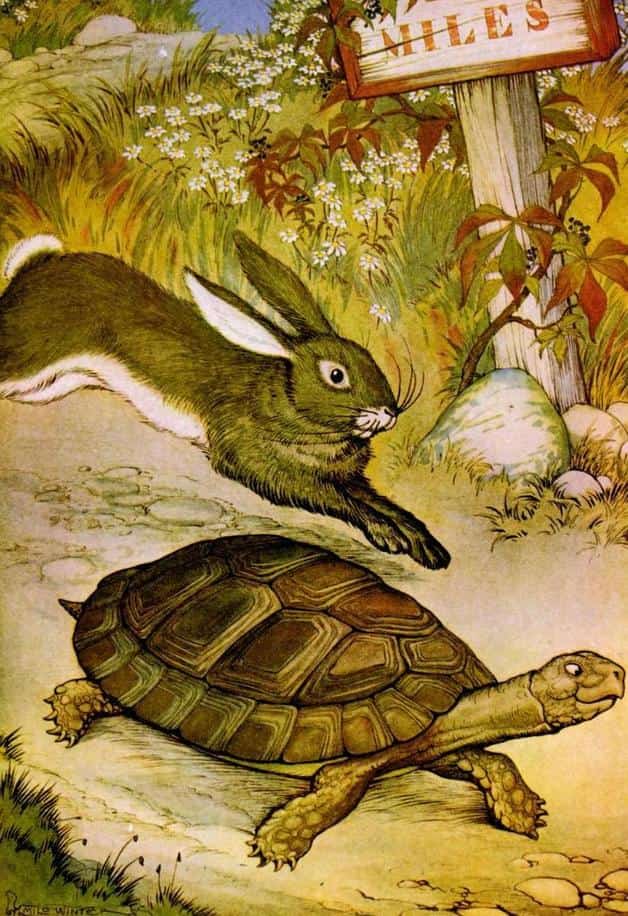
“Slow and steady wins the race” is a proverb from “The Tortoise and the Hare”, a story from Aesop’s Fables – a collection of tales from ancient Greece, attributed to a legendary slave named Aesop.

In the fable, the tortoise challenges the hare to a race, but the arrogant hare takes a nap midway through the race, sure that he has plenty of time to do so and still win the race. He wakes to find the tortoise has already crossed the finish line.

The moral of the story is that flashy overconfidence may be overtaken by conscientious plodding. In the same way, Dean hopes to win Rory back with his steady, reliable ways, while the “flashy” Jess misses out.

Chuck Berry Live

RORY: Chuck Berry live at The Fillmore on vinyl.

LORELAI: Oh my God, that’s perfect. He loves Chuck Berry. How did you come up with that?

RORY: I called him and asked him what he wanted.

Live at the Fillmore Auditorium, a 1967 live album by Chuck Berry recorded at The Fillmore, a historic music venue in San Francisco. During the 1960s, it was a focal point for psychedelic music and the counterculture in general, mentioned in Hunter S. Thompson’s Fear and Loathing in Las Vegas. The Steve Miller Blues Band (later the Steve Miller Band) were one of its regular acts, and they provide the backing music for this album.

Saint Nick

[Luke and Jess walk out of the diner; Jess is carrying a garbage bag] ….

LORELAI: Hi, Saint Nick.

Saint Nicholas of Myra (270-343), a bishop in the early Christian church of Greek descent, living in Myra in Asia Minor (now Demre in Turkey). Saint Nicholas is the patron saint of (among other things) children and students, and his feast day is December 6.

The saint’s legendary habit of secret gift-giving gave rise to the traditional Christian icon of Santa Claus, through the Dutch figure Sinterklaas. On December 6, his feast day is celebrated with gift-giving, and the saint is portrayed as an elderly, serious man with long white hair and a beard, wearing red vestments over a white bishop’s robe.

Saint Nick is an English translation of Sinterklaas, and the American Santa Claus and Christmas traditions which arose in the 19th century seem to be a nostalgic revival of earlier Dutch folklore from immigrants to New York. Santa Claus is called Saint Nick in the Christmas poem, “A Visit from St. Nicholas”, previously discussed.

Lorelai calls Jess “Saint Nick” because he is carrying a garbage bag, which Lorelai likens to Santa’s sack of presents. This is the second time that Lorelai has sarcastically referred to Jess as Santa Claus or Saint Nick – the first time was to accuse him of stealing Rory’s bracelet. Using the reference again seems to be a veiled barb, and a reminder to Jess that she is watching him.

The Five Stages of Grieving

SOOKIE: Well, you caught me at a good time, ladies. I’ve already gone through the five stages of grieving. Denial, anger . . . I don’t remember these two, but they were served on the rocks with salt! Now, I’m just happily enscotched in acceptance.

The five stages of grief are said to be denial, anger, bargaining, anger, and acceptance. The model was popularised by Swiss psychiatrist Elisabeth Kübler-Ross in her 1969 book, On Death and Dying. Despite being commonly referenced in popular culture, there is no evidence for these stages, and the model has been considered outdated and unhelpful. Kübler-Ross later stated that the stages are not linear or predictable, and she regretted writing them in a way which was misunderstood.

Sookie references the Margarita cocktail, previously discussed, which is served on the rocks with salt around the rim. In her drunkenness, she says she is “enscotched” rather than “ensconced”, as if she has been drinking Scotch whiskey as well.

“Don’t study so much that you … try to take over the world”

LORELAI: Don’t study so much that you get brilliant, go mad, grow a big bald egghead and try to take over the world, okay, ’cause I wanna go shoe shopping this weekend.

Lorelai sounds as if she is referring to the fictional character Ernst Stavro Blofeld from the James Bond novels and films, created by British author Ian Fleming. He is a criminal mastermind and the chief antagonist of the series, instantly recognisable from his bald head. He has been played by several actors, but his portrayal by Donald Pleasance is often thought of as “the classic Blofeld”.

Ernest Blofeld gained degrees political history and economics, and also engineering and radionics, but used his formidable intellect for nefarious purposes. He becomes completely insane by the end of the book series, and is obsessed with gaining world domination.

Ernst Blofeld has been often parodied in film and television, including the character of Dr Evil in the Austin Powers movies.

“That girl Butterfly who lived in a tree for a year”

DEAN: What do you want?

RORY: Do you remember that girl Butterfly who lived in a tree for a year? I can officially attest that she was nuts.

Rory refers to Julia “Butterfly” Hill (born 1974), environmental activist. She is best known for having lived in a 180 foot tall, roughly 1500-year-old California redwood tree for slightly more than two years between 1997 and 1999. Hill lived in the tree, affectionately known as Luna, to prevent loggers from cutting it down. She is the author of the 2000 book The Legacy of Luna and co-author of One Makes the Difference. Her story has often been alluded to in popular music and culture.

Rory climbs a tree in order to reach Dean while he’s in his bedroom, in the same way she climbed a tree to talk to Lane when she was grounded. There is a slight feeling of Romeo and Juliet, with Rory taking Romeo’s role in talking to Juliet while she’s on her bedroom balcony.