Louie’s Items He Wants Buried With Him

Fishing Reel

Bowling Trophy

Flask

Antique Duelling Pistols

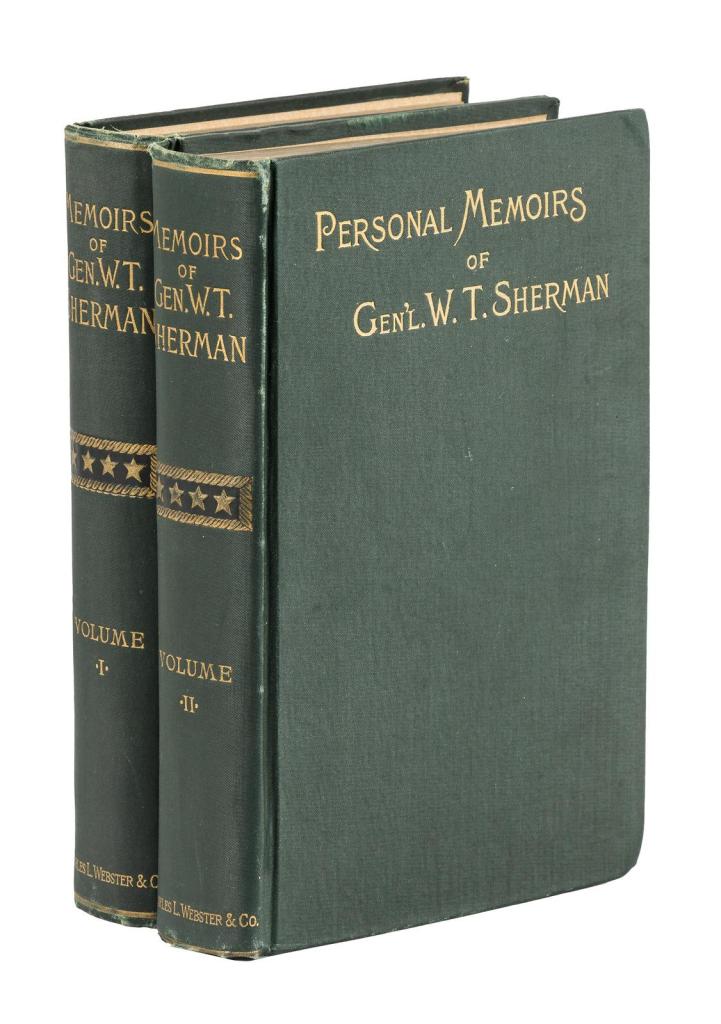
Personal Memoirs of General W.T. Sherman

William Tecumseh Sherman (1820-1891), general in the Union Army during the American Civil War, recognised for his military strategy and criticised for his harsh scorched earth policies against the Confederate States. His memoirs were published in 1875, becoming one of the best-known first-hand accounts of the Civil War.

Football signed by Johnny Unitas

John “Johnny Unitas (1933-2002) football quarterback from 1956 to 1973, primarily playing with the Baltimore Colts. He is consistently listed as one of the greatest NFL players of all time, and was inducted into the Pro Football Hall of Fame in 1979.

Gas mask (from World War I or II?)

Pith helmet (safari helmet worn by European travellers and explorers, routinely issued to European armed forces in hot climates in both world wars)

Baseball card collection

Lou Gehrig (Henry Louis Gehrig, born Heinrich Ludwig Gehrig, 1903-1941), played with the New York Yankees from 1923 to 1939. Known as “The Iron Horse” for his durability, he still has the highest ratio of runs scored plus runs batted among Hall of Fame players, being inducted in 1939. His career was brought to a tragic end by motorneurone disease, still often called Lou Gehrig’s disease in the US.

Joe DiMaggio (born Joseph DiMaggio, 1914-1999), played for the New York Yankees from 1936-1951. Widely considered the greatest baseball player of all time, his 56-game hitting streak is a record which still stands. He was inducted into the Baseball Hall of Fame in 1955. He is well known for his marriage to Marilyn Monroe, and lifelong devotion to her.

Willie Mays (born 1931), played for the New York/San Francisco Giants (1951-1972), before finishing his career with the New York Mets (1972-1973). Regarded as one of the greatest players of all time, he was inducted into the Baseball Hall of Fame in 1979. He was awarded the Presidential Medal of Freedom in 2015.

Louie’s interests seem to be fishing, bowling, drinking, watching baseball and football, and collecting war memorabilia and sporting memorabilia. Some of the items he’s being buried with are quite valuable.
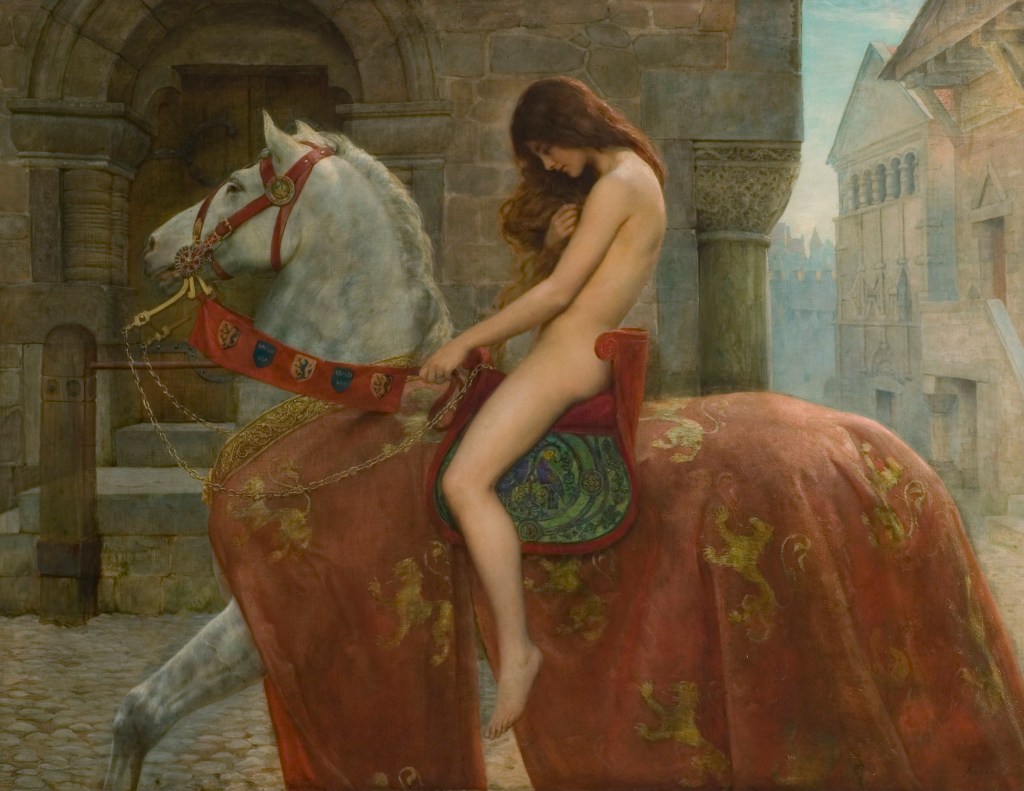
Lady Godiva

TAYLOR: Wait a second, wait a second! You there, when Lady Godiva here wanted to be town troubadour over you, I stood by your side.

Lady Godiva, in Old English Godgifu (died between 1066 and 1086) was an Anglo-Saxon noblewoman, married to Leofric, Earl of Mercia. According to legend she rode naked, covered only by her long hair, through the streets of Coventry to protest an oppressive tax her husband had imposed on his tenants. The legend dates to the 13th century and is not considered plausible by historians.

This is another long-haired character referenced by Taylor in regard to the Second Troubadour.

[Picture shows Lady Godiva, a 1897 painting by John Collier].

Charlie Rose

MISS PATTY: Transcript?

LORELAI: Yeah, Taylor, this isn’t Charlie Rose.

Charlie Rose, television interview and talk show, hosted by journalist Charles “Charlie” Rose (born 1942). Rose interviewed thinkers, writers, athletes, politicians, entertainers, business people, leaders, scientists, and fellow journalists. It was broadcast on PBS from 1991 to 2017, only coming to an end when Rose was accused of sexual harassment. The show was then replaced by one hosted by Christiane Amanpour. Transcripts of the show were made available online after broadcast, and in fact many of them still are.

Patricia Hearst and the SLA

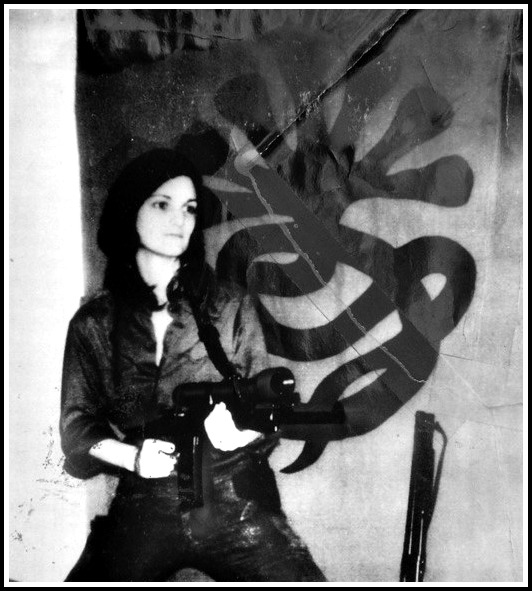
LORELAI: She’s brainwashed. She’s Patricia Hearst and my mother is the SLA.

Patricia Hearst (born 1954), author and actress, the granddaughter of publishing magnate William Randolph Hearst, previously mentioned. She is best known for being kidnapped from her Berkeley apartment in February 1974, when she was 19, by an urban guerilla left-wing group called the Symbionese Liberation Army. The kidnapping was partly opportunistic, as Hearst lived near the SLA hideout.

According to Hearst’s testimony, she was kept locked in a closet for weeks, given SLA literature to read by flashlight. Offered the choice between joining the SLA or being killed by them, she joined them, and was given daily weapon drills. Over the next 18 months, she took part in high-profile robberies and kidnappings as a member of the SLA.

Patricia Hearst was arrested in September 1975, her defence arguing that she had been brainwashed and was acting under duress. She was convicted in March 1976 and sentenced to seven years in prison. Her sentence was commuted by President Jimmy Carter, and she was released in February 1979. After release, she married a policeman who had been part of her security while on bail, brought out a memoir in 1981, and appeared in several films by John Waters.

The Final Days of Dick Nixon

RORY: Taylor’s wigging.

LORELAI: I know. He’s been sitting there like the final days of Dick Nixon for almost an hour.

Richard Nixon (1913-1994), 37th President of the US from 1969 to 1974. The Watergate Affair, the name used to describe the secret and illegal activities undertaken by members of the Nixon administration, was brought to light by reporters Carl Bernstein and Bob Woodward in The Washington Post in 1972.

Nixon had hoped to weather the storm by refusing to leave, but impeachment hearings against him opened in May 1974. With loss of political support, and the near-certainty he would be impeached and removed from office, Nixon resigned on August 9 1974.

Lorelai may be specifically referring to the 1976 non-fiction book, The Final Days, by Carl Bernstein and Bob Woodward, describing the last months of Richard Nixon’s presidency. It was a major commercial success, and was made into a television movie of the same name in 1989, with Lane Smith as Richard Nixon.

The Wedding Company’s Former Clients

SOOKIE: Oh, it’s this company’s sample place setting. Emily set me up with them. They did Celine Dion’s wedding, and Steven Spielberg’s daughter’s Jack Russell Terrier’s Bark Mitzvah.

Celine Dion, previously discussed. She married her manager, Canadian music producer René Angélil, in 1994 [pictured]; they first met in 1980, when Dion was 12 and Angélil was 38. They remained married until Angélil’s death in 2016.

Steven Spielberg (born 1946), film director, previously mentioned. He is one of the most commercially successful directors of all time. He has four daughters (Jessica, Sasha, Destry, and Mikaela), but I can find no reference to any of them having a Bark Mitzvah for a Jack Russell – although the Spielberg family does seem very attached to their pet dogs, so it’s not wildly unbelievable.

A Bark Mitzvah is a fun coming-of-age celebration for pet dogs with Jewish owners, held as a joke counterpart to the Bar Mitzvah, previously discussed. The first one was held in 1958, and although some rabbis find the idea offensive, they continue to be popular.

Jerry Lewis in “The Diner Guy”

LUKE: Yeah, I can’t serve and be on the phone.

LORELAI: But your reenactment of Jerry Lewis in The Diner Guy is gonna wow the critics.

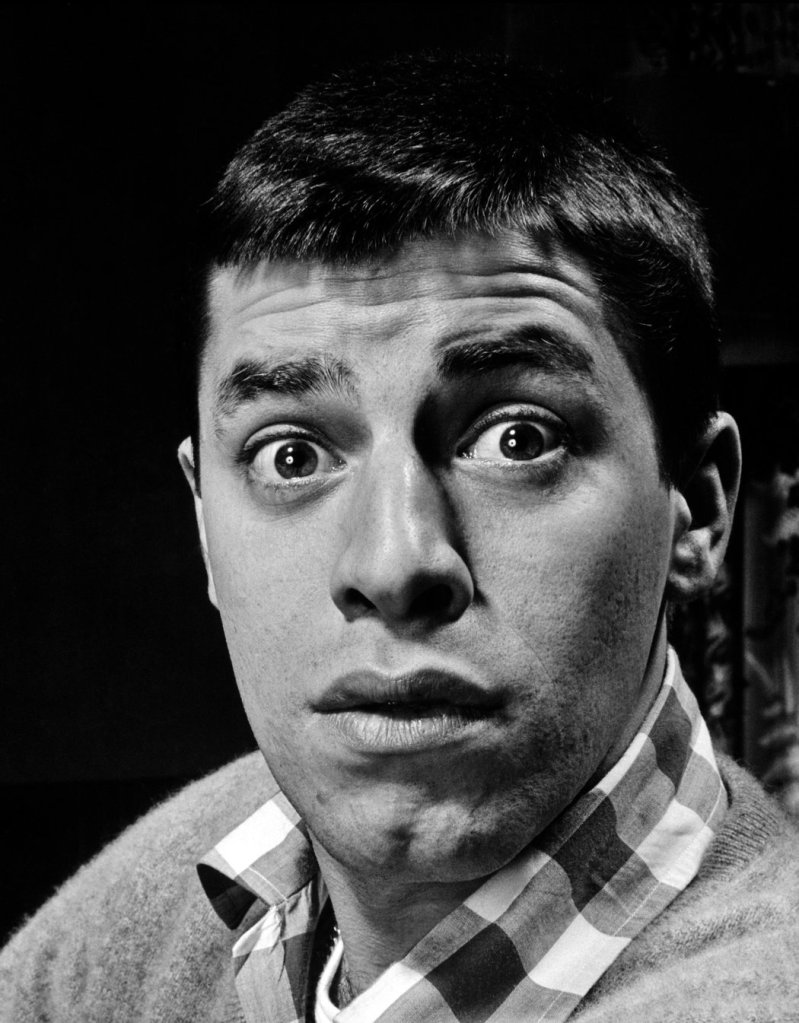
Jerry Lewis, born Joseph Levitch (1926-2017), comedian, director, actor, screenwriter, singer, humanitarian and producer. Nicknamed “The King of Comedy”, Lewis is regarded as one of the most significant American cultural figures of the 20th century, was widely known for his “kid” and “idiot” persona and his contributions to comedy and charity, making him a global figure in popular culture over an eight-decade career. He debuted professionally in 1946 working with Dean Martin as Martin and Lewis, and they performed together until 1956.

Although Jerry Lewis never did a film called The Diner Guy, several of his films had titles such as The Geisha Boy, The Ladies Man, and The Errand Boy, so The Diner Guy would actually fit right in.

Songs at the Bar

I Can’t Give You Anything But Love, Baby

This is the song playing at the bar when Emily and Lorelai first walk in together. It’s a jazz standard with music by Jimmy McHugh and lyrics by Dorothy Fields, introduced by Adelaide Hall at the Blackbird Revue in New York, 1928, which later opened on Broadway.

Come Fly With Me

This is the song which is announced as a “salute to the Chairman of the Board”. It’s a 1958 song with music by Jimmy Heusen and lyrics by Sammy Cahn. It was written for Frank Sinatra, the title track of his 1958 album, and became part of his concert repertoire.

Fly Me to the Moon

This is the song which plays when Chad, the “silver fox”, asks Emily to dance. It’s a 1954 song by Bart Howard, originally recorded by Kaye Ballard the same year. Frank Sinatra’s 1964 version is the best known, and became associated with NASA’s Apollo missions to the Moon. “Fly Me to the Moon” was inducted into the Songwriter’s Hall of Fame in 1999.

Someone To Watch Over Me

Previously discussed. This is the song which Emily and Chad dance to. It’s a sign that Emily desperately needs Lorelai to watch out for her – which she fails to do.

Stayin’ Alive

The song which plays while Emily and Lorelai argue about whose fault everything has been. It’s a 1977 song written and performed by The Bee Gees for the soundtrack to the film, Saturday Night Fever. The song was a smash hit around the world, going to #1 in the US and multiple other countries, and #4 in the UK. Considered one of the best songs of all time, it was one of the Bee Gees’ signature songs.

The songs at the bar are performed by Marty and Elayne (Roberts), a famous husband-wife lounge act who performed at The Dresden Room, a Hollywood landmark, for 38 years. They also make an appearance in the 1996 film Swingers. Marty passed away in January of this year, aged 89.

Jane Austen

PARIS: Typical guy response. Worship Kerouac and Bukowski, God forbid you’d pick up anything by Jane Austen.

JESS: Hey, I’ve read Jane Austen … and I think she would’ve liked Bukowski.

Jane Austen (1775-1817), English novelist, previously mentioned as the author of Emma, amongst others.

As previously hinted at, Jess has read some of the English Literature classics, as well as American counter-culture icons. Unlike Dean, he wouldn’t have needed prodding to read Jane Austen.

But in what possible universe would Jane Austen have liked Charles Bukowski, as either a person or a writer? She lived in an era when it was deeply shocking, even violating, for a man to address a woman without an introduction – how would she have coped with Bukowski’s vivid description of his own penis and his offer of it to a female friend, with instructions as to its use?

Jess is saying that a nice, genteel girl like Rory can still appreciate a crude but intelligent bad boy like himself. Rory and Jess? For sure. Jane Austen and Bukowski? Not a chance.

Kerouac and The Beats

PARIS: A tragic waste of paper.

JESS: I can’t believe you just said that.

PARIS: Well, it’s true, The Beats’ writing was completely self-indulgent. I have one word for Jack Kerouac – edit.

Jack Kerouac, previously discussed.

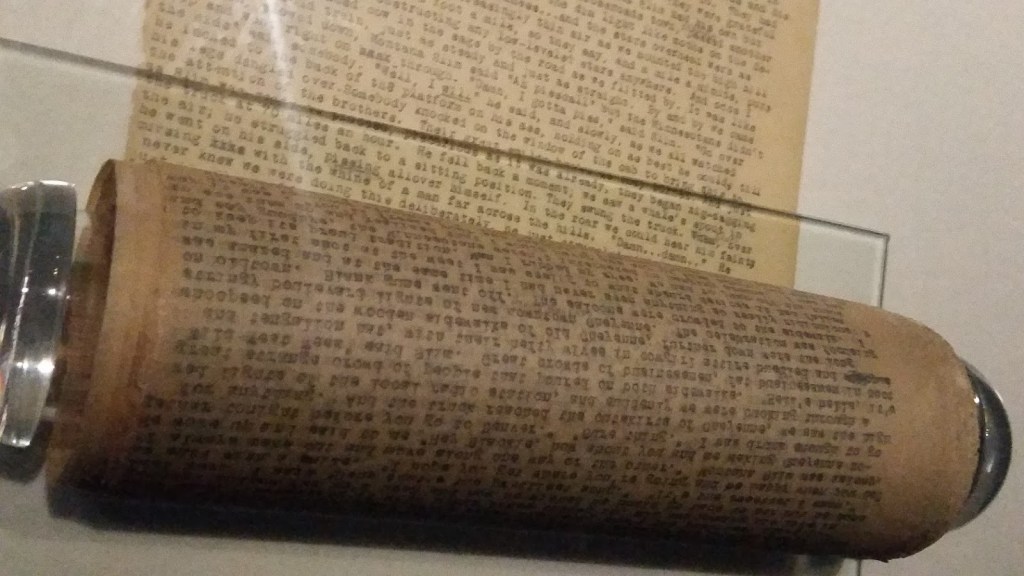
There is a myth that his novel On the Road was typed on one long free-form written scroll, without any editing. In fact, the experiences which inspired the novel were first written in a series of notebooks, and the early drafts were worked on for several years.

Dissatisfied with his progress, and impressed by a rambling 10 000-word missive from his pal (and muse) Neal Cassady, Kerouac then decided to write the novel as if it was a letter to a friend, with all the improvisational fluidity of jazz. The first draft was typed up in three weeks on a continuous 120-foot roll of tracing paper that he cut and taped together, single-spaced, and with no paragraph breaks.

In the following years, Kerouac continued to revise this manuscript, and the final published version was considerably shorter, with fictional names given to the real people he wrote about. In 2007, a slightly edited version of the original scroll was published, retaining the real names.

The original scroll was bought in 2001 for $2.43 million by American businessman Jim Irsay, and has been exhibited at various times in museums and libraries in the US, UK, Ireland, and France.

Paris’ comment is reminiscent of Truman Capote’s withering statement about Kerouac, and his supposed lack of editing: “That’s not writing. That’s typing”.