Madrid and Cervantes

RICHARD [of his upcoming trip to Madrid]: I think there’s a nice edition of Cervantes in it for you.
RORY: Gracias.

Miguel de Cervantes (1547-1616) was a Spanish writer regarded as the greatest writer in the Spanish language and one of the world’s greatest novelists. His best known work is Don Quixote, earlier discussed – it is sometimes thought of as the first novel, and is a literary classic.

Richard’s comment suggests that whenever he has to travel to a foreign city on business, he tries to buy Rory a book there by an author associated with that city – Cervantes lived and worked in Madrid for most of his life. We know Richard has already bought her something from Prague, quite possibly a book.

Rory simply replies, “Thank you” in Spanish.

(Richard’s trip to Madrid will be on the 12th of March, suggesting it is now Friday 2nd March. It could be Friday the 9th, but in that case it seems more likely that Richard would have simply said he left on Monday).

Houdini

RORY: Each of us have to follow a chick through its entire growth process. Everything has to be logged. Eating habits, sleeping habits.
LORELAI: Houdini habits.

Harry Houdini, born Erik Weisz (1874-1926) was an Austro-Hungarian born American illusionist and stunt performer, known for his sensational escape acts. An international star, Houdini was a headline act in vaudeville for most of his career, and for many years the highest-paid vaudeville performer.

Joan and Melissa Rivers

EMILY: Lorelai, you’re being morbid.
LORELAI: I’m being morbid? … Joan and Melissa Rivers here think I’m being morbid.

Joan Rivers, born Joan Molinsky (1933-2014) was an American comedian, actress, writer, producer, and television host. She was known for her controversial comedic persona, which was often viciously insulting towards celebrities and politicians. Actress Melissa Rivers (born Melissa Rosenberg in 1968) is her daughter, who worked alongside her mother on several occasions.

Joan and Melissa Rivers appeared as themselves in the 1994 television movie Tears and Laughter: The Joan and Melissa Rivers Story, which we learn in the next season is favourite viewing for a mocking Lorelai and Rory.

In the film Joan and Melissa recreate the anguish they went through after the suicide of Joan’s husband and Melissa’s father, Edgar Rosenberg – who had often been the butt of his wife’s jokes during her comedy routine, and whose death was also milked for humour by Joan.

Lorelai equates Richard and Emily’s glee at getting their hands on their dead acquaintance’s house at a good price as being in a similar vein of poor taste.

Joan Rivers was one of Amy Sherman-Palladino’s favourite comedians, and her later TV show, The Marvelous Mrs. Maisel, is about a female comedian in the 1950s who is partly inspired by Rivers.

Michael Douglas

LORELAI: Okay, so now the fact that I suggested painting Luke’s diner also means that I wanted to get him in bed. All of a sudden I’m trying to get any poor, unsuspecting person in bed with me. I’m like – I’m Michael Douglas!

Michael Douglas (born 1944) is a multi award-winning American actor and producer, with a long career in theatre, film, and television. He is married to Catherine Zeta-Jones, earlier discussed as one of the “pretty women” that Lorelai wonders if Luke’s ex-girlfriend Rachel resembles.

In 1993 it was widely reported that Michael Douglas was a sex addict and had entered rehab to be treated for his addiction (leading to much mockery). He refuted these claims, saying that he had gone into rehab to be treated for alcohol addiction, but the rumours persist – they were even published again in his 2012 biography by Marc Eliot, Michael Douglas: A Biography.

Diagnosed with cancer in 2010, Douglas told the public he had throat cancer caused by giving cunnilingus to many women, which did nothing to calm down the sex addiction rumours. In 2013 Douglas revealed he had actually had tongue cancer, and denied that there was any link with performing oral sex.

In January 2018, journalist Susan Braudy went public with claims that she had been sexually harassed by Michael Douglas in 1989 while working for him, including that he used inappropriate sexual language, and masturbated to orgasm in front of her. Douglas denies the allegations, although Braudy has shared corroborating evidence with the press. This has reignited the “sex addiction” rumours all over again.

Lorelai seems to have the common belief that people with “sex addiction” must be constantly trying to get random people to have intercourse with them, although such behaviour is probably rarer in real life than people think.

(Note: “Sex addiction” has not been accepted as a diagnosis by any mainstream psychological or psychiatric body, but there are support groups and treatment programs for it).

Vivien Leigh and Jessica Tandy

LORELAI: Streetcar Named Desire [explaining Stella the chicken’s name].
SOOKIE: Vivian Leigh or Jessica Tandy?
LORELAI: Hello – Tandy.
SOOKIE: Of course. Continue.

Vivien Leigh, born Vivian Hartley (1913-1967) was an English stage and film actress. She played Blanche DuBois in the 1949 London West End production of A Streetcar Named Desire, and was chosen to reprise the role in the 1951 film version of the play, which was directed by Elia Kazan, who had also directed the Broadway production. Leigh won Best Actress at the Academy Awards for her role, as well as from the BAFTA, The New York Film Critics Circle, and the Venice Film Festival. A Streetcar Named Desire was the #4 film of 1951, and won three other Academy Awards, while gaining high praise from critics.

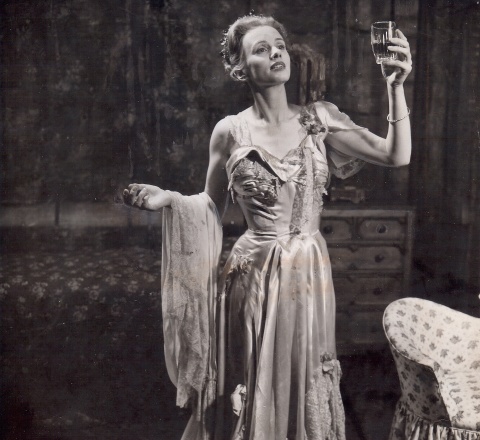
Jessica Tandy, born Jessie Tandy (1909-1994) [pictured] was a British stage and screen actress who appeared in over 100 theatre productions and had more than 60 roles in film and television; she moved to the US in 1940 and lived most of her life in Connecticut. Tandy played the lead role of Blanche DuBois in the original 1948 Broadway version of A Streetcar Named Desire, for which she won a Tony Award. The play itself, which first opened in New Haven, Connecticut was awarded The Pulitzer Prize for Drama, and Best Play from the New York Drama Critics Circle.

Lorelai’s response indicates that she is privileging Broadway over the West End, and perhaps the stage over the screen version. Possibly there is a little local pride involved too. I can’t see how Lorelai could judge the difference in their performances as the Broadway production was twenty years before she was born. It is notable that Sookie immediately agrees with her, maybe suggesting the Connecticut connection is well known and a source of some pride.

Wild Kingdom

LORELAI: Well, it started with Rory’s baby chick getting loose in the house and ended with Rory and I up at one in the morning looking for Morey and Babette’s new kitten, who we found asleep in the piano.
SOOKIE: Wow, that’s very Wild Kingdom of you.
LORELAI: Yeah. I’m like the Marlin Perkins of Stars Hollow.

Mutual of Omaha’s Wild Kingdom, often just called Wild Kingdom, is an American nature and wildlife show which first ran from 1963 to 1988. It was hosted by zoologist Marlin Perkins until he had to retire in 1985 due to ill health. Wild Kingdom helped raise ecological and environmental awareness, and its success led to other wildlife documentaries being aired on television, helping to pave the way for the Discovery Channel and Animal Planet. The show was revived on Animal Planet in 2002, and ran until 2011.

Marcel Marceau

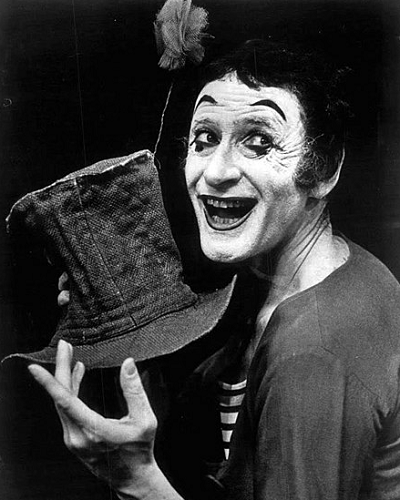
LORELAI: All day long, just chirps like a maniac at the top of her lungs. Now, nothing. Silence. Marcel Marceau chicken.

Marcel Marceau, born Marcel Mangel (1923-2007) was a French actor and mime artist, who called mime “the art of silence”. He was most famous for his stage persona of Bip the Clown, who wore a striped jersey and opera hat. Marceau performed for more than 60 years, winning multiple awards, and helping to inspire the dance style of Michael Jackson.

As a young man during World War II, Marceau worked with the French Resistance to save Jewish children from concentration camps, and also won awards for this humanitarian work.

Sinatra – the Capitol Years

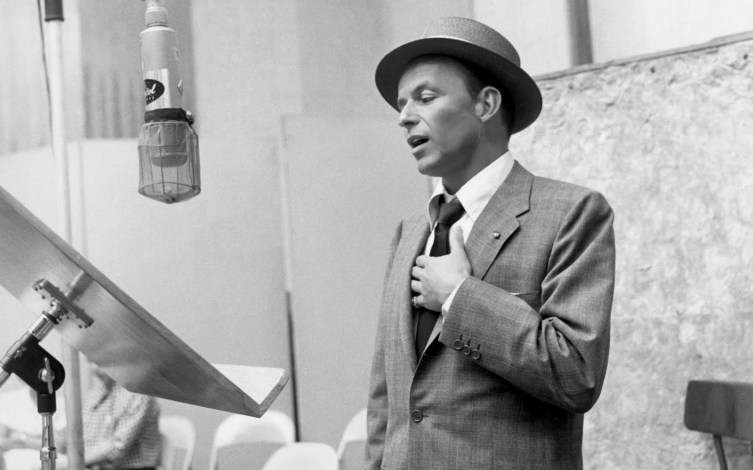
Lane has an entire section of her CD filing system taken up with Sinatra – the Capitol Years.

Francis “Frank” Sinatra (1915-1998) was an American singer, actor, and producer who was one of the most popular and influential musical artists of the twentieth century. Beginning his career in the big band era, he found success as a solo artist in the 1940s. One of the biggest performers at Las Vegas in the 1950s, he also forged a successful career as a Hollywood actor. Sinatra won eleven Grammy Awards, including the Legend and Lifetime Awards, and continued recording and touring until shortly before his death.

In 1953, Sinatra made a career revival by signing a contract with Capitol Records. Between 1954 and 1962 he brought out 22 albums which contain some of his best known songs, such as I Get a Kick Out of You, My Funny Valentine, They Can’t Take That Away From Me, I’ve Got You Under My Skin, Young at Heart, The Lady is a Tramp, and Come Fly With Me. These would all become concert standards for him.

Martha Stewart

LUKE: No stenciling!
LORELAI: Excuse me – do you even know what stenciling is?
LUKE: Does Martha Stewart do it?
LORELAI: Yes.
LUKE: (firmly) No stenciling.

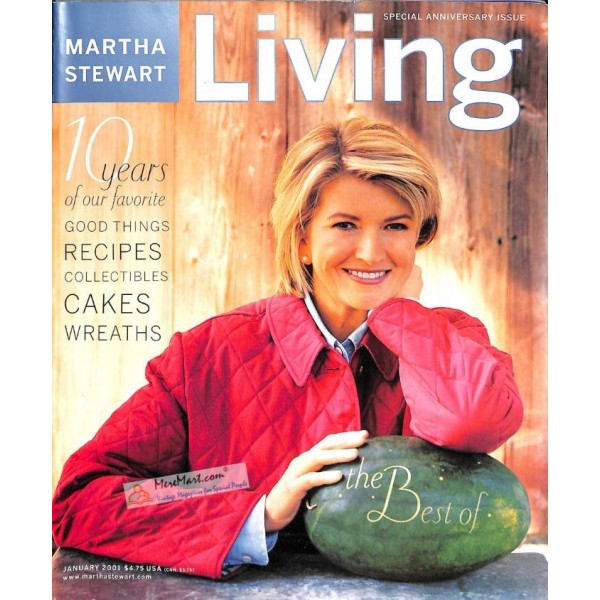
Martha Stewart (born Martha Kostyra in 1941) is an American businesswoman, writer, and television personality. The author of numerous cooking and craft books, her magazine Martha Stewart Living was founded in 1990, and her television show of the same name ran from 1993 to 2005. Both magazine and show focus on entertaining, lifestyle, food, crafts, decorating, and DIY. The model for the program’s TV studio was the Stewarts’ country house in Connecticut.

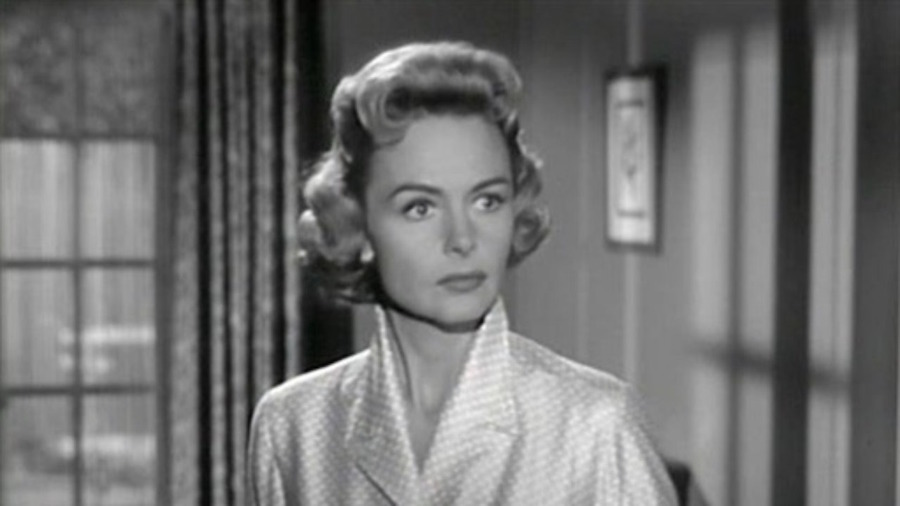
“Donna Reed wasn’t real”

DEAN: You do realize that Donna Reed wasn’t real, don’t you?
RORY: Yes, I know she wasn’t real, but she represented millions of women that were real and did have to dress like that and act like that.

Maybe Dean has an excuse for not knowing this, but how can Rory not know that Donna Reed was a real person? She’s been watching The Donna Reed Show for years, it seems, and would have seen the name Donna Reed in the credits, if nothing else.

Not only that, but the character of Donna Stone on The Donna Reed Show was strongly based on Donna Reed’s real personality and way of life, to the point where friends and family could instantly recognise the character as a TV version of the actress. Even the fictional character has a basis in fact.