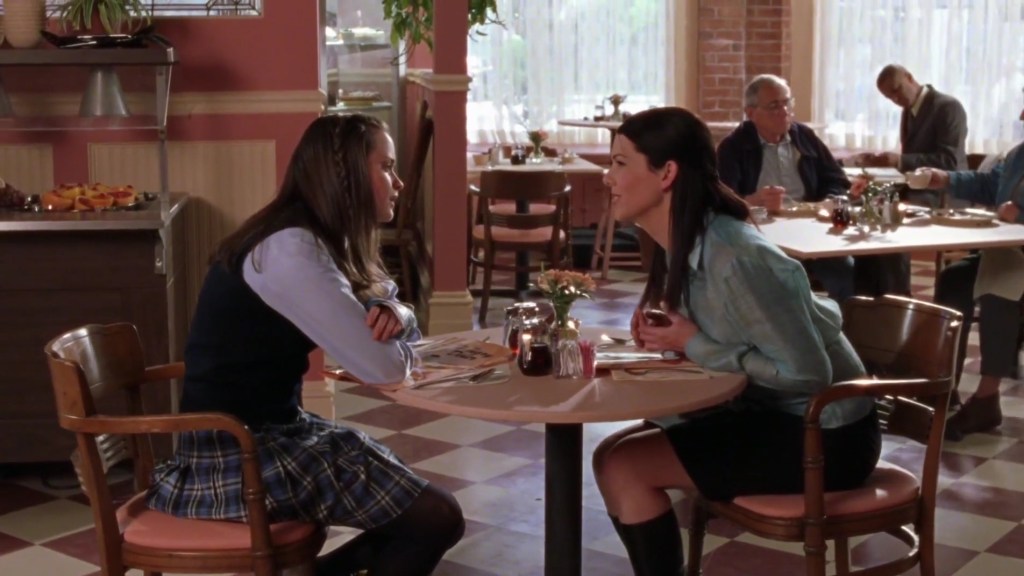
After his fight with Lorelai, and Jess going back to New York, Luke has closed the diner and gone fishing – something which has never happened before. Lorelai and Rory are forced to eat breakfast at a rival business we have not heard of until now called The Hungry Diner. The diner has a dark pink colour scheme, in contrast to the blue colour scheme of Luke’s Diner.
They are immediately miserable because The Hungry Diner makes people wait in line to be served, the menus have pictures on them, the coffee is undrinkable, and the coffee cups are tiny. It turns out that it is Michel’s regular breakfast place, because they make low-fat egg white omelettes (like the one Sookie refused to make him). Michel is reading a copy of GQ magazine, previously discussed.
Even though there was a big crowd of people waiting to get into Luke’s, The Hungry Diner is still mostly empty. Nobody else seems to have gone there, so either there is yet another place to have breakfast in Stars Hollow, or they all refused to eat out until Luke returns.
LORELAI: Oh, that must be Pauline Kael rising from the dead.
Pauline Kael (1919-2001), film critic who wrote forThe New Yorker magazine from 1968 to 1991. One of the most influential film critics of her era, she was known for her witty, biting, opinionated reviews which often ran counter to those of her contemporaries, and were highly personal.
Pauline Kael had only died the previous year to this episode, so Lorelai is saying that Pauline Kael must be rising from the dead to sharply critique the films that Taylor has offered her.
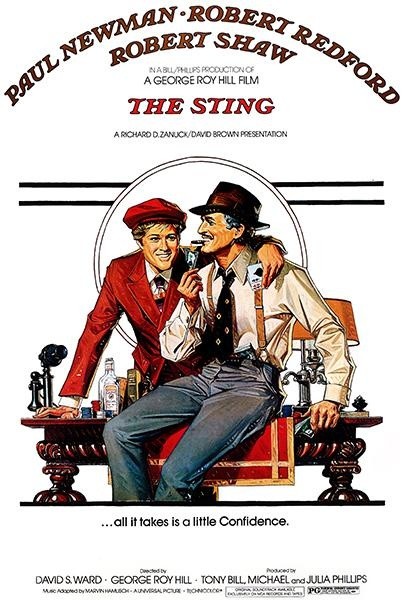
A 1973 caper film directed by George Roy Hill, involving two grifters, played by Paul Newman and Robert Redford, and their plan to con a mob boss, played by Robert Shaw. Set in 1936, it was inspired by real life cons perpetrated by brothers Fred and Charley Gondorff, as told in the 1940 non-fiction book, The Big Con by David Maurer. The Sting received rave reviews and was a box office smash, becoming the #2 film of the year. It won seven Academy Awards, including Best Picture and Best Director.
Rocky
A 1976 sports drama film, directed by John G. Avildsen, with screenplay by Sylvester Stallone, who also stars in the title role as Rocky Balboa. It’s a rags-to-to-riches tale of a working-class small-time boxer in the slums of Philadelphia who gets a shot at a world heavyweight championship. Made on a shoestring budget, it was a sleeper hit, becoming the #1 film of 1976. Critically acclaimed, it solidified Stallone’s career and led to him becoming a major movie star. It won three Academy Awards, including Best Picture, and is regarded as one of the greatest sports films ever made.
Crimes and Misdemeanours
A 1989 existential comedy-drama directed by Woody Allen, who also stars as Clifford Stern, a documentary filmmaker. The other main character is Judah Rosenthal, played by Martin Landau, who commits a very serious crime, and, stricken with guilt, turns to the religious teachings he had rejected. Cliff and Judah only meet once, at the end of the film, which has a philosophical message. A box-office flop, it was lauded by critics, and is regarded as one of Allen’s best films.
The Singing Detective
A 1986 BBC television serial drama, written by Dennis Potter, directed by Jon Amiel, and starring Michael Gambon. It is about a mystery writer, suffering writer’s block and ill in hospital, who enters a fantasy world involving his novel, The Singing Detective. Although ratings were modest, it was highly influential, and greatly praised in America, where it was later shown on PBS and won a Peabody Award. It is regarded as one of the greatest British TV programs ever made. Rory calls it a “mini-series”, but in fact it was six episodes – a normal run on British television.
Arthur
A 1981 comedy written and directed by Steve Gordon. It stars Dudley Moore as Arthur Bach, a drunken New York millionaire about to enter an arranged marriage with an heiress, but who falls for a working-class girl from Queens. The #4 film of 1981, Arthur was critically acclaimed, and considered one of the best films of the year. Its theme song, “Arthur’s Theme”, won an Academy Award for Best Original Song, and Sir John Gielgud won Best Supporting Actor for his role as Arthur’s valet.
Sophie’s Choice
A 1982 psychological drama film written and directed by Alan J. Pakula, adapted from the 1979 novel of the same name by William Styron. Set in 1947, it stars Meryl Streep as Sophie, a Polish immigrant with a dark secret from her past who shares a boarding house in Brooklyn with her lover, played by Kevin Kline, and a young writer, played by Peter MacNichol. It was a commercial and critical success, and Meryl Streep won the Academy Award for Best Actress for her role.
Cabin Boy
A 1994 fantasy comedy film directed by Adam Resnick and co-produced by Tim Burton. It stars comedian Chris Elliot, who co-wrote the screenplay with Resnick. Elliot’s character is a snobbish, unpleasant man who accidentally gets stuck aboard a boat out at sea, and goes on a fantastical voyage of self-discovery. The film received mixed reviews, and it is a matter of opinion whether it’s one of the worst films ever, an underrated work of comedic legend, or so bad that it’s good.
Desperately Seeking Susan
A 1985 comedy-drama film directed by Susan Seidelman, partly inspired by the 1974 French film Céline and Julie Go Boating. Set in New York City, it stars Rosanna Arquette as a bored housewife, who becomes involved with a bohemian drifter named Susan, played by Madonna in her first major screen role. The film was a commercial success, and received mostly positive reviews, with acclaim for both Arquette and Madonna. It’s considered one of the best films of the 1980s.
Fletch
A 1985 neo-noir comedy thriller film directed by Michael Ritchie, based on the 1974 novel Fletch by Gregory Mcdonald. It stars Chevy Chase as undercover reporter Irwin “Fletch” Fletcher who begins investigating a murder scheme that has unexpected links with the story he is working on. The film received positive reviews, and was a commercial success, performing very well on home media, and becoming a cult film.
Urban Cowboy
A 1980 romantic western film directed and co-written by James Bridges and Aaron Latham, adapted from an article of the same name Latham wrote for Esquire magazine. The story revolves around the love-hate relationship between a couple named Buford and Sissy, played by John Travolta and Debra Winger. Set in Pasadena, Texas, much of the action takes place in a honky-tonk bar playing country music. A critical and commercial success, the soundtrack was also a hit.
Lorelai and Rory managed to whittle their list of films down to a trim 75 possibilities!
LORELAI: Just as Marty, aka Eve Harrington, shows up trying to take Dean’s job, Taylor’s ladder mysteriously disappears …
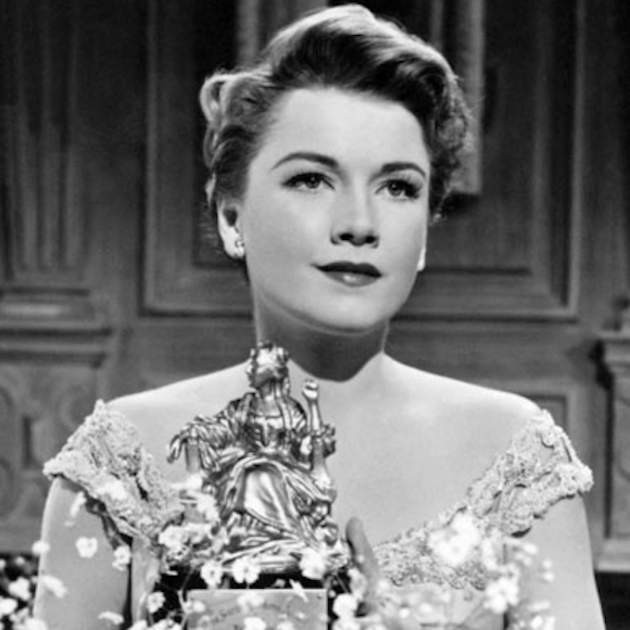
Eve Harrington [pictured] is the title character of the 1950 drama film All About Eve, directed by Joseph F. Mankiewicz, and produced by Daryl F. Zanuck. It is based on the 1946 short story, “The Wisdom of Eve” by Mary Orr, published in Cosmopolitan magazine.
The film stars Bette Davis as Margo Channing, a highly-respected but ageing Broadway star, and Anne Baxter as Eve Harrington, an ambitious young fan who insinuates herself into Margo’s life as her assistant, all the while scheming to take her place. The story was based on the real life experience of Austrian-British actress Elisabeth Bergner, who found herself in the same position as Margo Channing.
All About Eve was overwhelmingly praised by critics, and a box-office success, becoming the #9 film of 1950. It received a record 14 nominations at the Oscars and won six Academy Awards, including Best Picture, Best Director, and Best Screenplay. It is the only film to have ever received four female acting nominations at the Oscars – for Bancroft, Davis, Celeste Holm, and Thelma Ritter. It is regarded as one of the greatest films of all time.
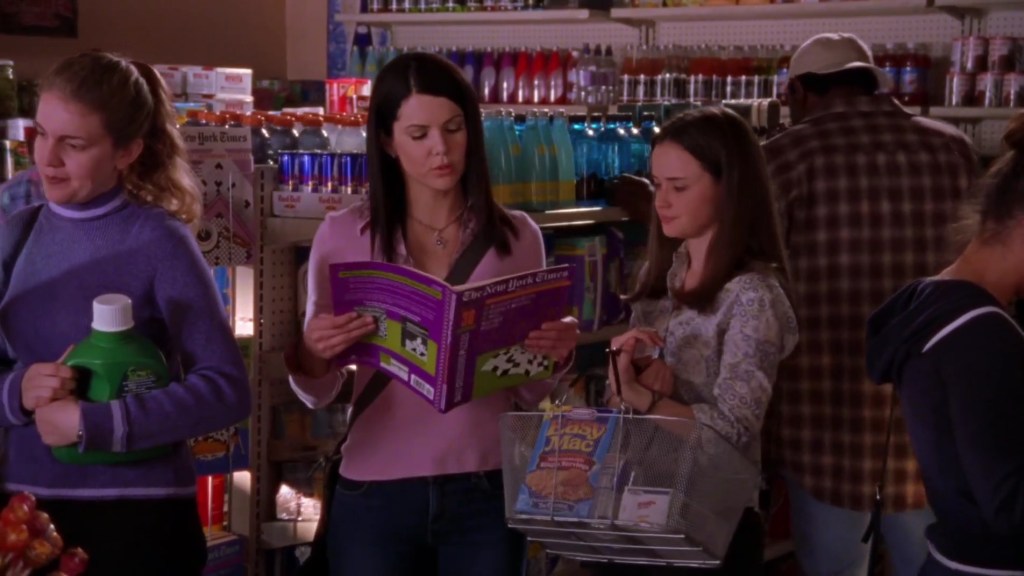
LORELAI: I hate crossword puzzles. They make me feel stupid.
An inside joke. Lauren Graham is very good at crossword puzzles, and would go through several a day on set while waiting for her turn.
Lorelai is looking at a New York Times puzzle book, and judging by the shopping basket Rory is carrying, they are having mac and cheese made from a packet, Twinkies, and a can of Red Bull for dinner that night.
MADELINE: Okay, well, first we go for the obvious – magazines.
LOUISE: You know, Teen, Young Miss, Seventeen.
MADELINE: Spin and Rolling Stone, especially to hit the guys.
RICHARD: I hear that Jane magazine also has a young, hip following.
Teen, a lifestyle magazine for teenage, published from 1954 to 2009. The magazine included articles on technology, celebrity role models, advice, quizzes, beauty and fashion, and personal essays by readers.
Young Miss, a magazine for girls which began in 1932 and ended in 2004; it was the oldest girl’s magazine in the US during its run. It began as two magazines in the 1930s called Compact (for older teens), and Calling All Girls (for younger girls). They merged into Young Miss in the 1960s, then the name changed to Young & Modern in the 1980s, before becoming Your Magazine in 2000, although known as YM in all these cases. For some reason, Louise refers to it by its 1960s title, possibly because Your Magazine might be confusing for viewers.
Seventeen, bimonthly teen magazine aimed at 13-19 year old females, published in New York City since 1944. At first providing girls with working-woman models, and information about self-development, it gained more focus on fashion and romance, but still attempts to instil self-confidence in girls. Sylvia Plath had her first short story published in Seventeen in 1950. The magazine’s cover that month featured a story on Chad Michael Murray, who had played Tristan on Gilmore Girls.
Spin, music magazine published from 1985 to 2012. It had a focus on college rock, grunge, indie rock, and hip-hop, providing an alternative to the more establishment Rolling Stone magazine. It provided extensive coverage of punk, new wave, world music, electronica, experimental jazz, and the underground scene, as well as non-mainstream cultural phenomena such as manga, monster trucks, Twin Peaks, the AIDS crisis, and outsider art. It continues to be published online.
Rolling Stone, monthly magazine focusing on music, politics, and popular culture, founded in San Francisco in 1967, but moving to New York City in 1977. From the beginning, it identified with the hippie counterculture, but distanced itself from the more radical elements and aimed for a more conventional journalism than the underground music press of the time. Hunter S. Thompson was one of its early journalists, and they covered major stories, such as the Patricia Hearst abduction, Charles Manson murders, and NASA space program.
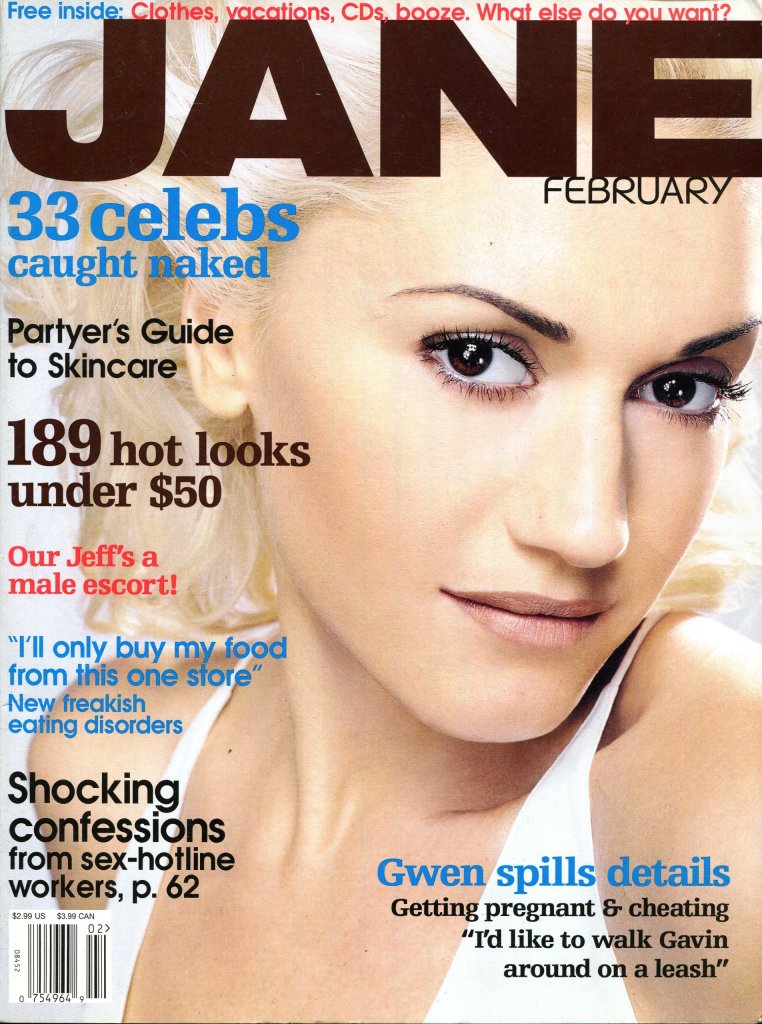
Jane, previously discussed. This is now the third mention of the magazine. Even Richard has heard of it, slightly unbelievably! Perhaps it was research for the Business Fair project.
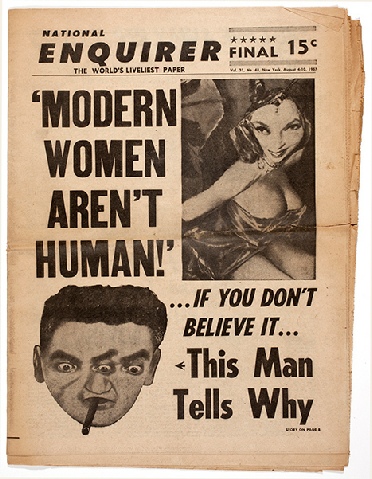
PARIS: [The Beats] believed in drugs, booze, and petty crime … That was not great writing. That was the National Enquirer of the fifties.
National Enquirer, tabloid newspaper founded in New York in 1926, known for its sensationalist reporting and flimsy journalistic ethics.
The National Enquirer already existed in the 1950s, so I’m not sure how The Beats are “the National Enquirer of the 1950s”. Surely the National Enquirer was the National Enquirer of the 1950s? For a supposedly smart character, Paris says some remarkably silly and ignorant things.
Lorelai is seen reading Jane magazine, previously discussed. She is reading the February 2002 issue, with Gwen Stefani on the cover. Madeline, who thought Lorelai was a “cool mom” also reads Jane, the trashy feminist magazine for wild girls. This month’s issue offers juicy celebrity gossip, scandalous confessions, cheap fashion tips, and skincare routines for the partied out.
When Jess arrives to clean the gutters, he is wearing a tee-shirt advertising this underground punk magazine on it. Punk Planet was a bi-monthly punk zine founded in Chicago in 1994 that examined punk subculture and a wide variety of progressive issues, such as feminism, media criticism, and labour issues. It tried to review all punk records it was sent, so that its review section was very long.
The final issue of Punk Planet was sent out in 2007, due to rising costs, and the website closed down two years later. However, its entire print run is still available to read online as an internet archive.
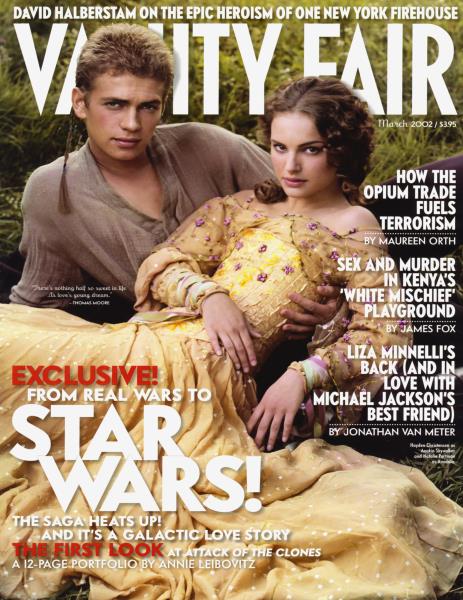
LORELAI: And one leg suddenly feels shorter than the other. RORY: This is gonna be the Vanity Fair paper cut incident all over again, isn’t it?
Vanity Fair is a monthly magazine of fashion, popular culture, and current affairs, published by Condé Nast. It was first a society magazine published from 1913 to 1936, after which it merged with Vogue. The title was revived in 1983.
The magazine’s title ultimately comes a location in John Bunyan’s 1678 allegorical religious novel, The Pilgrim’s Progress. In the story, Vanity Fair is a decadent city built by Beelzebub where every worldly pleasure that a person could want, delight in, and lust after is sold daily. It appears attractive, but in reality is a dreadful place. It was used as a title of a satirical novel by William Makepeace Thackeray in 1848.



 The Annotated Gilmore Girls