Mazatlán

RORY: Where does Dad have a misspelled tattoo?
LORELAI: Ah, ah, another story for another time, possibly before your first trip to Mazatlán.

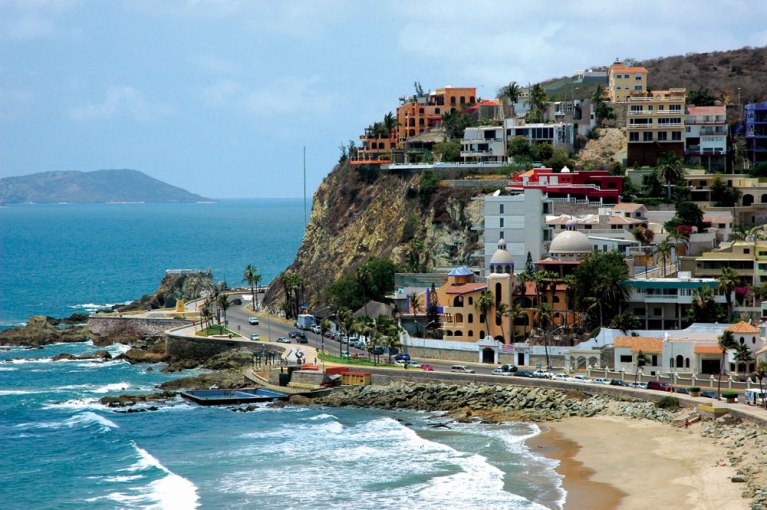
Mazatlán is a city in Mexico, located across from the tip of the Baja California peninsula. It is a popular tourist destination, famous for its beach resorts. It’s a popular destination for American students to go on spring break (less so now than formerly). Lorelai is saying that once Rory is a young adult and preparing to make her own drunken mistakes, she will be ready to hear about her father’s tattoo.

Armageddon

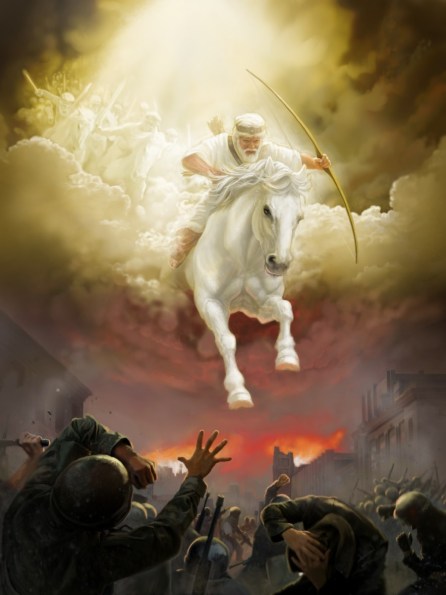
LORELAI: Chris, this [sex] is the next to last thing I thought would ever happen tonight. The last thing being a holy saint guy riding down on a flaming chariot from heaven to announce Armageddon.

In the book of Revelations in the Bible, Armageddon is mentioned as the location of a battle at the end of time. Literally, Armageddon refers to an actual place – Tel Megiddo, an ancient city in northern Israel where several Old Testament battles were fought. It’s now in a national park, and has a gift shop attached.

The Bible verse is usually (not always) interpreted symbolically, so that Armageddon is popularly taken to mean any battle between believers and unbelievers at the end of the world, or even more vaguely, any end of times situation involving a clash between good and evil.

Lorelai’s idea of a holy saint riding down in a flaming chariot would thus be the first sign of God’s army arriving from Heaven to announce the battle. The holy prophet Elijah is said to have been taken up to heaven in a chariot of fire, so that might be who Lorelai is thinking of.

The Bahamas

RICHARD: Well Straub, how is retirement treating you?
EMILY: Yes, do tell us about the Bahamas.
STRAUB: You can get an entire island there for the cost of a decent house here.

The Bahamas (officially the Commonwealth of The Bahamas) is a sovereign state made up of an archipelago of over 700 islands, cays, and islets in the Atlantic Ocean. Under British control for most of its modern history, it has been independent since 1973, but, like other Commonwealth nations, retains the British monarch as head of state.

The Bahamas is a popular destination for Americans to retire to: it is English-speaking, has a warm climate with beautiful beaches, and only 40 minutes by plane from Florida. Residents don’t pay any tax either, which is another drawcard, and to become a permanent resident, all you have to do is buy a property worth $500 000 or more.

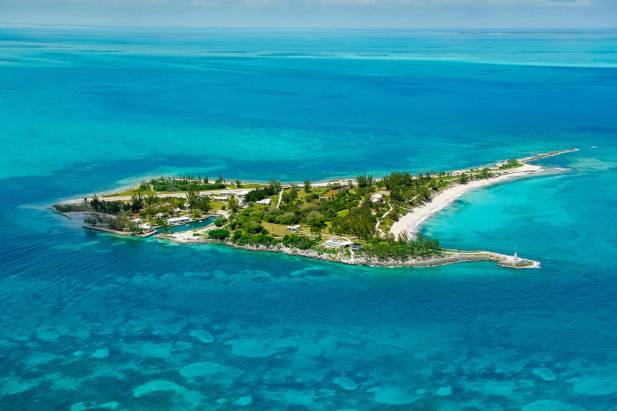
It is possible to buy a very small island in The Bahamas today for as little as $500 000 – the price of a nice house in Hartford. I suspect for Straub, a “decent” house in Hartford would be around the 1 million mark in today’s money, and for a million dollars, you could get a rather nice little islet in The Bahamas.

That Straub and Francine live in The Bahamas provides a convenient excuse as to why they haven’t been any part of Rory’s life. (Emily asks them what The Bahamas is like, but in a later season we discover she and Richard spent the previous Christmas in The Bahamas, presumably so that Richard could relax after his angina attack).
Paraguay

CHRISTOPHER: What kind of international cuisine [is served at Al’s Pancake World]?
RORY: He kind of hops around. Last month it was his salute to Paraguay.

Paraguay is a land-locked country in central South America, bordered by Argentina, Brazil, and Bolivia. Its traditional cuisine tends to be simple, hearty, and based on meat and cornmeal.

Some of the traditional dishes Al might have served during his salute to Paraguay: milanesa, (fried crumbed meat cutlets), chipa guazu (a savoury cake made from cornmeal, eggs, onions, and cheese), parillada (a meat dish cooked over banana leaves and hot coals), or vori vori (a thick yellow soup filled with little dumplings made from cornmeal) [pictured].

Berkeley

DEAN: So do you live in the area?
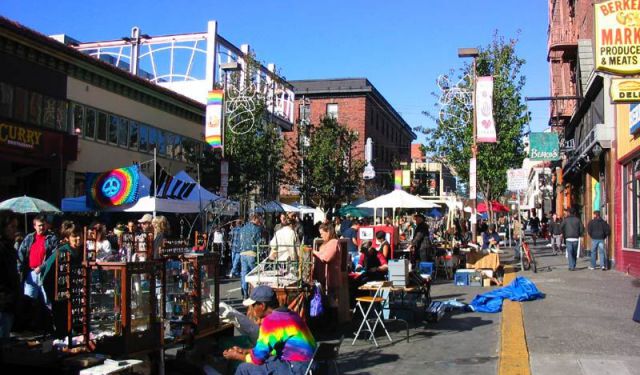
CHRISTOPHER: No, I had some time so I rode my bike out from Berkeley.

Berkeley is a city on the shores of San Francisco Bay. It’s known for being socially liberal, and famous as the location of the oldest campus of the University of California. It’s the kind of relaxed, student-y, hipster-ish place where Christopher could easily re-invent (or re-market) himself, and the rents weren’t as high in the early 2000s as they are now.

Rincon

CHRISTOPHER: [sighs] Why does your dad have more faith in me than you?
LORELAI: My father hit his head surfing Rincon a couple of years ago. His judgement’s a little off.

Rincon Beach is a surf spot in California, between Malibu and Santa Barbara, and closer to the latter. It’s one of the most famous surf beaches in California, and is well known around the world. It hosts the Rincon Classic surf event each January, and is mentioned in The Beach Boys’ song Surfing Safari.

Obviously Lorelai is joking – surfing Rincon is one of the last things Richard Gilmore would ever do. The real reason for his misplaced faith in Christopher is explained later in the episode.

Madrid and Cervantes

RICHARD [of his upcoming trip to Madrid]: I think there’s a nice edition of Cervantes in it for you.
RORY: Gracias.

Miguel de Cervantes (1547-1616) was a Spanish writer regarded as the greatest writer in the Spanish language and one of the world’s greatest novelists. His best known work is Don Quixote, earlier discussed – it is sometimes thought of as the first novel, and is a literary classic.

Richard’s comment suggests that whenever he has to travel to a foreign city on business, he tries to buy Rory a book there by an author associated with that city – Cervantes lived and worked in Madrid for most of his life. We know Richard has already bought her something from Prague, quite possibly a book.

Rory simply replies, “Thank you” in Spanish.

(Richard’s trip to Madrid will be on the 12th of March, suggesting it is now Friday 2nd March. It could be Friday the 9th, but in that case it seems more likely that Richard would have simply said he left on Monday).

The Rental in Martha’s Vineyard

LORELAI: What’s going on?
RICHARD: Oh, your mother and I have just secured a place on Martha’s Vineyard.

Richard and Emily are pleased at the price they got their summer rental on Martha’s Vineyard for, due to the unexpected death of the previous tenant. We don’t know what kind of house it is, except that it is said to be a fine property with a library, and larger grounds than they had before, suggesting something pretty fancy.

Today you could rent a very nice house on Martha’s Vineyard for around $5000 a week in the summer, but a luxury property might be $10 000-$15 000 a week, and one on the waterfront could easily cost around $40 000 a week.

Village Vanguard

BABETTE: Well, see, Morey just got a call to play a gig at the Village Vanguard tonight so we got to go to New York.

Village Vanguard is a jazz club on Seventh Avenue South in Greenwich Village. It opened in 1935 and at first featured many forms of music, such as folk and beat poetry. It became focused solely on jazz in 1957. Some of the big stars who have played at the Village Vanguard include Miles Davis, Thelonious Monk, Charles Mingus, and Sonny Rollins.

It’s an internationally renowned club, so it’s a demonstration of Morey’s recognised talent that he was chosen to play here (even though it seems a bit last minute).

Paris

While suggesting that Richard and Emily go to Paris instead of Martha’s Vineyard, Lorelai and Rory mention some of the things associated with this city.

Impressionism: A 19th century art movement associated with small, thin brushstrokes; an emphasis on light and movement; unusual angles; and ordinary subject matters. The movement arose in Paris during the 1870s and 1880s with a number of independent art exhibitions. Famous impressionist artists include Claude Monet, Pierre-Auguste Renoir, and Camille Pissarro.

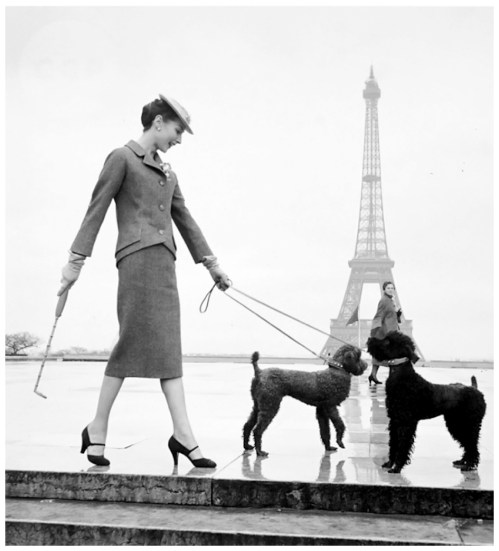
Poodles: A stereotypical image of Paris is an elegant middle-class woman taking her poodle for a walk. Although poodles were very fashionable in France some decades ago, they have fallen out of favour and are no longer chic. (The photo used was taken by American photographer Louise Dahl-Wolfe, and first published in 1940).

Crème brûlée: A rich, creamy custard dessert with a hard caramel topping. It originated in Spain, and was first given its French name (which means “burnt cream”) in the 17th century. It wasn’t common until the 1980s, and was popularised by Italian chef Sirio Maccioni at his New York restaurant Le Cirque. It isn’t particularly Parisian, although you can certainly eat it while in Paris.

It’s in keeping with their lack of travel experience that Lorelai’s and Rory’s visions of Paris are distinctly dated and second-hand.