Jess Leaves Town

BABETTE: Last night, not long after the accident happened, Luke walked him straight to the bus station, stuck the kid on a bus, sent him home to his mom.

MISS PATTY: I can’t believe Luke would send him off like that.

BABETTE: Well, I heard the kid wanted to go. I don’t know. All I know is that Jess is gone.

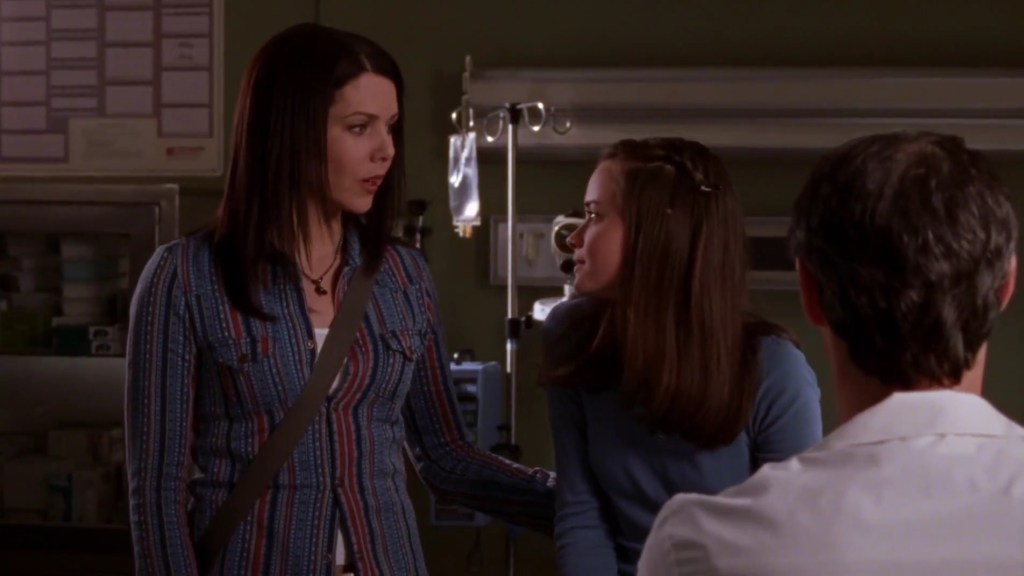
While watching the film with Lane and her parents, Rory overhears Babette and Miss Patty gossiping, and in this way learns that Jess left town the previous night, after the accident he had driving Rory’s car. Luke walked him straight to the bus station and sent him home to Liz.

We never got to see the conversation between Luke and Jess, so we have no idea why Luke did that, or in what mood he did it. Babette heard that Jess actually asked to leave, rather than Luke throwing him out. Did Luke take Lorelai’s advice and get rid of Jess, or did he regretfully give way to Jess’ request that he go home? We don’t know for sure, but town gossip hints the latter is more likely than the former.

In real life, the last bus to New York City leaves Hartford at 10.30 pm, so Jess would have left Stars Hollow around 11.10 pm, and got to Manhattan some time after 1 am. That might suggest the accident took place somewhere between 8.30 pm and 9.30 pm.

After all the town’s complaints about Jess, Babette and Miss Patty seem rather regretful that Jess has gone, saying that they don’t know what they will do for entertainment now (and Jess stole from Babette and pestered Miss Patty’s dance students, so they have personal reasons to wish him gone). It suggests that the town’s exaggerated hatred of Jess was mostly motivated by a desire to cause drama so they’d have something to focus on. Like old Louie Danes, Jess was a convenient sinkhole where they could throw all their negativity.

Lorelai keeps her face rigidly glued to the screen, trying not to betray anything by her expression, but she knows this can’t be good news for her friendship with Luke. Rory looks hurt and unhappy, and turns away from her mother, as if needing privacy for her grief (or possibly as if she is beginning to blame Lorelai for Jess’ departure). It feels as if Jess being gone will cause just as many issues for the Gilmore girls as Jess being there …

Christopher Arrives

Lorelai wakes up to find that after their phone call, Christopher drove to Stars Hollow from Boston and let himself in, falling asleep in a chair next to her. Lorelai wonders if driving interstate in the middle of the night is okay with Sherry, but Christopher deflects this by saying that “Rory comes first”. (Lorelai has no hesitation in throwing herself into the arms of another’s woman’s boyfriend).

Hm, maybe Lorelai should have asked a few more questions! She doesn’t, because she’s so relieved to have someone there to share the parenting with in an emergency, for a change. She even calls Christopher a “superhero”, just for showing up. Lorelai’s excitement over this small effort is a sad indictment of how rock bottom her expectations of Christopher are (and with justification).

In their shared relief that Rory is okay, and mutual hatred of Jess, Lorelai and Christopher easily make up their fight from “It Should’ve Been Lorelai”. Lorelai is very forgiving of Christopher – probably too forgiving.

The Contessa and the House Wench with the Talking Mice

LORELAI: And over here you have a tiny but annoying bell in case there’s something here that you need but you don’t have and you want to summon the common but lovely house wench who will promptly leave her talking mice and come to fetch the Contessa whatever she may require.

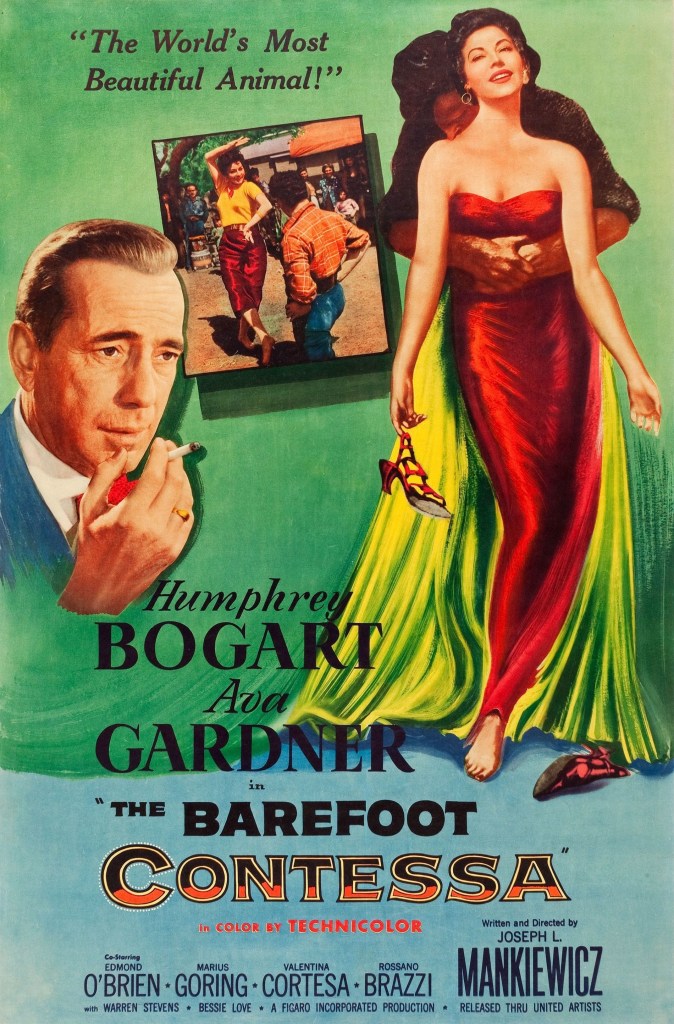
Lorelai compares Rory to The Barefoot Contessa, a 1954 drama film written and directed by Joseph F. Mankiewicz about the life and loves of a Spanish sex symbol named Maria Vargas, who is known as “the Barefoot Contessa”. Ava Gardner plays the title role as the glamorous Contessa. The film received mixed reviews, but made a big impact on popular culture.

Presumably Lorelai means that Rory, being in bed, has bare feet, yet will be waited on hand and foot like a great lady. Interestingly, the film has a major plot around infidelity and a love triangle, like that between Rory, Dean, and Jess. Like so many of these references, it ends in violence.

Lorelai compares herself to Cinderella, previously discussed. In the 1950 film, Cinderella is friends with a number of talking mice. Lorelai is saying that she is Rory’s humble servant and will get her anything she needs, just as Cinderella slaved away in the kitchen.

Lorelai behaves absolutely absurdly towards Rory. She has the most minor of injuries, and yet Lorelai acts as if she has two broken legs, at the very least. She not only gives Rory a bell to call her with, as if Rory is crippled, but actually sleeps in Rory’s room.

Why? Is she worried Rory will die in the night without her there, or does she think Rory needs help to go to the toilet with a cast on her wrist? It’s a callback to the years mother and daughter spent sharing a bed, their boundaries completely merged.

It’s almost as if Lorelai thinks she can justify her over-the-top demonisation of Jess by acting as if he has done terrible injury to Rory. She is also trying to make up for her failure to “protect” Rory from Jess by overcompensating now, when it is too late.

Lorelai’s instinct is always to smother Rory when she feels their relationship is threatened; whether this is good for Rory or not is never questioned. Her fussing over a barely injured Rory seems like confirmation that Jess was right – Rory is not cut out for the tough life of a foreign correspondent.

(Note that Rory has a Powerpuff Girls glass next to the bed, a callback to when Lorelai said they were going to buy some. Although they didn’t buy them that day, it’s confirmed they did eventually make the purchase).

Rory’s CDs

Stan Frerberg

Stan Frerbeg (1926-2015), actor, comedian, musician, puppeteer, and radio personality. He was one of the talents recruited by Capitol Records in 1951 for their spoken word division, doing satirical recordings about popular culture. He also did musical parodies of popular songs.

Rory’s CD might be The Stan Frerberg Show: Direct from the Famous CBS Broadcasts, which was released as a four-disc box set on CD in 1997, published by Smithsonian Historical Performances. The other possibility is that it is The United States of America Volume 2, The Middle Years, comedy sketches based on figures from American history, released on CD by Rhino in 1996.

Ash

Ash, Northern Irish rock band formed in 1989 by vocalist and guitarist Tim Wheeler, bassist Mark Hamilton, and drummer Rick MacMurray. Their first full-length album was released in 1996, and titled 1977 [pictured]; it is regarded by NME as one of the greatest albums of all time.

Their song “Girl from Mars” from the album has already been used in Gilmore Girls, appearing at the end of the episode “Nick and Nora, Sid and Nancy” to illuminate Jess’ attraction to Rory. It’s a callback to the moment that Rory and Jess first made a real connection with each other.

Sinéad O’Connor

Sinéad O’Connor, now named Shuhada Sadaqat (born 1966), Irish singer-songwriter. Her 1987 debut album, The Lion and the Cobra, charted internationally, while her 1990 second album, I Do Not Want What I Haven’t Got, received glowing reviews and was her most successful album – the lead single, “Nothing Compares 2 U” (written by Prince) was the #1 song of 1990.

O’Connor has released ten studio albums, many of them going gold in the UK or US. Her most most recent album at this point was Faith and Courage, released in 2000. It received positive reviews and was a commercial success.

Jess and Luke on the Bridge

[Jess is sitting on the bridge as Luke walks up to him]

JESS: I made sure she was okay.

LUKE: I know you did.

The bridge becomes a place of refuge for Jess, who might be a “little punk” to Lorelai, but is also a frightened and worried boy. Luke once pushed Jess off the bridge in a fit of frustration, now he comes to bring Jess his own brand of silent comfort.

Note that Luke and Jess are once again dressed alike, both in khaki jackets, and their seating postures mirror each other, so that each sits with their face turned away from the other. Emotions are difficult for these two to handle, let alone discuss. We never get to hear their conversation, as if they need privacy even from the audience.

Lorelai Yells at Luke

LUKE: What about Jess – is he hurt?

LORELAI: No, Luke – Jess did the hurting. That little punk nephew of yours almost killed my kid tonight.

Lorelai confronts Luke about the accident Jess had in Rory’s car. It’s normal for Lorelai to be unreasonable and a bit childish when she’s angry (those Gilmore tantrums), but this time she really goes over the top. She’s had months of seething resentment towards Jess, and by extension, towards Luke, that has been bubbling away, and now it finally boils over in one explosive scene.

From beginning to end, Lorelai’s anger towards Luke is unfair and completely one-sided. She never even considers that Luke might be worried when he hears Jess has been in a car accident – immediately exaggerating by saying that Jess “almost killed” Rory, when all she had was a minor hairline fracture. Lorelai is obviously thinking of how things could been so much worse, but painting Jess as some sort of deranged killer is over the top.

Lorelai makes sure to tell Luke that Rory is “having X-rays and tests”, even though she’s only having them because Lorelai demanded them, and they’re completely unnecessary. She puts all the blame on Luke for taking Jess in, saying that his obligation wasn’t to his family, but to her and Rory and all of Stars Hollow.

Lorelai thinks Gilmores are the centre of the universe, but this is outrageous even for her, that Luke should have abandoned his own nephew in order to put Lorelai and Rory first. (It’s definitely a sign that Lorelai wants to be #1 in Luke’s heart, but she’s too angry to even see the implications of what she said).

This is the worst fight Lorelai and Luke have had so far, and it’s the culmination of their argument in “Nick and Nora, Sid and Nancy”. Their disagreements about Jess, and Lorelai’s mistrust of him, could only ever be papered over. When the crunch came, all of Lorelai’s true feelings came out, and they are extremely hurtful to Luke.

At the end, when Lorelai is left alone and finally lets her tears out as she watches Rory’s wrecked car get towed, her first instinct is to reach for her phone and call Christopher. Much of Lorelai’s exaggerated fear about Rory is based on the fact that Lorelai was in the car when Christopher crashed his Porsche as a teenager. Now she sees it from a parents’ point of view, and realises how terrifying it is to hear your child call you from hospital.

To a certain extent, Jess is paying for Christopher’s sins, and even more unfairly, Lorelai goes running to Christopher when Rory ends up in the same situation Lorelai did as a teenager.

Jess

RORY: Jess made sure that he called the ambulance and that I was okay before he even talked to the police and – .

This lets the viewer know why Jess isn’t with Rory at the hospital. He phoned for an ambulance and made sure Rory was safe before he had to talk to the police about his role in the accident, since he was the driver at the time. After that, he could have joined Rory at the hospital, but is probably (rightly) scared of how Lorelai is going to react to the news.

Terms of Endearment

LORELAI: Hey, do you remember in Terms of Endearment, that scene where Shirley MacLaine is in the hospital and freaks out because they won’t give her daughter a shot? She got that from me and she toned it down a little.

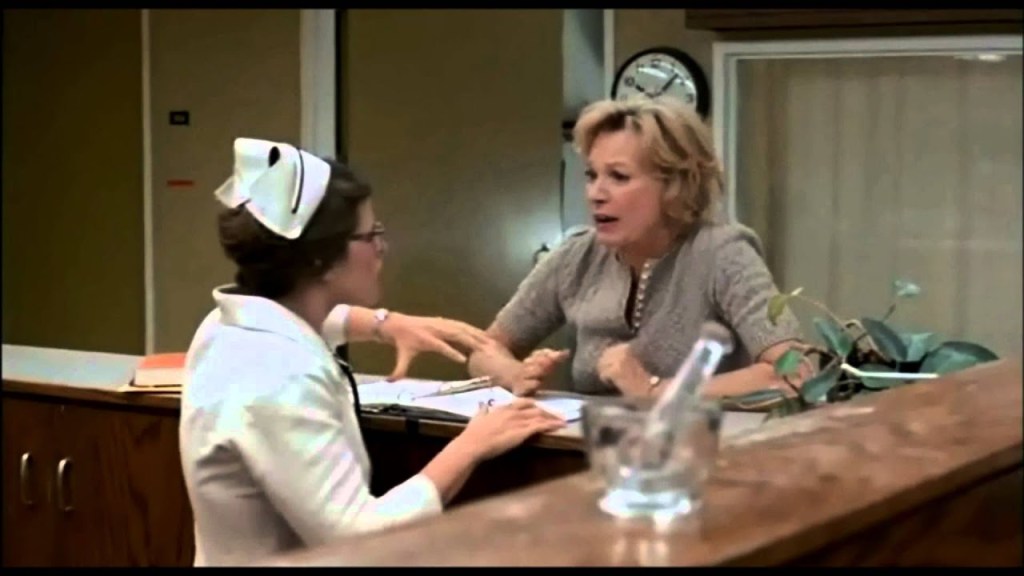
Terms of Endearment, a 1983 family comedy-drama film directed, written and produced by James L. Brooks, and adapted from the 1975 novel of the same name by Larry McMurty. The film covers thirty years of the relationship between Aurora Greenway, played by Shirley MacLaine, and her daughter Emma, played by Debra Winger.

Terms of Endearment received critical acclaim and was the #2 film of 1983. It received five Academy Awards, including Best Picture, Best Director, and a Best Actress Award for Shirley MacLaine.

In the film, Aurora and Emma have a difficult but very close relationship. Emma is diagnosed with a terminal illness, and Aurora stays by Emma’s side throughout her treatment and hospitalisation, proving to be a fierce advocate on her behalf. There is a memorable scene where Aurora screams at a nurse, insisting that her daughter receive a shot (of pain relief) immediately when she felt they were being too slow to administer it.

Note that Lorelai does the same thing Emily did at the hospital when Richard was admitted, even using a movie reference to get her point across.

Car Song

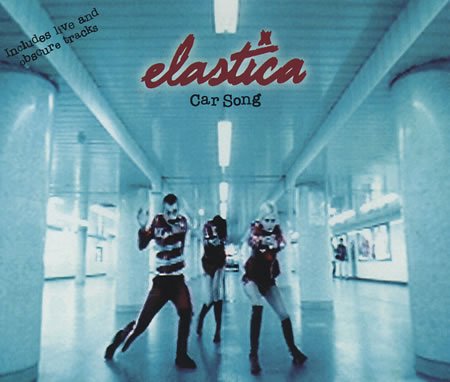
This song plays while Jess and Rory are in the car, driving back from buying ice cream cones (because Luke’s only serves ice cream in bowls, which doesn’t count).

“Car Song” is a 1995 song by Britpop group Elastica, written by Justine Frischmann, the band’s lead singer. From their self-titled debut album, it was only released as a single in North America and Australia in 1996, and went to #106 in Australia, while it charted on the US Alternative Songs Chart at at #33, and #14 on the Canadian Alternative Rock Chart. The song was well-reviewed, described as sexy and charming.

The song is about having sex in a car, to make it clear where Jess and Rory’s minds are going, and the subtext of them being in a car together. Although there’s no suggestion that they actually had sex in the car offscreen, or even kissed, their car trip is a symbolic lovemaking experience as it is so emotionally intimate. Compare it to the first time Rory was in the car with Dean, when she couldn’t even tell him how she felt, after dating for months.

Here we go again
I’m riding in your car
Let me count to ten
‘Cause it’s gone way too far
Up my street to nowhere
You know what detours are
Here we go again
And it’s gone way too far

The lyrics are a good description of what’s going on – they’ve taken a detour on a street to nowhere (driving aimlessly), and going around in circles (“here we go again”). And although they’ve gone nowhere much, they have “gone way too far” – because they should never have got in the car to begin with.

“As you wish”

JESS: Of course, I could turn right and then we’d just be driving around in circles for awhile.

RORY: Turn right.

JESS: As you wish.

Jess quotes from The Princess Bride, a 1987 fantasy romance film directed by Rob Reiner, adapated from the 1973 novel of the same name by William Goldman. It tells the story of a farmhand named Westley, played by Cary Elwes, accompanied by companions met along the way, who must rescue his true love, Princess Buttercup, played by Robin Wright, from marriage to the odious Prince Humperdinck, played by Chris Sarandon.

The film has a framing device, which is that the story is a book being read to a little boy sick in bed, played by Fred Savage, by his grandfather, played by Peter Falk. It’s been described as a postmodern fairy tale, and the satirical interjections by the grandfather, and the dialogue between he and and the boy, provide many humorous moments.

Despite good reviews, The Princess Bride was only a modest success at the box office, but became a cult classic after its release on home video. Eminently quotable, the film is considered both one of the funniest, and one of the most romantic films of all time.

In the film, Princess Buttercup begins by ordering Westley around a lot, to which he always responds, “As you wish”, before complying. The narration from the grandfather says, “That day, she was amazed to discover that when he was saying As you wish, what he meant was, I love you. And even more amazing was the day she realized she truly loved him back”.

Jess is, very clearly and boldly, telling Rory that he loves her, and believes that she loves him back, even if she doesn’t realise it yet.