Rachel

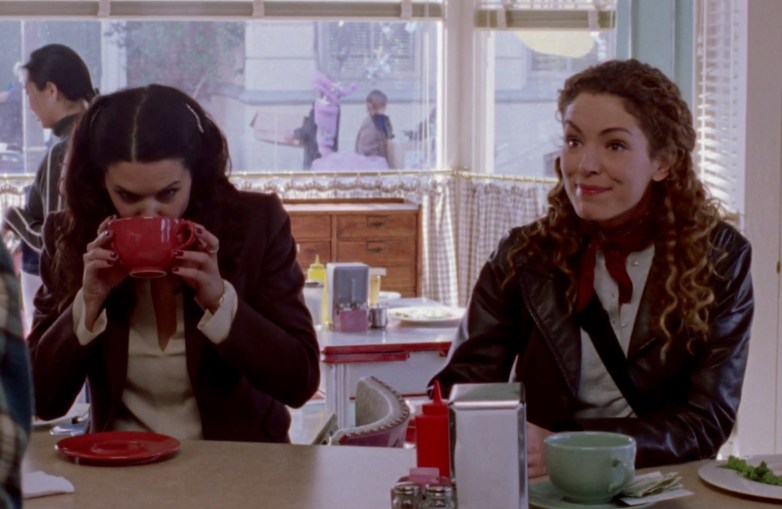
Right in the middle of a festival devoted to love, and lovers coming to find each other, Luke’s ex-girlfriend Rachel (Lisa Ann Hadley) unexpectedly appears on a whim, as if the stars over Stars Hollow were leading her back. It’s really quite a coincidence, as Lorelai only recently found out that Rachel existed, and then here she is.

Rachel suddenly turning up is another falling star on Lorelai’s romantic hopes. Any thought that she could find comfort with Luke is now gone, as his threateningly cool ex-girlfriend is back in his life. Lorelai is running out of options for an easy fix to her woes.

It’s a matter of opinion whether Rachel is “an Elle MacPherson kind of pretty” or not. She certainly looks more like Elle MacPherson than Catherine Zeta-Jones or Michelle Pfeiffer, but to me she’s really more of a “Lorelai Gilmore kind of pretty”.

“Hell hath no fury”

PARIS: Thank you for the “where to make out” list, I just need to get my books.
LOUISE: Hell hath no fury.

Louise is referencing the very well known phrase, “Hell hath no fury like a woman scorned”. It comes from the 1697 tragedy The Mourning Bride by English playwright William Congreve. The exact quote is: “Heav’n has no Rage, like Love to Hatred turn’d/Nor Hell a Fury, like a Woman scorn’d”.

Louise is saying (accurately) that Paris is only angry because Tristan prefers another girl to her.

Cleopatra, Queen of Denial

Rory calls Lorelai “Cleopatra, Queen of Denial” when she refuses to admit that she’s in a bad mood because she misses Max, who she broke up with a couple of months ago. Perhaps her night with Christopher in the previous episode only made it clearer how superior Max is.

Rory’s referencing the 1993 country song Cleopatra, Queen of Denial by Pam Tillis, an obvious pun on Cleopatra, Queen of the Nile. It’s from her album Homeward Looking Angel, and got to #11 on the country music charts. It helped popularise the phrase “queen of denial” to mean a woman who deals with her problems by denying they exist. It seems to have originated with Alcoholics Anonymous and the Twelve Step Program, which became mainstream in the early 1990s.

Christopher Leaves

When Christopher prepares to ride back to California on his bike, he makes the manipulative and irresponsible move to have Rory re-state his marriage proposal to Lorelai. This only serves to give Rory more false hope, and to place the blame for him not being in her life on Lorelai. Rory also asks him to phone more often in the future, further confirmation that the “weekly phone call” from Christopher was much less often in reality.

I’m not sure how Christopher can afford to drive home when his credit card is maxed out – the trip across America to California would take several days at least, and cost a lot in fuel, food, and accommodation. Maybe Richard and Emily gave him money, or his own parents.

This episode, and the previous one, make it abundantly clear that Christopher is a creep and a wastrel, and it’s a testament to David Sutcliffe’s acting that he also imbues him with such charm and boyish appeal. You can see that Lorelai and Christopher have great chemistry, and genuinely care for each other, but it’s not a relationship that could ever last the distance.

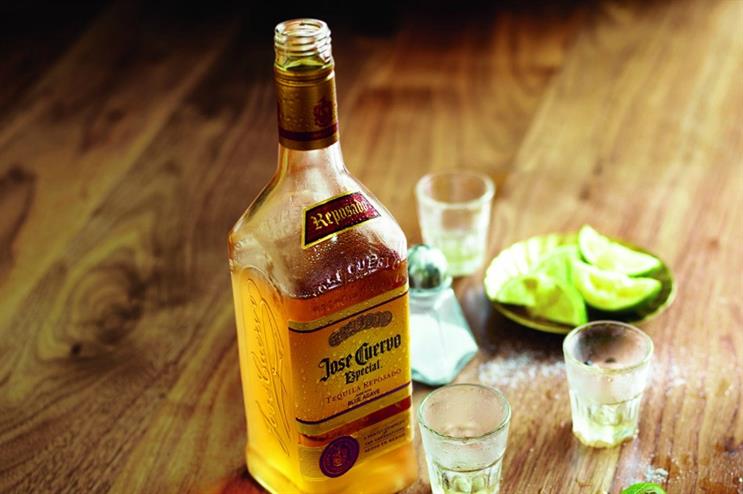
Jose Cuervo

CHRISTOPHER: What about last night? What did our having sex mean to you?
LORELAI: [sighs] It meant that Jose Cuervo still has amazing magical powers.

Jose Cuervo is a Mexican brand of tequila. It is the best-selling tequila in the world, and has a third of the American market.

Lorelai is making it clear to Christopher that she would never have had sex with him if she hadn’t been drunk. By saying that it “still has magical powers”, she also implies that was the case when they were teenagers.

Lorelai and Christopher’s Band Rivalry

CHRISTOPHER: You know I don’t deserve that, I’m as mature as you.
LORELAI: What? The Offspring is your favorite band.
CHRISTOPHER: So? You’re into Metallica.
LORELAI: Well, Metallica is way more substantial than The Offspring.
CHRISTOPHER: Here we go, it’s the same Black Sabbath riff all over again.
LORELAI: Oh! The Offspring have like one chord progression. They use it over and over. They just popped on new words and called it a single, and I don’t want to talk about this anymore!

The Offspring is an American rock band formed in 1984 by Bryan “Dexter” Holland and Greg Kriesel. Their self-titled debut album was released in 1989, and they gained mainstream success in 1994 with their biggest-selling album, Smash. In 2001, their most recent album was Conspiracy of One, which came out the previous year. They were one of the most popular punk bands of the 1990s, and their biggest hits of this era include Come Out to Play (1994) and Pretty Fly (For a White Guy) (1998).

Metallica is an American heavy metal band formed in 1981 by Lars Ulrich and James Hetfield, and one of the founding bands of thrash metal. Metallica attracted a fan base in the underground music community while also gaining critical acclaim. Their 1986 album Master of Puppets was highly influential in thrash metal, while their self-titled 1991 album brought them wider mainstream success and is their biggest-selling album. In 2001 their most recent album was Reload (1997). One of the most commercially successful bands of all time, Metallica have won nine Grammy Awards, and were inducted into the Rock and Roll Hall of Fame in 2009. By these standards, Metallica would be judged as “more substantial” than The Offspring.

Black Sabbath, earlier mentioned, were an English rock band formed in 1968 by Tommy Iommi, Geezer Butler, Ozzy Osbourne, and Bill Ward. Often seen as pioneers in heavy metal music for their occult themes and image, their 1970 self-titled debut album was poorly reviewed, but a commercial success. By their 1973 album Sabbath Bloody Sabbath, they had begun to win the critics over while still remaining popular. The band broke up in 2017, and are often regarded as the greatest metal band of all time. Black Sabbath have won two Grammy Awards and were inducted into the Rock and Roll Hall of Fame in 2006.

A riff is a short repeated musical phrase, generally used as the opening or refrain of a song. Both being heavy metal bands, it isn’t surprising that Metallica sometimes have similar riffs to Black Sabbath – Black Sabbath were pioneers in the genre, so their riffs tended to set the standard for defining what heavy metal sounds like. A particularly noticeable example is the opening riff to Metallica’s 1984 track For Whom the Bell Tolls, and its similarity to the final riff in Black Sabbath’s 1970 track Fairies Wear Boots.

A chord progression is a series of musical chords played in a sequence. Certain chord progressions become very popular in certain genres, so it wouldn’t be surprising for The Offspring, like many other bands, to rely heavily on a certain chord progression. The Offspring often uses the I-V-vi-IV progression very popular in punk music, but so ubiquitous that it can also be found in songs by Bruce Springsteen, Coldplay, Celine Dion, Green Day, Madonna, Red Hot Chili Peppers, John Denver, and many others – it’s also the chord progression in Auld Lang Syne.

Christopher later says that he and Lorelai are arguing just like an old married couple, which he sees as a good sign for their relationship. Instead, you can see that they are arguing like a couple of teenagers, and that neither of them is mature enough for marriage.
 

Lorelai and Christopher

We learn in their scene together on the balcony of Lorelai’s childhood bedroom that this is where Rory was conceived. As Rory was born in late October, it means that Lorelai and Christopher had sex outdoors in January, which seems ridiculously cold and uncomfortable. They then recreate it by having sex on the balcony again, this time at night in early March, when it is still very cold in Connecticut. I’m not sure the Californian writer, who had only visited Connecticut in the summer, really thought this one through.

From what we see of Christopher in later episodes, it seems to be one of his less endearing qualities that he is quick to make a move on Lorelai whenever they are together and she is in an emotionally vulnerable state – in this case, crying after a terrible argument with her father, and drinking tequila that he gave her. It makes you wonder if this is how they originally had sex as teenagers. Did Christopher wait until she was at a low point after a fight with her parents, then ply her with alcohol?

In any case, it’s a horrible thing for both of them to do to Rory, as they go off to be alone together just when she most needs their love and reassurance. (It’s done so that Rory can have a touching scene with Emily, but still makes Lorelai and Christopher look bad).  Rory is old enough to wonder where they went, and shrewd enough to make a guess as to what they were doing, as her questions to Lorelai show. For a child who obviously secretly longs to have her father in her life, it’s cruel to give her that kind of hope that her parents might be getting back together.

Rory and Emily

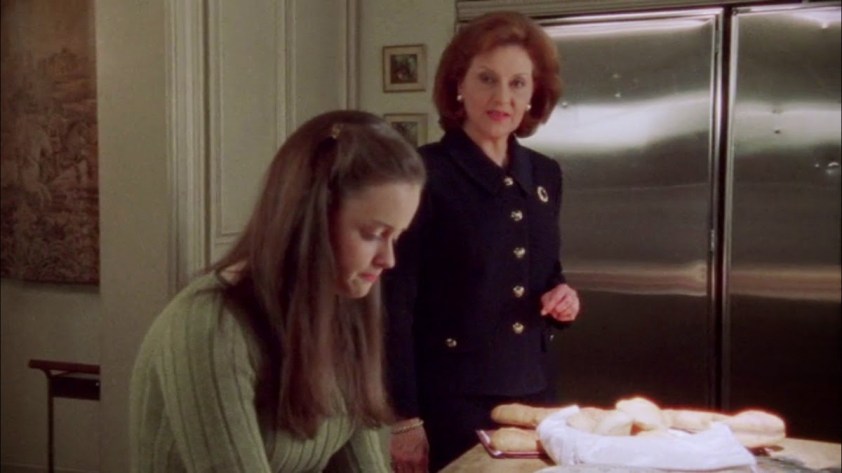
While Lorelai is talking with her father, Emily at first tries to defend Straub as a good man, highly intelligent, who was one of the top lawyers in an obscure field of international law, and a great contributor to the community through his charity work. She then drops the charade, and says he’s always been a big ass. Most importantly, she lets Rory know that never, for even one second, has Rory herself ever been a disappointment to them. It’s something Rory needs to hear.

Emily then gives Rory some cold leftovers, which look like a roast potato and a couple of asparagus spears; it doesn’t seem like an adequate meal. What about the leftover roast meat? At least make her a sandwich, Emily!

Alfalfa

LUKE: Doesn’t even resemble clever [Kirk’s heckling].
KIRK: I’m dumbing it down for you, Alfalfa.

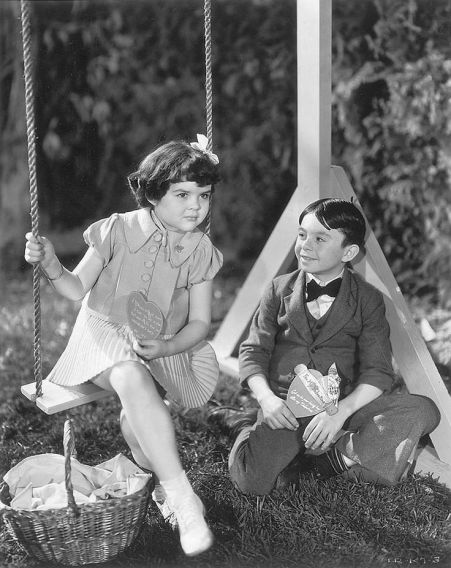
Alfalfa was a character from the Hal Roach’s Rascals short comedy films, made from 1922 to 1944, popularly known as the Our Gang films, after the first short in the series. The stories are about a group of poor children, and their adventures around their neighbourhood. The films were notable for showing children acting naturally, and ground-beaking for showing black and white children playing together as equals.

Alfalfa, played by Carl Switzer, was one of the most popular characters from the 1935-1940 era, eventually going from sidekick to lead character. His romance with a cute spunky little girl named Darla, played by Darla Hood, was an an ongoing source of comedy in the films. Kirk may identify Luke with Alfalfa because of his obvious romantic interest in Lorelai.

Packaged as The Little Rascals, the shorts were syndicated to television in the 1950s, shown on cable in the 1980s, and from 2001-2003 were on the American Movie Classics network. During the 1980s, The Little Rascals became an animated television show that was part of the Saturday morning cartoon line-up with Julie McWhirter voicing Alfalfa.

In 1994, a feature film of The Little Rascals was released, directed by Penelope Spheeris, and with Bug Hall in the role of Alfalfa Switzer. The movie has a heavy focus on Alfalfa’s romance with Darla (Brittany Ashton Holmes).