Iron Chef

RORY: You can make soup.
LORELAI: No. I wanna really cook like on the Food Channel. I wanna sauté thing and chop things and do the BAM, and I wanna arrange things on a plate so they look like a pretty little hat. I wanna be the Iron Chef!

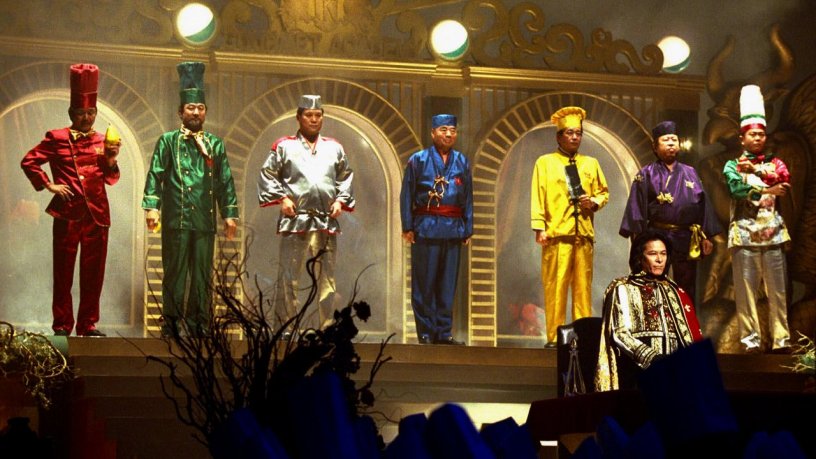
Iron Chef is a Japanese television cooking show which is a head-to-head contest between one of the show’s cooking masters, the titular Iron Chefs, and a challenger who is a professional chef. The timed cooking battle always requires use of a specific themed ingredient, such as eel, tofu, or asparagus, made into a multi-course meal with several dishes all using the theme ingredients in different ways.

Successful in Japan since 1993, the show became a surprise cult hit in the US after it was shown on the Food Network in 1999 and dubbed in English. American audiences were amused by the (to them) exotic flavour combinations on the show, while the dubbing gave it camp appeal.

This episode provides a rare example of Lorelai actually wanting to cook, apparently inspired by the shows she has been watching on the Food Network, a cable TV station devoted to cooking. It seems that her sudden urge for domesticity is caused by her heartbroken depression – and maybe missing Max’s cooking. Lorelai may be able to do some basic home cooking, as Rory says she can make soup, but I suspect that for the Gilmore girls, “making soup” means opening a tin of condensed soup and mixing in the water or milk before heating it on the stove.

Tito Puente

MISS PATTY: Who wants to hear about the time I danced in a cage for Tito Puente?
KIDS: [raising hands] Me!
MISS PATTY: It was the summer of ’66 …

Ernesto “Tito” Puente (1923-2000) was an American singer, songwriter, big band leader, percussionist, and music producer. He is best known for his mambo, cha-cha-cha, and Latin jazz compositions, produced over a fifty year career, several of which were used in films. He was sometimes known as “The Musical Pope” and “The King of Latin Music”, and was at the peak of his popularity in the 1950s. He was posthumously awarded a Grammy Lifetime Achievement Award in 2003.

It is unclear where Miss Patty may have danced for Tito Puente. He was a fixture at the Palladium Ballroom in New York, a centre for Afro-Caribbean dance music, but that had just closed down, in May 1966. Maybe she means the spring of 1966?

Christopher Leaves

When Christopher prepares to ride back to California on his bike, he makes the manipulative and irresponsible move to have Rory re-state his marriage proposal to Lorelai. This only serves to give Rory more false hope, and to place the blame for him not being in her life on Lorelai. Rory also asks him to phone more often in the future, further confirmation that the “weekly phone call” from Christopher was much less often in reality.

I’m not sure how Christopher can afford to drive home when his credit card is maxed out – the trip across America to California would take several days at least, and cost a lot in fuel, food, and accommodation. Maybe Richard and Emily gave him money, or his own parents.

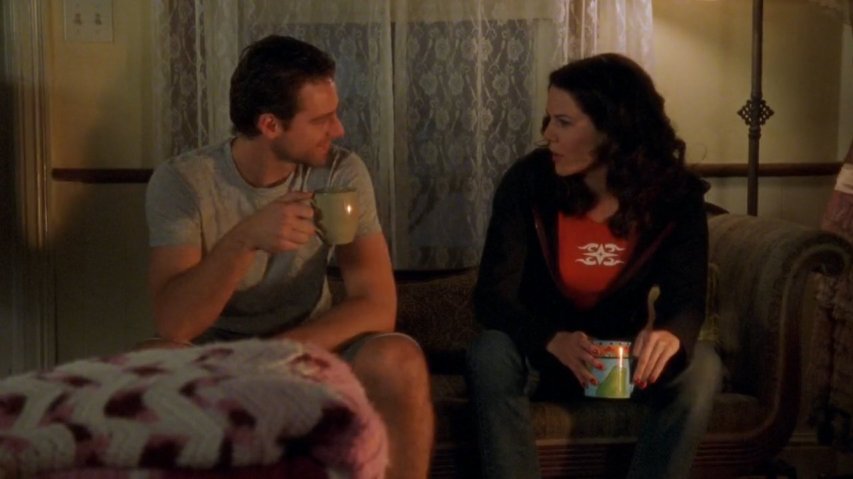
This episode, and the previous one, make it abundantly clear that Christopher is a creep and a wastrel, and it’s a testament to David Sutcliffe’s acting that he also imbues him with such charm and boyish appeal. You can see that Lorelai and Christopher have great chemistry, and genuinely care for each other, but it’s not a relationship that could ever last the distance.

Whoville

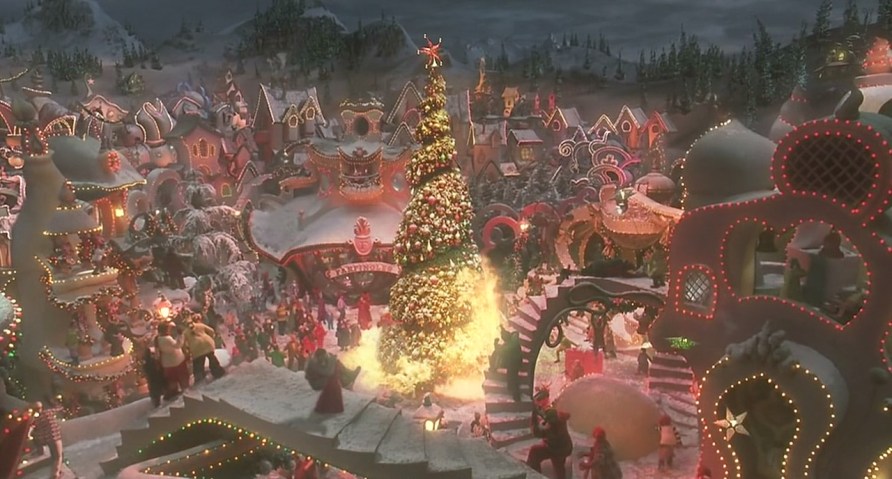
CHRISTOPHER: Well, I know you well enough to know that when you say no to coffee, especially in the morning, all is not right in Whoville.

Whoville is the setting for the 2000 Christmas film How the Grinch Stole Christmas, earlier discussed – a charming little place where the denizens all really love Christmas.

It’s interesting that Lorelai referenced it to Rory at the start of Concert Interupptus, and now about a month later, Christopher is referencing it to Lorelai as if it is something they shared together. It suggests the possibility that when Christopher came to Hartford for Christmas in 2000, he and Lorelai took Rory to the movies to see The Grinch. If so, it’s rather touching that they went on a family outing together, and chose a movie to which you’d generally take a younger child than Rory.

(There is a Who-ville in the Dr. Seuss book Horton Hears a Who, but you can see from the books they are two quite different places with different characters, just similar names. The Horton Who-ville exists within a speck of dust on a clover flower, and the Grinch movie pays tribute to that by having their Whoville contained within a single snowflake).

Paraguay

CHRISTOPHER: What kind of international cuisine [is served at Al’s Pancake World]?
RORY: He kind of hops around. Last month it was his salute to Paraguay.

Paraguay is a land-locked country in central South America, bordered by Argentina, Brazil, and Bolivia. Its traditional cuisine tends to be simple, hearty, and based on meat and cornmeal.

Some of the traditional dishes Al might have served during his salute to Paraguay: milanesa, (fried crumbed meat cutlets), chipa guazu (a savoury cake made from cornmeal, eggs, onions, and cheese), parillada (a meat dish cooked over banana leaves and hot coals), or vori vori (a thick yellow soup filled with little dumplings made from cornmeal) [pictured].

“Kind of a big success”

CHRISTOPHER: I don’t know how much your dad has told you but I’m on the verge of kind of a big success; it’s for real this time. I’ve got a company with an actual cash flow, I’ve got employees, I’ve got an accountant, for God’s sake. He wears a tie and says words like “fiduciary” and “ironically”. I mean it’s for real this time, Lor.

This is the Internet start-up business in California that Richard told Lorelai and Rory about in the Pilot episode, approximately six months ago. We now hear more about it from Christopher without ever finding out what exactly the company does, or was supposed to do.

(A fiduciary is a person who holds a legal position of trust in business, typically being in charge of financial assets to either have them in their safe-keeping or to invest them wisely on another’s behalf. Although this would cover many different types of jobs, it is typically used to refer to a trustee who is responsible for the money in a trust fund – it may suggest that Christopher’s accountant is helping him use his trust fund money to pay for his business venture).

Christopher’s reassurance that “it’s for real this time” suggests that he has attempted, and failed, at several businesses previously – or has even flat-out lied about trying to start a business. Little wonder that Lorelai is rather sceptical about it.

Motorcycle

LORELAI: Kill me and bury me with that bike.
RORY: What is it? A Harley?
LORELAI: That is a 2000 Indian, 80 horsepower, 5 speed close ratio Andrews transmission, and I want to get one.

Indian is a brand of American motorcycle, first produced from 1901 to 1953 in Springfield, Massachusetts, until the company went bankrupt. Initially made by the Hendee Manufacturing Company, their name was changed to the Indian Motorcycle Manufacturing Company in 1928.

The rights to the Indian name were acquired by a succession of companies after the bankruptcy. In 1998, the Indian Motorcycle Corporation of America was formed from a merger of nine different companies, and in 1999 they began making Indian motorcycles in Gilroy, California (a hint as to who is riding the bike). The company went bankrupt in 2003, but rights to the name have again been acquired by a succession of companies, and they are still being made.

Rory wonders if the motorcycle is a Harley-Davidson, often just called a Harley. Harley-Davidson have been making motorcycles since 1903, first manufactured in Milwaukee, Wisconsin; they are the main rival company to Indian. Rory clearly has far less knowledge of motorcycles than her mother, and possibly knows of Harleys through motorcycle-loving Dean, who may yearn for one of these Midwest-originating bikes.

Andrews makes parts for motorcycles, including transmissions, and have been supplying Harley-Davidson since 1972. They were also supplying Indian, at least in the early 2000s.

Lorelai’s lust for the motorycle explains why she was so worried that Rory would be attracted to a boy who rode one – she assumed it would be a case of like mother, like daughter. This soon turns out to be correct. In fact, Rory jumps on the back of her father’s bike with suspicious ease, making us wonder if Dean kept his promise to Lorelai to never let Rory on his motorcycle.

Vivien Leigh and Jessica Tandy

LORELAI: Streetcar Named Desire [explaining Stella the chicken’s name].
SOOKIE: Vivian Leigh or Jessica Tandy?
LORELAI: Hello – Tandy.
SOOKIE: Of course. Continue.

Vivien Leigh, born Vivian Hartley (1913-1967) was an English stage and film actress. She played Blanche DuBois in the 1949 London West End production of A Streetcar Named Desire, and was chosen to reprise the role in the 1951 film version of the play, which was directed by Elia Kazan, who had also directed the Broadway production. Leigh won Best Actress at the Academy Awards for her role, as well as from the BAFTA, The New York Film Critics Circle, and the Venice Film Festival. A Streetcar Named Desire was the #4 film of 1951, and won three other Academy Awards, while gaining high praise from critics.

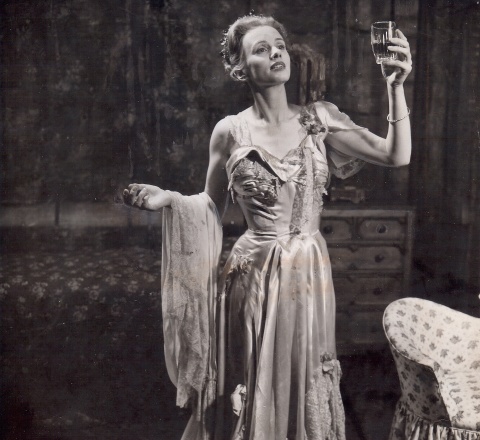
Jessica Tandy, born Jessie Tandy (1909-1994) [pictured] was a British stage and screen actress who appeared in over 100 theatre productions and had more than 60 roles in film and television; she moved to the US in 1940 and lived most of her life in Connecticut. Tandy played the lead role of Blanche DuBois in the original 1948 Broadway version of A Streetcar Named Desire, for which she won a Tony Award. The play itself, which first opened in New Haven, Connecticut was awarded The Pulitzer Prize for Drama, and Best Play from the New York Drama Critics Circle.

Lorelai’s response indicates that she is privileging Broadway over the West End, and perhaps the stage over the screen version. Possibly there is a little local pride involved too. I can’t see how Lorelai could judge the difference in their performances as the Broadway production was twenty years before she was born. It is notable that Sookie immediately agrees with her, maybe suggesting the Connecticut connection is well known and a source of some pride.

Flower Girl of Bordeaux

This instrumental piece by Mexican band leader and composer Juan García Esquivel, often known by his surname only, is the “interesting music” which is playing when Dean first arrives at Babette’s and finds Rory in costume. It is from the CD that Rory got from Lane’s “miscellaneous” section, and which she described as “the weird one”.

Esquivel is considered to be the king of late 1950s-early 1960s quirky instrumental pop, or lounge music – Rory’s choice of his music shows that while she has tried to be faithful to period, she is doing so with her own idiosyncratic style, and subverting conventional expectations.

Esquivel’s music was released on a series of CDs in the 1990s; Flower Girl of Bordeaux is from the 1995 compilation album Music From a Sparkling Planet.

Notice how this is a slight callback to the “kick ass” Bordeaux wine drunk earlier in the episode; perhaps an allusion to how intoxicating Rory appears to Dean.