Tribbles

[Sookie has fallen into a pile of stuff for the rummage sale, and it proves difficult to get her out]
RORY: Jeez this stuff is like tribbles.

Tribbles are an alien species in the Star Trek universe, first appearing in the 1967 episode The Trouble with Tribbles. Tribbles are small, furry creatures with a purr that humans find relaxing, however they increase in such numbers that they eat all the grain stores on board ship, and Captain Kirk literally becomes buried in tribbles when he enters the hold they are in. In the same way, Sookie is quickly enfolded by the pile of donated goods.

Anvil

LORELAI: Hey, four menus, a coffee and an anvil please.
LUKE: What’s the anvil for?
LORELAI: For Rune.

Lorelai is referring to a common trope in cartoons where an anvil is dropped on a character’s head with hilarious results. It seems to have first been used in Disney animated films, and was perfected by Warner Bros. in their Looney Toons cartoons. (Possibly not a coincidence that Lorelai sees Rune off with a “Bye, Loon”.

The comedy anvil drop may have its origins in real life. A traditional celebration on the Fourth of July in America was launching an anvil into the air with gunpowder from atop another anvil, then watching it fall onto the other anvil with a thud. Presumably everyone stood well back during this exciting spectacle and hopefully nobody got an anvil on the head.

Oscar and Felix

While arguing over whether to eat leftover pizza from the garbage bin – it was only just thrown out and is still in the box – Rory calls Lorelai “Oscar”, and she counters by calling Rory “Felix”.

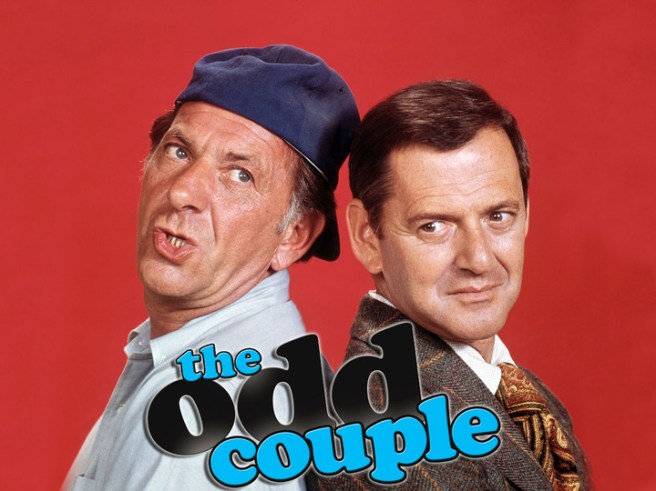
This is in reference to Oscar Madison and Felix Ungar, the main characters from The Odd Couple, originally a 1965 Broadway play written by Neil Simon. In the story, the pair are friends sharing an apartment, with the slovenly Oscar and neat-freak Felix constantly clashing.

The Odd Couple was made into a comedy film in 1968, directed by Gene Saks, and with Walter Matthau and Jack Lemmon starring as Oscar and Felix respectively. Given rave reviews by critics, it was the #4 film of 1968.

It was then made into a television sitcom with Jack Klugman and Tony Randall as Oscar and Felix, originally airing from 1970 to 1975, but still on American television in reruns. This may be the version of The Odd Couple that Lorelai and Rory is most familiar with.

It seems to be an old joke between Lorelai and Rory to see themselves as “the odd couple” – mismatched housemates who nevertheless are very fond of each other.

(Note that Lorelai cleaning out the refrigerator is a call back to the contest she and Rory had at the start of the episode to see who had to clean out the fridge – apparently Lorelai lost).

“Here’s Johnny”

RORY: Well, Madeline and Louise, Paris’ best friends, they said hello to me the other day.
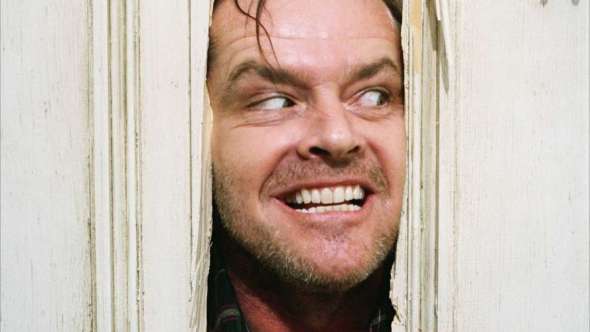
LORELAI: Really? Like a normal hello? Not like a “Here’s Johnny” kind of hello?

Another reference to the horror film The Shining, earlier discussed. In one memorable scene of the movie, the sanity-challenged Jack Torrance hacks through a bathroom door with an axe in an attempt to kill his wife and son. Jack Nicholson, who played Torrance, adlibbed the line “Here’s Johnny!”, which he shouts in a terrifyingly deranged manner with his head through the broken door. It is regarded as an iconic film moment.

Jack Nicholson took the line from the long, drawn-out catchphrase used by Ed McMahon when introducing the host on The Tonight Show Starring Johnny Carson, which ran from 1962-1992. It’s one of the best known catchphrases in history.

This Old House

MAX: And yet, as soon as that dinner’s over and I start cleaning up, suddenly that’s when you’re starving.
LORELAI: What can I say – watching someone work makes me hungry. If I hadn’t stopped watching This Old House I’d be five hundred pounds right now.

This Old House is a highly popular home improvement television show which has aired since 1979, and is broadcast from Stamford, Connecticut. Presumably Lorelai started watching it after she bought a house of her own in Stars Hollow so she could learn how to do home repairs; she probably stopped watching it once she realised she could get Luke to do everything for her.

We last saw Max having his first date with Lorelai in Love and War and Snow. We only just now discover that they been dating happily ever since and are still together.

Charo

LORELAI: Rory, there are only two things that I totally trust in this entire world. The fact that I will never be able to understand what Charo is saying no matter how long she lives in this country – and you.

Charo (born Maria Martinez Molina Baeza in perhaps 1941) is a Spanish-American actress, comedian, and flamenco guitarist. In the late 1960s and 1970s Charo frequently appeared on American television as a guest star, and she has had a successful musical career in Latin America for five decades.

Her stage persona has an exuberant manner, wears flamboyant costumes, speaks broken English with a heavy Spanish accent, and uses the meaningless catchphrase “cuchi-cuchi” a lot – hence Lorelai’s difficulty in understanding her.

The Miracle Worker

LANE: Let me guess. You and Lorelai haven’t made up yet?
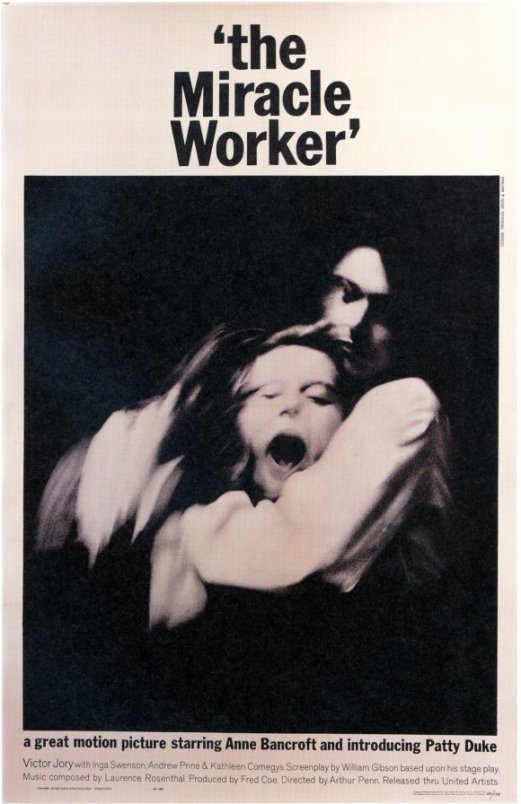
RORY: Nope. Things are still very Miracle Worker at my house.

Most likely a reference to the 1962 biographical film The Miracle Worker, directed by Arthur Penn and based on the 1959 play of the same name by William Gibson (originally part of the 1957 television drama anthology Playhouse 90); Gibson wrote the screenplay for the movie.

The film is the story of Anne Sullivan (1866-1936), the sight-impaired teacher of Helen Keller (1880-1968), who had become both blind and deaf at a very early age. Anne was able to break through Helen’s almost total isolation from lack of language, allowing her to communicate with the world by spelling words into her hand and teaching her to read Braille.

Helen made remarkable progress at a school for the blind with Anne’s support, and went on to become the first blind person to earn a bachelor of arts degree, forging an inspirational career as an author, political activist, and lecturer.

William’s Gibson’s source for The Miracle Worker was Helen Keller’s 1902 autobiography, The Story of My Life, and the title comes from Mark Twain‘s description of Anne Sullivan as “a miracle worker”.

The Miracle Worker received rave reviews, and is still considered one of the most inspirational films ever made. Anne Bancroft, who played Anne Sullivan, won the Academy Award for Best Actress, while Patty Duke, who played Helen Keller, won the Academy Award for Best Supporting Actress (in the 1979 television remake, Patty Duke played Anne Sullivan).

Rory possibly means that she and her mother are still not talking, just as Helen Keller was not able to communicate until she was taught to by Anne Sullivan. She could also be referring to the famous fight scene in the movie, shown on the poster, where Anne Sullivan struggles physically with Helen Keller in an effort to make her eat politely at the breakfast table, to mean that she and Lorelai still fighting.

V.I.P.

LANE: Because I have to go home soon and my mom threw out our TV when she caught me watching V.I.P. So I’m bored and I need some entertainment.

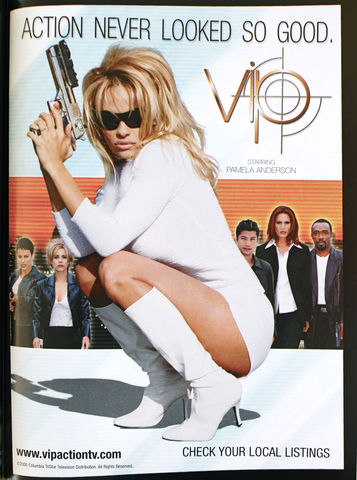
V.I.P. was an action-comedy television series starring Pamela Anderson as Vallery Irons, a woman who works at a hotdog stand but is mistaken for a bodyguard when she accidentally saves a celebrity. She cashes in on her fifteen minutes of fame by becoming the head of a security agency called V.I.P. (Vallery Irons Protection), and hires some real bodyguards to do the actual work. Despite her lack of skills or training, it is Vallery who ends up saving the day much of the time.

The satirical show became many people’s guilty pleasure for its sense of campy fun and never taking itself seriously. It ran from 1998 to 2002.

“Fly the invisible plane over”

LORELAI: Well, uh, gee, Mom, I don’t know, let me see. Black ice, treacherous roads . . . I guess I’ll just put on my red, white, and blue leotard, grab my golden lasso and fly the invisible plane on over.

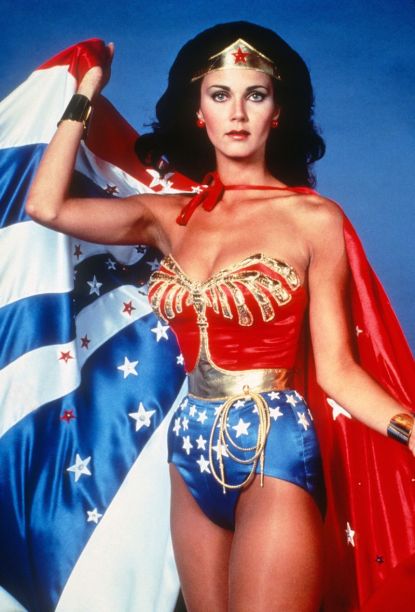
Lorelai is referring to the character of Wonder Woman, a DC Comics superhero who is a goddess and princess of the all-female Amazon warrior people. Named Princess Diana, her civilian name when blending in with everyday humans is Diana Prince.

Wonder Woman wears a red, white, and blue costume, and has a magic golden Lasso of Truth, which forces people into submission, and makes them tell the truth. Her mode of transport is the Invisible Plane that can travel at 2000 miles per hour.

Wonder Woman first appeared in All Star Comics #8 in 1941. However, Lorelai probably remembers the character best from the Wonder Woman television show, which ran from 1975 to 1979 (when Lorelai was aged seven to eleven); for the second season the title became The New Adventures of Wonder Woman. The title role was played by Lynda Carter.

I can imagine the young Lorelai enjoying a story based on a strong, beautiful woman with superhuman powers. The show was still on TV in re-runs during the 1990s and early 2000s, so she might have watched it even as an adult.