Lorelai sings the theme song to the film Easter Parade, previously discussed, as she starts setting up the new DVD player for Emily – perhaps partly to block out Emily’s complaints!
The song “Easter Parade” was written by Irving Berlin in 1933 – the melody was written in 1917, and was originally for a song called, “Smile and Show Your Dimple”, intended to cheer up girls who had to send their husbands and sweethearts off to war. A 1918 recording by Sam Ash had modest success.
The Easter lyrics for the tune were written in 1933 for a Broadway musical called As Thousands Cheer, first sung by Marilyn Miller and Clifton Webb. It has featured in several films, including Holiday Inn, while the film Easter Parade is constructed around the song, and performed by Judy Garland and Fred Astaire. Several artists have had hits with the song, including Bing Crosby and Liberace.
RORY: [on phone] So, we’ll see you next Friday at three. And once again, sorry for the short notice. Okay, bye. [hangs up] SHERRY: Great, who’s next? RORY: Um, Sheldon Harnick.
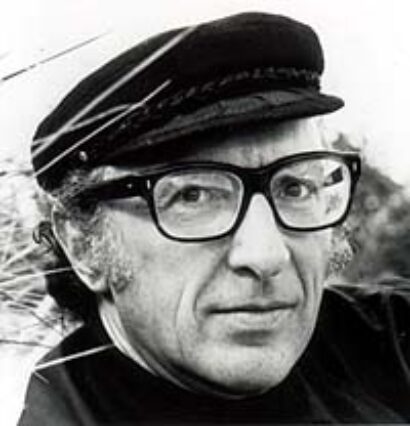
Sheldon Harnick (born 1924), award-winning lyricist and songwriter best known for his collaborations with composer Jerry Bock on musicals such as Fiddler on the Roof. His musical Dragons was performed in New Jersey in late 2003, and this is possibly what Sherry is working on promoting.
Sherry says that Sheldon Harnick “hates pregnancy”, so Rory suggests they tell him Sherry has a plumbing issue instead. In real life, Sheldon Harnick is married to actress Margery Gray and is a father, so it doesn’t seem likely he’s really that panicked by pregnancy. In 2011, he was a special guest to a performance of his songs by Kate Baldwin who was seven months pregnant at the time, and they sang a duet together.
Sherry now has Rory handling her business calls at the hospital! Yes, at night! Rory is a people pleaser, specifically an adult pleaser, who genuinely likes to help, so she complies with this obviously terrible treatment.
RORY: I got the flags and . . . he changed his mind again. LANE: He’s worse than my mother at the Glory of Easter T-shirt stand.
Glory of Easter, an annual evangelical drama which begun in 1984 and went on until 2012. It took place at the Crystal Cathedral in Garden Grove, California [pictured, now a Catholic church], suggesting that the Kim family went to it at least once, where Mrs Kim could not decide between all the tee-shirts available for sale.
I think this is the first time we’ve seen Lane working at the Independence Inn to help prepare for a function. Perhaps Mrs Kim is allowing her more freedom, or perhaps now she’s eighteen she can be employed at the inn without any worry about labour laws. In either case, this is another possible income stream for Lane.
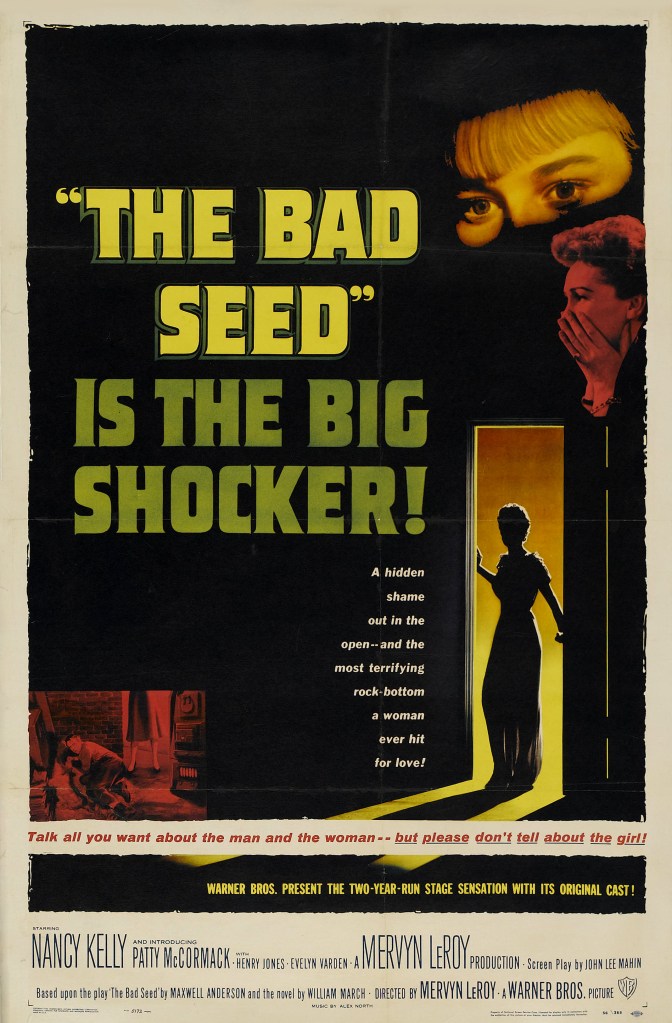
Bad seed, an American expression referring to someone who is evil or unprincipled by their nature, “born bad”.
The expression gained widespread notoriety through the 1956 psychological thriller The Bad Seed, directed by Mervyn LeRoy and starring Patty McCormack in the title role. It is based on the 1954 play of the same name by Maxwell Anderson, which in turn was based on the 1954 novel by William March. The film is about a sociopathic little girl, and was a hit at the box office, receiving positive reviews from critics.
Rory suggests that Paris was born from the “bad seed” of disgraced president Richard Nixon, to explain why she is such a bad president herself.
Xanadu, 1980 musical fantasy film directed by Robert Greenwald, and based on the 1947 film Down to Earth. Olivia Newton-John stars as Kira, a mysterious woman who is actually one of the Nine Muses from Greek mythology, while Michael Beck is a struggling artist who falls in love with her, and opens a nightclub called Xanadu with a former big band orchestra leader, played by Gene Kelly in his final role.
The film was savaged by critics and was a box-office bomb, helping to inspire the creation of the Golden Raspberry Awards (The Razzies) – Robert Greenwald won the inaugural Worst Director at the Razzies that year. However, the movie’s soundtrack album, featuring music mainly by Olivia Newton-John and Electric Light Orchestra, was a huge commercial success, with the songs “Xanadu” and “Magic” both going to #1. The film has since become a cult classic, and it was adapted into a successful Broadway musical in 2007.
A popular big band era jazz standard recorded by Glenn Miller. It’s based on the 1930 composition “Tar Paper Stomp” by Wingy Manone, in a new arrangement by Joe Garland, with lyrics added by Andy Razaf. First released by Edgar Hayes and His Orchestra in 1938, the 1939 Glenn Miller version was inducted into the Grammy Hall of Fame in 1983. It is considered one of the most important musical works of the 20th century.
Sing, Sing, Sing (With a Swing)
A 1936 song by Louis Prima, who first recorded it with the New Orleans Gang. It’s been recorded many times, most notably by Benny Goodman. Part of the big band and swing eras, it’s a favourite for film and television soundtracks.
Walkin’ My Baby Back Home
A 1930 jazz song written by Fred E. Ahlert, with lyrics by Roy Turk. It charted in 1931, with highest-charting versions of that year by Nick Lucas, and Ted Weems, with both reaching #8. Nat King Cole’s 1951 version also went to #8, and it was most successful in 1952, when Johnnie Ray took it to #4.
A 1914 popular song by Harry Carroll, with lyrics by Harold R. Atteridge. Originally recorded by the Heidelberg Quintet, it topped the charts for six weeks during the outbreak of World War I.
These Foolish Things (Remind Me of You)
A 1935 song by English songwriters Eric Maschwitz (under the name Holt Marvell), lyricist and Jack Strachey, the composer. It is said to have been inspired by a youthful romance with cabaret singer Jean Ross. The song wasn’t an immediate success, even after featuring in the 1936 London revue Spread It Abroad, until famous West Indian pianist and singer Leslie Hutchinson found the music on top of Maschwitz’s piano, and liked it. He recorded it the same year, and after this it became a great success, recorded by musicians all over the world, including Benny Goodman, and Billie Holliday, whose version peaked at #5 in 1936.
A String of Pearls
A 1941 song composed by Jerry Gray, with lyrics by Eddie DeLange. It was recorded by Glenn Miller becoming a #1 hit. It is a big band and jazz standard.
All the music at the dance marathon is provided by the band, The Swingin’ Deacons, a band from Lynchburg, Virginia. They have a 1999 album, House of the Blues Swings!
ANDREW: [in background] You went out with Liam Neeson! Are you kidding me?
William “Liam” Neeson (born 1952), actor from Northern Ireland. He began his career in the Belfast theatre scene, and his first film role was in Excalibur (1981). He rose to prominence playing the title role in Schindler’s List(1993), starred in dramas such as Nell(1994) and provided the narration for Everest (1998). In November 2002, his most recent films were Stars Wars: Attack of the Clones and K-19: The Widowmaker, although Gangs of New York was just about to come out. He has received numerous honours, including an OBE in 2000.
Liam Neeson was married to actress Natasha Richardson in 1994, a marriage which lasted until her death in 2009. Presumably, Andrew’s dance partner went out with Liam Neeson prior to his marriage (or prior to him meeting Richardson, which took place in 1993).
LORELAI: I have to say, for a couple of modern girls, we have time-warped with the best of them.
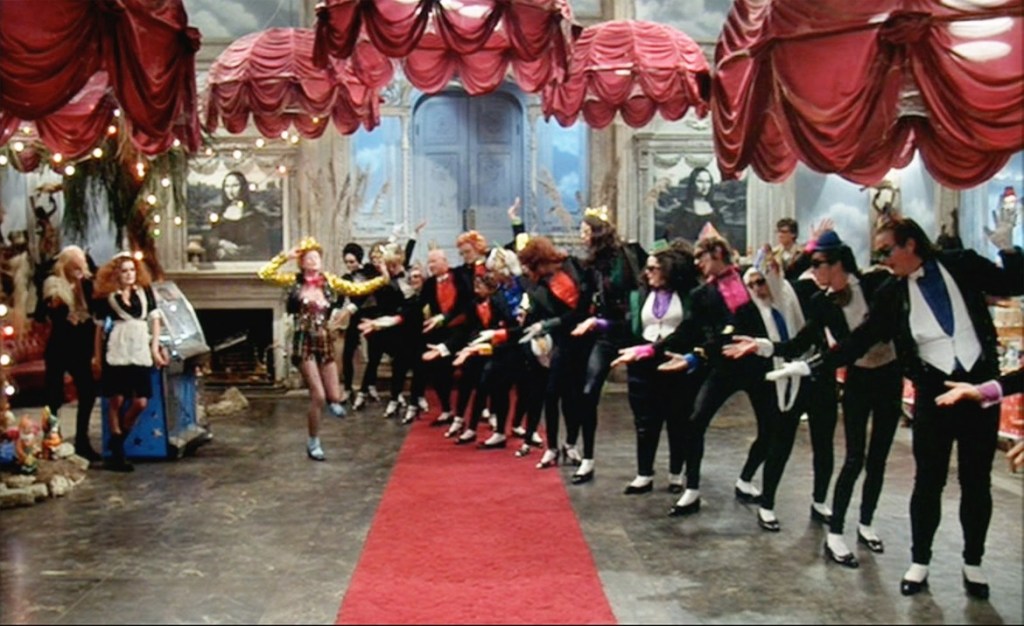
“Time Warp”, a song from the musical The Rocky Horror Show and its film version, The Rocky Horror Picture Show, previously discussed. It’s also the name for the dance which accompanies the song, and the song lyrics provide dance instructions. It was most popular in Australia, reaching #3 in 1980, but has remained a popular song ever since. It’s already been demonstrated that Lorelai and Rory are fans of the film.
LORELAI: Oh, he’s brand new in town. He works over at the hardware store, and the best part is, he used to be part of the touring company . . . of Riverdance.
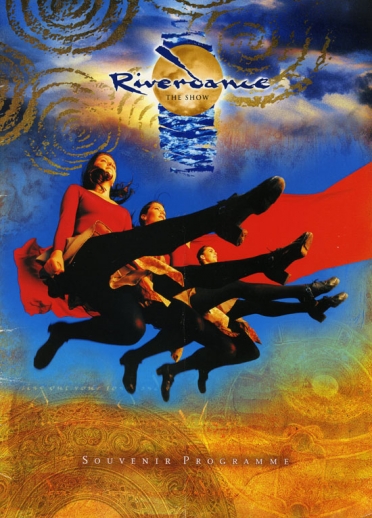
Riverdance, theatrical show that consists mainly of traditional Irish music and dance. With a score composed by Bill Whelan, it originated as an interval act during the Eurovision Song Contest 1994. Shortly afterwards, it was expanded into a stage show, which opened in Dublin in 1995. Since then, the show has visited over 450 venues worldwide and been seen by over 25 million people, making it one of the most successful dance productions in the world.
Riverdance comes to Hartford every year. Did Stanley join the company while it was in Connecticut, or did he like the area so much he decided to stay there? How do you go from touring with Riverdance to working in hardware in a small town?




 The Annotated Gilmore Girls