Blue Man Group

LORELAI: You are not sleeping through this.
RORY: Through what?
(Lorelai walks over to the bed and leans over her.)
LORELAI: The freaking Blue Man Group is outside our house!

The Blue Man Group is a performance art company founded in Manhattan in 1987 by Chris Wink, Matt Goldman and Phil Stanton. What began as a series of “street disturbances” by a group of men wearing blue masks became a series of shows combining music and art held in small clubs, and eventually a full performance at the Astor Theatre in New York in 1991, which is still on-going.

The Blue Man Group have gone on a number of concert tours, and released several albums. At the time this episode went to air, The Blue Man Group were booked to play live in Las Vegas, which continued until 2005. The Blue Man Group eventually went international, and in 2017 were bought by Cirque Du Soleil.

Interestingly, Nathan Wetherington, who played Dean Forester in the original Pilot episode, was the drummer with the Blue Man Group for two years.

The Elephant Man

SOOKIE: She’s [Rory] like the most unmaterialistic kid in the world.
LORELAI: No, it’s not about what she would buy. I don’t care if she buys a house, or a boat, or The Elephant Man’s bones.

Joseph Merrick, often incorrectly called John Merrick (1862-1890) was an English man with severe facial and physical deformities who was exhibited at freak shows as “The Elephant Man”. He then went to live at London Hospital and became well known in society, even being visited by royalty. It is not known from which medical condition Merrick suffered, and DNA tests have been inconclusive.

His life story was depicted in a 1979 Tony Award-winning stage play, The Elephant Man, by Bernard Pomerance, and David Lynch did a film version in 1980, starring John Hurt in the title role.

In 1987, Michael Jackson, who had apparently related to Joseph Merrick after seeing the film The Elephant Man, reportedly offered the London Hospital one million dollars for Merrick’s bones, but the hospital refused to sell them. It seems to have been a story fabricated by Jackson himself to add to his “Wacko Jacko” persona. For some time, rumours persisted that Jackson actually owned the bones.

Cabaret

SOOKIE: Call her now. Ooh, page her, or page her and have her call my cell phone, and we can sing the money song from Cabaret. You be Liza, I’ll be Joel.

Cabaret is a 1972 musical drama film directed by Bob Fosse, and loosely based on the 1966 Broadway musical Cabaret by John Kander and Fred Ebb; this was adapted from the 1951 play I Am a Camera by John Van Drouten, and the 1939 memoir The Berlin Stories by Christopher Isherwood, which the play was based on.

Set in Berlin during the Weimar Republic of 1931, the film is about a young American named Sally Bowles (Liza Minnelli), and her bohemian life as a cabaret dancer at the Kit Kat Club. The musical shows the growing rise of the Nazi Party, as the club at first harrasses the National Socialists and then eventually allows them to dominate the audience.

The “money song” from the film is Money, Money, containing the refrain, “Money makes the world go round”. It’s sung by Liza Minelli and Joel Grey, who plays the Master of Ceremonies at the club, and acts as the storyteller of the film.

Cabaret was an immediate box office smash, and received rave reviews from critics as a completely different kind of musical – cynical, kinky, political, and bleak. It was the #7 film of 1972 and received eight Academy Awards, including Best Director, Best Actress for Liza Minelli, and Best Supporting Actor for Joel Grey. It holds the record for the most number of Oscars won by a film that did not win Best Picture. Cabaret is regarded as one of the best musical films of all time, and it turned Liza Minelli into a gay icon.

Cabaret was first released on DVD in 1998, so Lorelai and Sookie might have rented it quite recently.

“The beginning of a wonderful friendship”

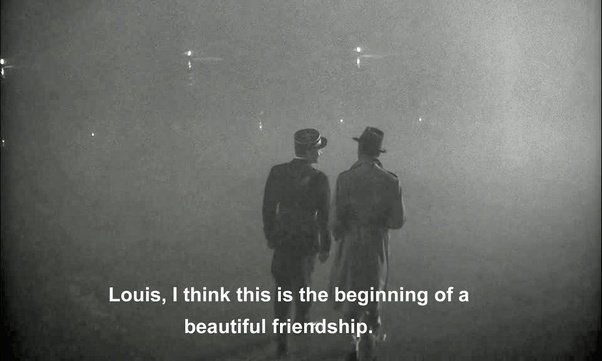
RORY: Louis, I think this is the beginning of a wonderful friendship.
TRISTAN: Who’s Louis?

Rory is referencing the 1942 romantic drama film Casablanca, directed by Michael Curtiz and based on the unproduced stage play Everybody Comes to Rick’s by Murray Burnett and Joan Alison.

Set in Casablanca, Morocco during World War II, it is about an American nightclub owner named Rick Blaine (Humphrey Bogart) who must choose between his lost love Ilsa Lund (Ingrid Bergman) and helping her husband Victor Laszlo (Paul Henreid), a Czech Resistance fugitive, escape from Vichy-controlled Casablanca so he can fight against the Nazis.

When the corrupt prefect of police Louis Renault (Claude Rains) tries to arrest Victor, Rick forces Renault to instead assist Victor and Ilsa to escape by holding him at gunpoint. At the last moment, Rick makes Ilsa leave with her husband. Louis suggests to Rick that they join the Free French in Brazzaville, in the Congo, and in the final scene Rick says, “Louis, I think this is the beginning of a beautiful friendship”.

Rory seems to be suggesting that she and Tristan could form a friendship based on doing the right thing – that is, forgetting all about their kiss (which was apparently mutually enjoyable) and putting others’ needs before their own. Tristan doesn’t recognise the slight misquote, which dooms him as a potential love interest. Even Dean got Rory’s movie references.

Casablanca was the #9 film of 1942, received very good reviews, and won three Academy Awards, including Best Picture. Its reputation has only increased with time, and it continues to be well loved and popular with audiences. Casablanca is generally regarded as one of the best films ever made, and a shining example of the Golden Age of Hollywood.

This is another of Lorelai and Rory’s favourite films.

David Mamet

EMILY: I have to get out everything she’s [Richard’s mother] ever given us. Thirty-five years worth of fish lamps and dog statues, lion tables, and stupid naked angels with their … butts!
LORELAI: Whoa! Stupid naked angel butts? What, did David Mamet just stop by?

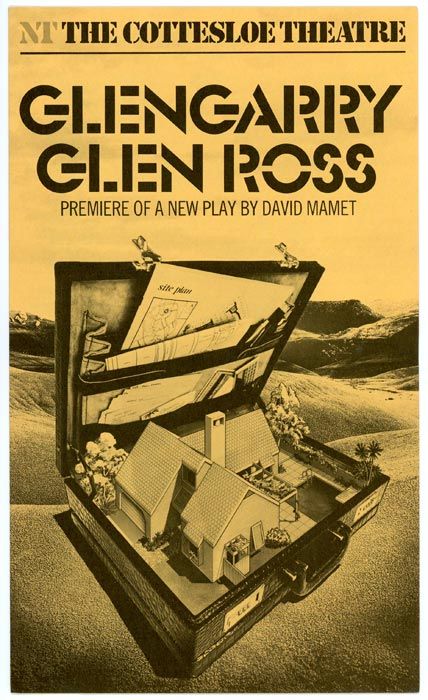
Lorelai is probably referring to David Mamet’s 1983 play Glengarry Glen Ross. It shows two days in the lives of four Chicago real estate agents prepared to do anything, no matter how illegal or unethical, to sell some undesirable real estate. It won the 1984 Pulitzer Prize, and in 1992 was made into into a highly-acclaimed film, with the screenplay written by Mamet.

The play is notorious for its use of profanity, and Lorelai is teasing her mother for her uncharacteristic use of the word “butts”. Maybe the butt model conversation affected her.

David Mamet is one of Amy Sherman-Palladino’s own favourite playwrights.

Emily’s statement suggests that she and Richard have been married for thirty-five years, so since 1965-1966.

“Camelot is truly dead”

LORELAI: Do you know that butt models make $10,000 a day? [Rory chuckles]
EMILY: Camelot is truly dead.

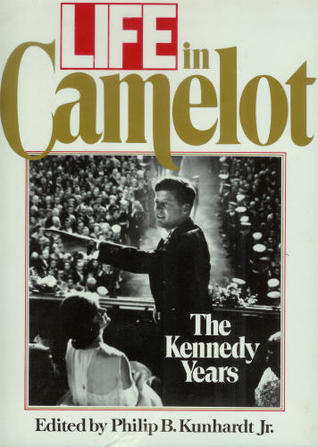
Camelot is the name of King Arthur’s castle and court in Arthurian legend. Americans use the term to refer to the presidency of John F. Kennedy, which was first applied by his widow Jacqueline Kennedy after his assassination in 1963.

Jackie referenced a line from the 1960 stage musical Camelot: “Don’t let it be forgot, that once there was a spot, for one brief, shining moment, that was known as Camelot”. Indicating that this was one of John F. Kennedy’s favourite lyrics from the musical, she added, “There will be great presidents again, but there’ll never be another Camelot again”.

I’m not sure where Lorelai received her information from, but butt models in the movies actually make about $500 a day, double that if they go nude. Outside the movies, it might be as little as $200 a day – they get paid by the hour, and let’s face it, hardly anybody wants to film a single butt all day. These days, a butt model could make as much as $5000 from just one Instagram post, but that isn’t the norm, and the option didn’t exist in 2001.

Who’s Afraid of Virginia Woolf?

This is the play that the Stars Hollow Elementary School is currently performing; Rory suggests that she and Lorelai might see it as a reward for getting all their Saturday morning chores done. It doesn’t seem as if they ever did, however.

Who’s Afraid of Virginia Woolf? is a black comedy by American playwright Ed Albee, first staged in 1962. It is about a middle-aged couple named George and Martha who have a volatile relationship. A drunken night they spend with a young couple named Nick and Honey reveals a poignant secret in George and Martha’s marriage.

Who’s Afraid of Virginia Woolf? won the Tony Award for Best Play, while its Broadway stars Uta Hagen and Arthur Hill won Best Actress and Best Actor. It was successfully adapted to film in 1966 with Elizabeth Taylor and Richard Burton in the lead roles.

Needless to say, it is completely inappropriate as a play for elementary school children to even watch, let alone take part in. Not only is it unusually long with complex dialogue to memorise, but the characters are utterly vicious to one another. It heavily features alcohol use/abuse, and discusses death, murder (including murder of children by their parents and vice versa), and sexual themes, including infidelity.

It seems too much even for quirky Stars Hollow, so perhaps Rory used it jokingly as a hypothetical activity. It’s definitely a joke by the writer (Amy Sherman-Palladino).

“Funny, funny girl”

LORELAI: Okay. I need a pan.
RORY: And a fire extinguisher.
LORELAI: Funny, funny girl.

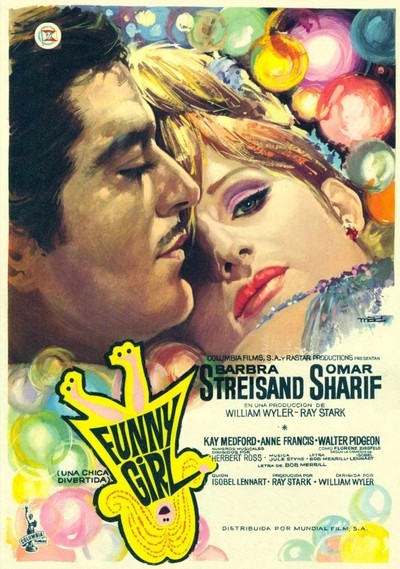
Lorelai may be alluding to the 1968 biographical musical film Funny Girl, directed by William Wyler and based on the 1963 stage musical of the same name with book by Isobel Lennart, music by Jule Styne, and lyrics by Bob Merrill.

Funny Girl stars Lorelai’s favourite actress Barbara Streisand, reprising her Broadway role to portray actress and comedian Fanny Brice (1891-1951), a star of vaudeville, film, radio, and television who rose to fame as a Ziegfield Follies girl in the 1920s.

Funny Girl was the #2 film of 1968, and acclaimed by critics; Streisand won a Best Actress Award for her role in the film at the Academy Awards. Regarded as one of the best musical films of all time, it is notable for being the first film where a Jewish woman is portrayed as smart, funny, talented, and beautiful.

We later learn that Funny Girl is Lorelai’s favourite film.

Star-Crossed Lovers and Other Strangers

The title references two different works. One is William Shakespeare’s Romeo and Juliet, previously and frequently mentioned. In the play, Shakespeare refers to the main characters as “star cross’d lovers”, meaning that their relationship is destined to fail no matter how hard they try. The phrase comes from astrology, meaning that the stars are working against them (in the same sense that we say “don’t cross me”, to mean “don’t interferere with my plans”).

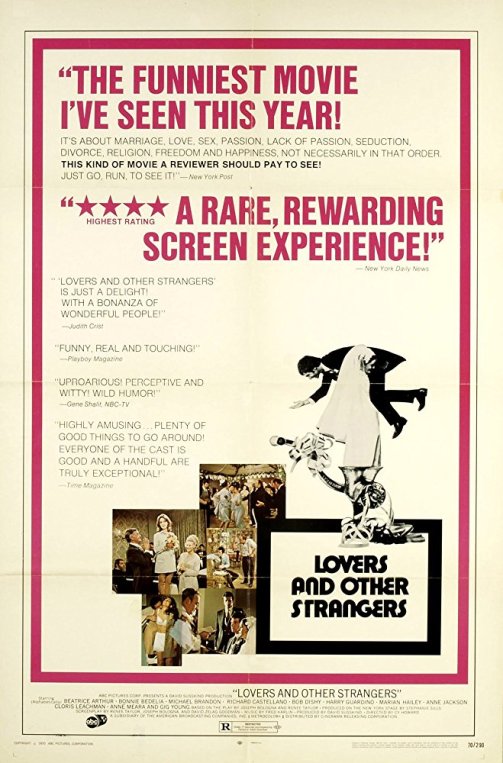
The other reference is to the 1970 comedy film Lovers and Other Strangers, directed by Cy Howard and based on the play of the same name by Renée Taylor and Joseph Bologna, who also co-wrote the screenplay for the film.

The movie revolves around the upcoming wedding of Mike (Michael Brandon) and Susan (Bonnie Bedelia), and the spotlight it shines upon the marriages of their family members. The film is notable for being the screen debut of actress Diane Keaton, who plays Mike’s sister-in-law. Lovers and Other Strangers was well-reviewed and successful at the box office; it won the Academy Award for Best Original Song (For All We Know).

Fiddler on the Roof

LORELAI: We can’t get married Christopher. We don’t know each other as adults.
CHRISTOPHER: So let’s get married and get to know each other as adults.
LORELAI: Well, that’s very Fiddler on the Roof of you.

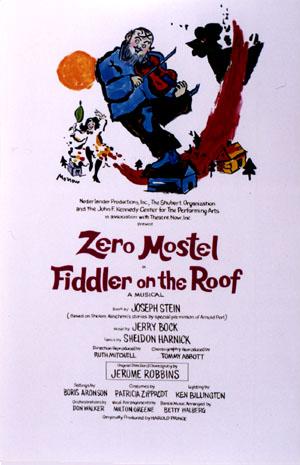
Fiddler on the Roof is a 1964 musical with music by Jerry Bock, lyrics by Sheldon Harnick, and book by Joseph Stein. Set in a Jewish community in Russia in 1905, the play is based on Tevye and His Daughters, a series of short stories written in Yiddish by Russian author Sholom Alecheim.

Tevye (played by Zero Mostel in the original Broadway production), a poor man, wants to arrange the marriages of his daughters, with the idea that although the couple may not know each other very well before marriage, they will learn to know each other after marriage. This was the case in his own happy marriage to his wife Golde, but his daughters have other ideas.

Fiddler on the Roof was a massive hit with both critics and audiences, and won nine Tony Awards, including Best Musical. For many years it was the longest-running musical on Broadway, and has had numerous revivals. Successfully adapted to film in 1971, it remains popular around the world.