Thailand

EMILY: This is either the greatest steak I’ve ever eaten, or I’m so hungry, I’m delirious. Pass the horseradish, please.

LORELAI: I never knew you were a spicy girl.

EMILY: Oh, believe me, I can handle my heat. One summer when we were first married, your father and I stayed at this little village in Thailand where we spent two weeks eating viciously hot chillies and skinny-dipping.

Emily and Richard would have visited Thailand in the late 1960s, considered to be during the Golden Age of Tourism in Thailand. Westerners had been travelling to Thailand (Siam) since the 19th century, but it was only in 1947 that the first flights from the US to Bangkok began, when Pan Am offered it as part of its around the world ticket. By the 1960s, flights to Bangkok were cheaper and shorter.

The “little village” the Gilmores stayed in was almost certainly Pattaya – originally a fishing village with a perfect crescent of beach, only 99 miles from Bangkok, on a decent road. That made it very attractive to tourists, and by the early 1960s, some development had already begun. Today it is a modern city of more than 120 000 people with a very seedy red light district, and a major pollution problem. The once-pristine beach is now considered poor quality due to sewage dumping.

It’s interesting that Emily remembers skinny-dipping with Richard for two weeks, as he later has quite a different recollection. It is just possible that it was on this summer vacation in Thailand that Lorelai was conceived – she was born in late April 1968, meaning that she could have been conceived in July-August the previous year.

Note that Emily’s enjoyment of hot horseradish on her steak parallels Rory eating her French fries dipped in pepper and hot sauce. (And her love of Indian curry!).

[Picture shows Pattaya in 1965].
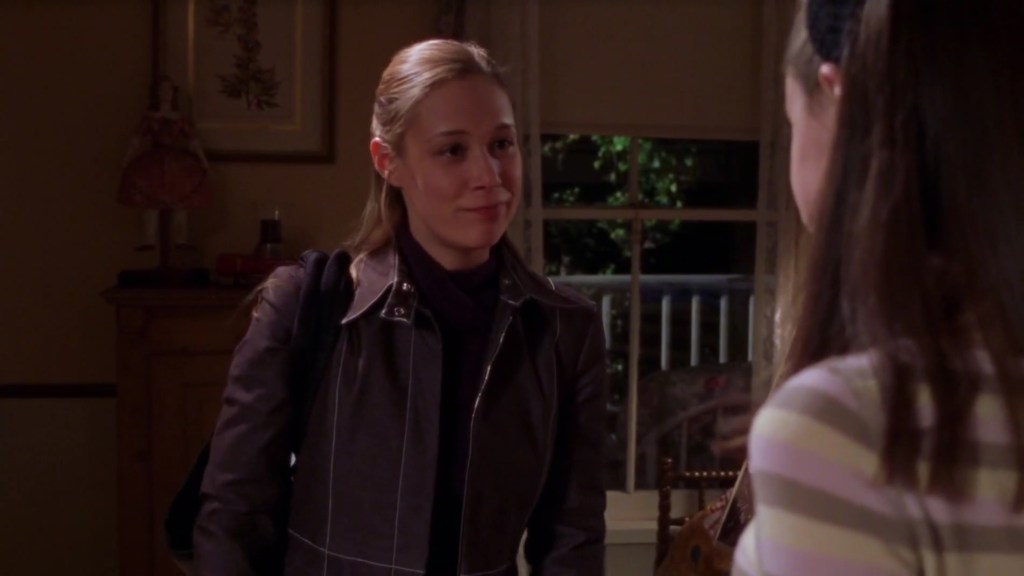
Slumber Party, Freeze a Bra

PARIS: Spend the night, like a slumber party? … Okay. But if you’re doing all this so you can freeze my bra, I’ll kill you.

Slumber party, previously discussed.

Freeze a bra, previously discussed.

It’s hard for Paris to trust that someone actually likes her – her parents’ cold and neglectful behaviour have seen to that. An overture of friendship from Rory sees Paris agree to it with a smile, although she can’t help ending with a typically Paris-like threat.

Bizarro, Friendish

PARIS: We’re friends?

RORY: I’m not sure if there is an exact definition for what we are, but I do think it falls somewhere in the bizarro friends-ish realm.

Bizarro, previously discussed, and now used by Lorelai, Jess, and Rory.

Just as Rory found it hard to define her relationship with Jess, resorting to the word “friendish” to describe it, she also finds it hard to say what Paris is to her. Classmate? Ex-bully? Frenemy? Fellow nerd? Or an actual friend? For now, the bizarro friends-ish realm must satisfy.

Dean Shouts at Rory, and Paris Intervenes

Despite being explicitly told that Rory wanted to be alone and undisturbed tonight, Dean comes over uninvited with some ice cream for them to share. He does his usual stalker-y routine of not phoning until he is actually on the doorstep and can’t be got rid of. This is the boy who can happily call Rory a minimum of four times a night, but suddenly phoning ahead of time is too much of a drag for him.

When Dean discovers that Jess is at the house, he completely loses it, no doubt thinking that Rory kept him away so she could spend time alone with Jess. The fact that Paris is there too, and Rory was never alone with Jess for a minute doesn’t seem to register with him. He looms over Rory in an intimidating way and shouts at her when she tries to explain, until she says, “Stop yelling!”.

Paris overhears their argument and comes to the rescue. Unfortunately, she doesn’t do so by taking Dean to pieces, and giving him a short sharp lesson in how to treat women, or even asking Rory if she really feels safe with Dean.

Instead she lies, pretending that she had a crush on Jess, and asked Rory to help her spend time with him. Like Lorelai, Paris finds Dean scary enough in a temper that she thinks it’s better to lie to him to calm him down. Yep, Angry Dean even frightens Paris.

Even more unfortunately, Paris doesn’t have enough experience to tell Rory that her boyfriend’s treatment of her is not okay. At least Dean has the sense to walk away in order to cool off, but the fact that he obviously doesn’t trust Rory is something he needs to think about.

West Side Story

JESS: Okay, I’m going. Look, man, I really was just dropping off some food, so don’t get all West Side Story on me, okay? [leaves]

West Side Story, previously discussed.

Jess refers to the gang rivalry between two Upper West Side gangs of New York, the Jets (white Americans) and the Sharks (Puerto Ricans). Maria, played by Natalie Wood, is a Puerto Rican girl who has come to New York for an arranged marriage with a man named Chino she does not love. She is drawn to Tony, played by Richard Beymer, a former member of the Jets.

Jess is taunting Dean by hinting that Rory no longer loves him, and like Maria, has fallen for a boy who is off-limits to her. In the film, Chino comes after Tony with a gun during a rumble, and shoots him dead. This is another suggestion that Jess is expecting Dean to become violent with him in order to keep him away from Rory.

Frankenstein

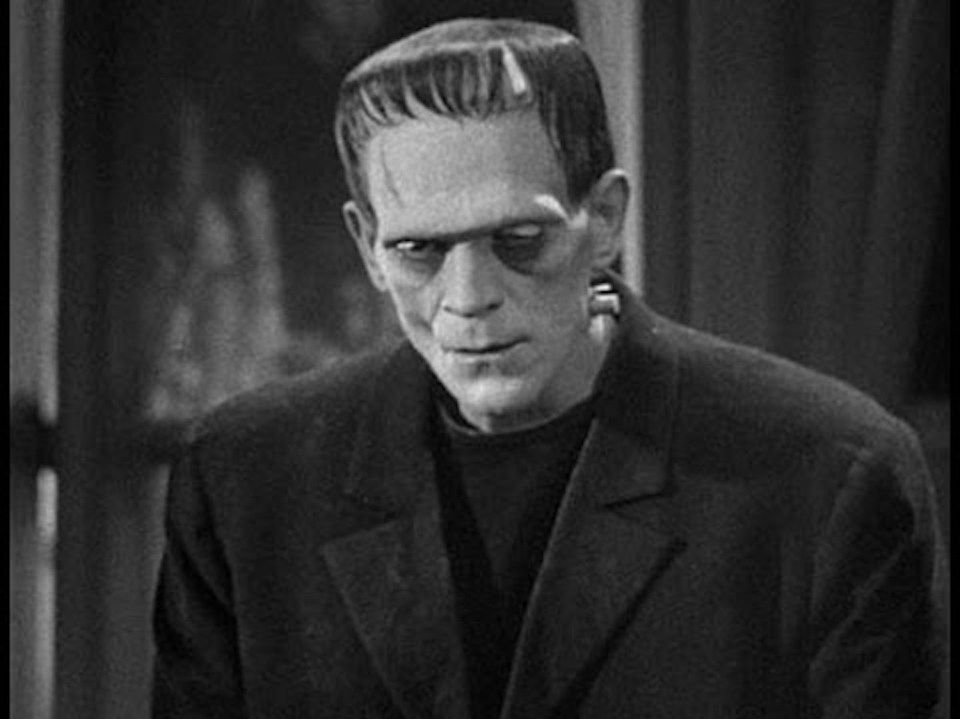
JESS: You’re doing that towering over me thing. Huh. I tell you, you’ve really got that down. It helps that you’re twelve feet tall, but this Frankenstein scowl really adds to the whole …

Frankenstein, previously discussed.

Jess makes a common error by speaking as if the monster in the film is named Frankenstein – Dr. Victor Frankenstein is the name of the scientist who creates the monster; the monster himself has no name, and is referred to as “Frankenstein’s monster”. In the 1931 film, he is played by Boris Karloff.

Rory, Jess, and Paris Have Dinner Together

This episode is a fan favourite, with many enjoying the chance to to see Rory actually hang out with some friends the same age. Most stories have Rory and Paris interacting at Chilton, and this is a rare time that they get to be in Stars Hollow, in Rory’s world. Paris is able to relax and have a good time away from the stress and competition of school.

Paris actually likes matching wits with Jess and talking about literature with him. She’s someone who doesn’t suffer fools gladly, and doesn’t respect people who are easily browbeaten, so for her to enjoy Jess’ company is significant. It seems as if Rory has found a guy who gets along well with at least one of her friends. Unfortunately, we are never again treated to a scene of these three hanging out and having a good time together. What a shame!

“I can’t get into poetry”

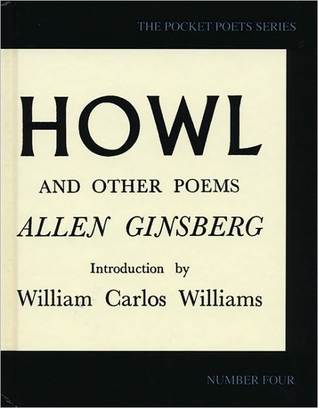
JESS: I can’t get into poetry. It’s kind of like, geez, just say it already, we’re dying here.

Jess has actually read Allen Ginsberg’s poem Howl more than forty times, so this “I’m too butch for poetry” is nothing but posturing. Maybe he’s trying provoke Rory into saying something, which would reveal to an outsider how they formed an intimate bond over her poetry book. If so, it doesn’t work.

Jane Austen

PARIS: Typical guy response. Worship Kerouac and Bukowski, God forbid you’d pick up anything by Jane Austen.

JESS: Hey, I’ve read Jane Austen … and I think she would’ve liked Bukowski.

Jane Austen (1775-1817), English novelist, previously mentioned as the author of Emma, amongst others.

As previously hinted at, Jess has read some of the English Literature classics, as well as American counter-culture icons. Unlike Dean, he wouldn’t have needed prodding to read Jane Austen.

But in what possible universe would Jane Austen have liked Charles Bukowski, as either a person or a writer? She lived in an era when it was deeply shocking, even violating, for a man to address a woman without an introduction – how would she have coped with Bukowski’s vivid description of his own penis and his offer of it to a female friend, with instructions as to its use?

Jess is saying that a nice, genteel girl like Rory can still appreciate a crude but intelligent bad boy like himself. Rory and Jess? For sure. Jane Austen and Bukowski? Not a chance.

National Enquirer

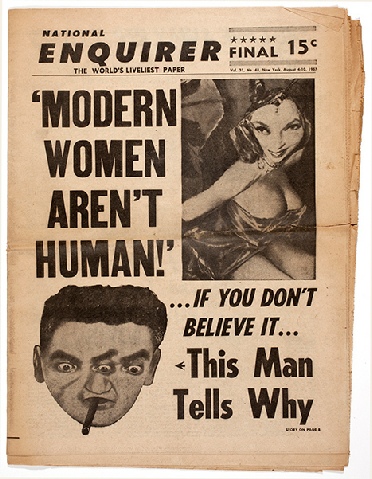
PARIS: [The Beats] believed in drugs, booze, and petty crime … That was not great writing. That was the National Enquirer of the fifties.

National Enquirer, tabloid newspaper founded in New York in 1926, known for its sensationalist reporting and flimsy journalistic ethics.

The National Enquirer already existed in the 1950s, so I’m not sure how The Beats are “the National Enquirer of the 1950s”. Surely the National Enquirer was the National Enquirer of the 1950s? For a supposedly smart character, Paris says some remarkably silly and ignorant things.