LORELAI: I am a grown woman. RORY: Says the woman with the Hello Kitty waffle iron.
A slightly cruel comment at this juncture, as Lorelai received the waffle iron as one of her engagement presents. There was a whole set of Hello Kitty appliances, previously mentioned.
RORY: You said we could talk. LORELAI: Yes, well I thought you meant about make-up or something. RORY: When have we ever talked about make-up? LORELAI: Never, that’s why I thought now would be a good time.
In fact the very first conversation Rory and Lorelai had on the show was about make-up, when Rory asked her mother for lip gloss and received more options than she wanted. They talked about it again when Rory was getting ready for her first date with Dean and Lorelai advised her on make-up, and briefly again when they were all getting ready for their double dates. I think it’s safe to presume that Lorelai and Rory talk about make-up a completely normal amount for a mother and teenage daughter.
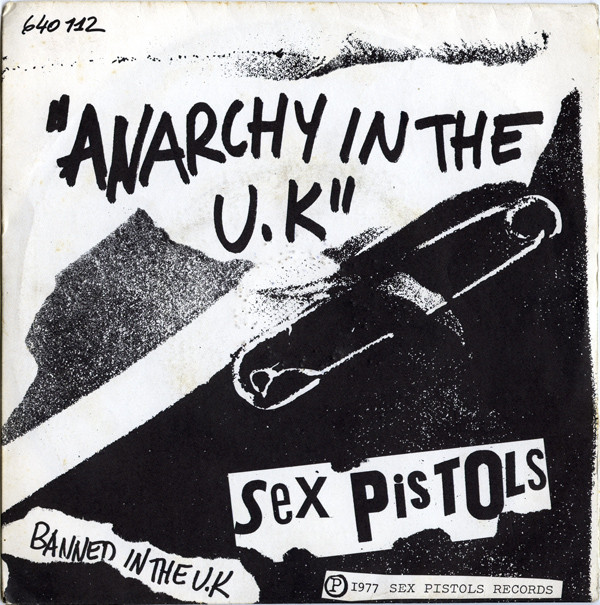
LORELAI: We could sing. RORY: Sing? LORELAI: Yeah, we could sing Anarchy in the UK at the top of our lungs.
Anarchy in the UK is a 1976 song by British punk band The Sex Pistols. It was released as their debut single, and later featured on their 1977 debut album Never Mind The Bollocks, Here’s the Sex Pistols. Anarchy in the UK reached #38 in the UK. It is now regarded as a classic rock song, and highly influential in the development of modern rock.
LORELAI: We could go to sleep. RORY: Mm, it’s 8.23.
The B&Bers have been carousing for three hours, so cocktail hour began at 5.20 pm, suggesting that Lorelai and Rory arrived at The Cheshire Cat between 4.30 pm and 5 pm, giving them ten to twelve hours on the road for something that should have taken them three hours. That’s a lot of aimless wandering.
RORY: In the course of three hours, they’ve participated in every inane B&B group activity known to man. LORELAI: Let’s just hope they finish with a mass suicide. RORY: We get cranky when we’re hungry. LORELAI: Well, plus we’re above everyone else on the planet. RORY: Clearly.
A rare moment of self-insight from Lorelai and Rory.
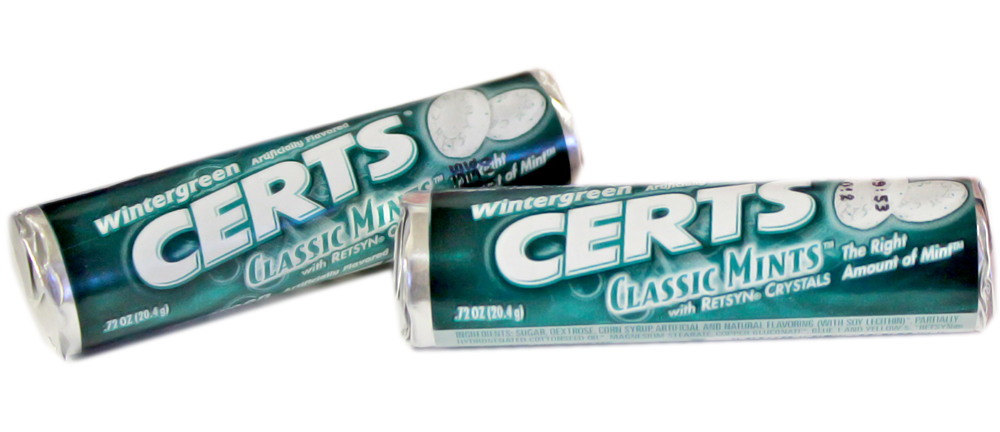
[Lorelai sits on the bed looking through her purse while Rory is in the bathroom.] LORELAI: Ohh, ahhh, I struck gold! [pulling something out of her purse] RORY: What is it? LORELAI: Certs.
Certs is a brand of breath mint and candy made by Mondelēz International since 1956. One of the first mints to be marketed in the US, they are a fixture at drug stores and convenience stores. Despite being mints, they don’t contain any actual mint, just artificial mint flavouring, with their green colour coming from copper.
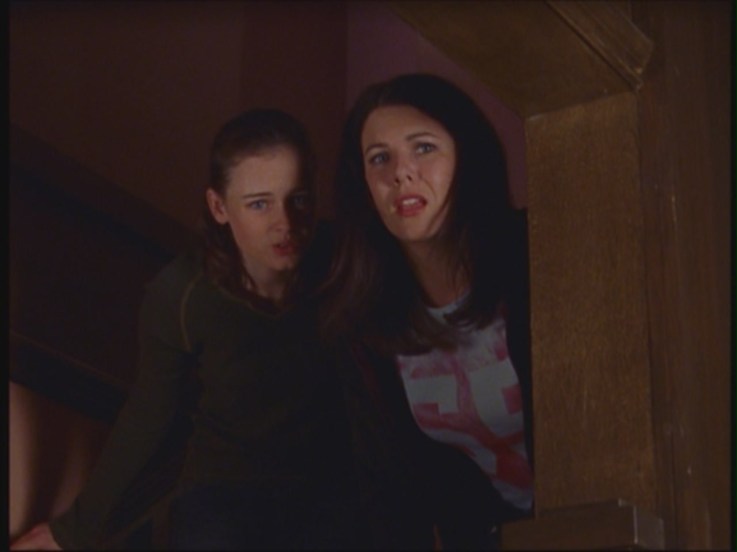
[Lorelai and Rory start to walk down the steps, but stop when they see a bunch of people downstairs.] LORELAI: Dentists. Boston dentists. Cocktail hour at the Cheshire Cat. RORY: So? LORELAI: So our exit is blocked. RORY: Let’s just rush pass them. LORELAI: Too risky. RORY: They’re not assassins.
Unbelievably, Lorelai and Rory find themselves unable to leave their room to get food because they can’t walk downstairs and past a group of strangers. Normally you can’t shut Lorelai up, now she’s incapable of exchanging a few words with a handful of people on her way out to buy dinner. As a plot device to trap Lorelai and Rory in a room together, it’s a pretty lame one.
By what psychic powers Lorelai knows the people downstairs are all dentists from Boston must remain a mystery, but presumably cocktail hour is marked on the activity sheet LaDawn gave them.
LORELAI: Okay, I think we just found the first room in the history of the world that would’ve made Liberace say, “Whoa. Step back. No one’s that gay.”
Władziu Liberace, known professionally as Liberace (1919-1987) was an American pianist, singer, and actor. A child prodigy, he had a career spanning four decades of concerts, recordings, television and film. At the height of his fame, from the 1950s to the 1960s, he was the highest-paid entertainer in the world, with residencies in Las Vegas, and an international touring schedule. He was known for his flamboyantly excessive lifestyle, earning him the title “Mr. Showmanship”.
For years, Liberace denied allegations he was homosexual, successfully suing publications that hinted at his sexuality (hence his famous catchphrase: “I cried all the way to the bank”.) He continued denying them, even when his chauffeur and former lover sued him for palimony (it was settled out of court). He died of AIDS, having been diagnosed as HIV positive 18 months previously, with other of his lovers dying of the same illness.
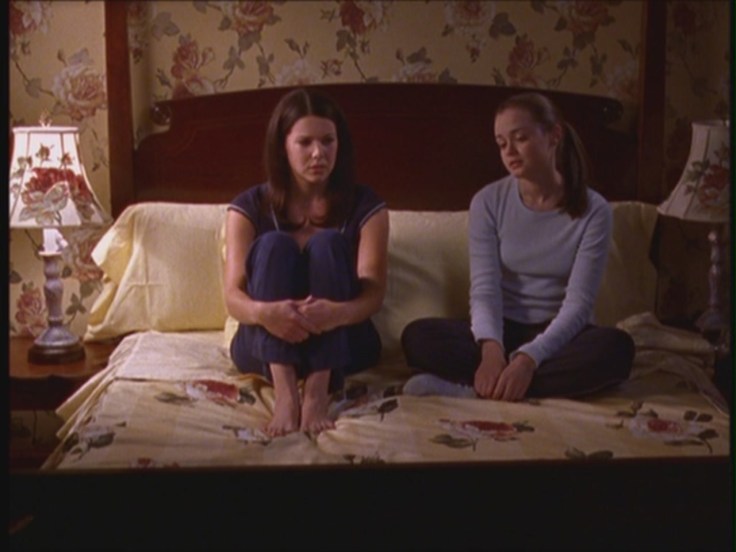
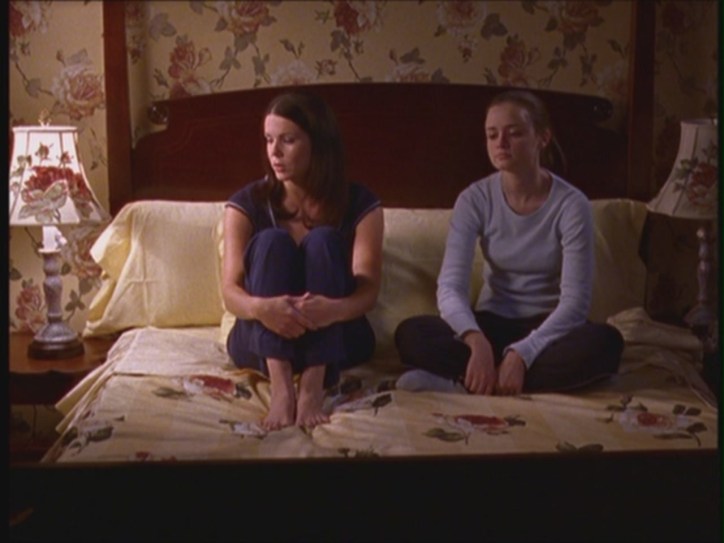
LADAWN: I get so many compliments on this room. LORELAI: Yeah, are [the flowers on the wallpaper] moving? LADAWN: It looks like it, doesn’t it? There’s foil in the paper and it gives it that illusion. Isn’t it terrific?
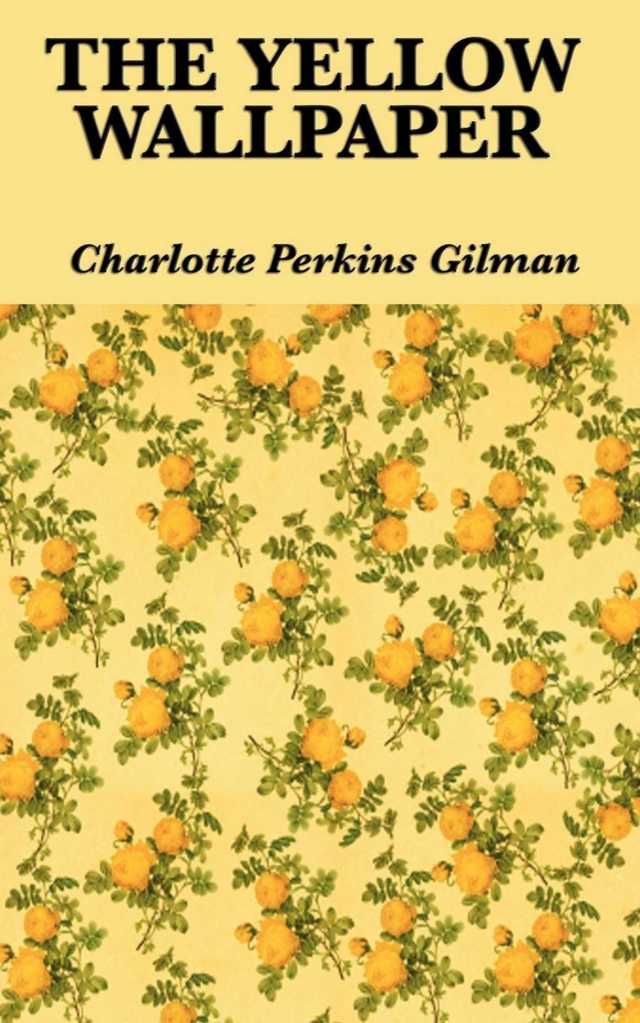
A possible allusion to the 1892 short story, The Yellow Wallpaper, by Charlotte Perkins Gilman. In the story, a woman is sent by her husband for a “rest cure” after suffering postnatal depression. It gradually becomes apparent that the woman is actually imprisoned in a single room, and as her mental state deteriorates, she begins to believe the pattern on the yellow wallpaper is changing and mutating. It is based on Gilman’s own experience, who was forbidden to read or work after suffering what was then called “nervous depression” after giving birth (she got better after eventually ignoring this medical advice).
Reader Stina Töyrä has pointed out the many connections this story has to Lorelai and her situation. Charlotte Perkins Gilman was from Hartford, the grand-niece of Harriet Beecher Stowe, and her surname is similar to Gilmore. The wallpaper at the Cheshire Cat is a creamy yellow colour, and is apparently designed to give the illusion of a moving, changing pattern. The next morning, Lorelai is convinced that the flowers have become taller, and that there are more of them than the night before. Furthermore, as with the woman in the story, Lorelai is mysteriously unable to leave her room at the B&B.
The allusion to the story would provide another example of Lorelai feeling trapped by her situation, and seeing marriage to Max as an imprisonment. Interestingly, it also hints that she may feel that her child has been the catalyst for this, as in the story it is brought on by giving birth. It may be that Lorelai would never have become engaged to Max so quickly if she didn’t have Rory to consider, and that on some level she (unfairly) blames Rory for the mess she’s in.
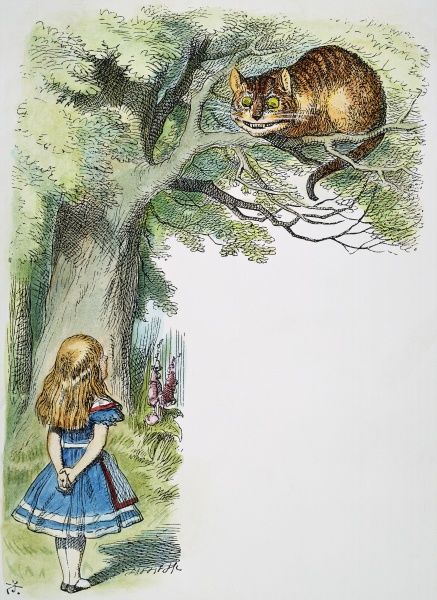
LADAWN: Welcome to the Cheshire Cat. LORELAI: … Okay, she’s named the place after an Alice in Wonderland character. This is my worst nightmare.
As Lorelai says, the Cheshire Cat is a character in Lewis Carroll’s Alice’s Adventures in Wonderland, previously discussed and frequently referenced. The cat likes to engage in amusing philosophical conversations, and is known for its distinctive grin; even when it disappears, as it does a few times, the grin will be the last thing to vanish.
The character is a personification of the English saying, “to grin like a Cheshire cat”, meaning that the person has a very wide smile. The saying dates to the 18th century, but its origins are obscure. Cheshire was known for its dairy industry, with milk and cream making cats happy, so that’s one possible explanation.
Presumably LaDawn chose the name of her B&B after her large cat, Sammy. In real life there are numerous B&Bs in the Portsmouth area to cater to the tourist trade. Scenes at the Cheshire Cat were filmed in the same set used for the Black White Read Bookstore.



 The Annotated Gilmore Girls