The Northwest Territories

LUKE: You get a promotion?
LORELAI: Oh yeah, they made me head salesman of the Northwest Territories. No, I run an inn, there’s no place to promote me too.

The Northwest Territories is the second-largest territory in Canada, with the current borders established in 1999. The northern part of the territory is in the polar region, while the southern part is subarctic, and is one of only two areas of Canada where Indigenous people make up more than half the population (it is very slightly more than 50%). Its capital is Yellowknife, which has around 20 000 people.

Because Gilmore Girls was first filmed in Canada, affectionate references to the country are made from time to time.

Everybody Needs a Little Sanctuary

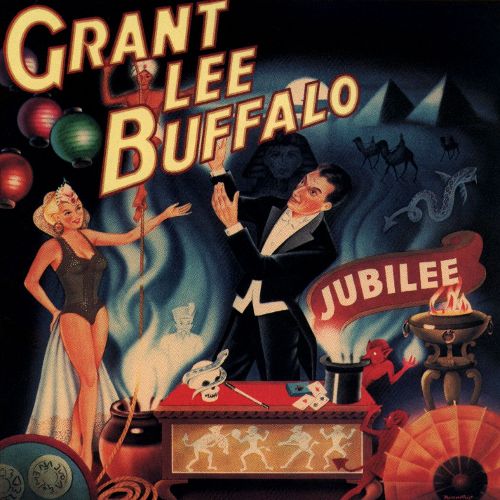
After receiving her daisies, Lorelai walks past the Town Troubadour, who is singing this 1998 song by Grant Lee Buffalo. The rival Troubadour walks by, and the Town Troubadour gives a little nod, indicating that he can join in, which he does. Hence the two troubadours mend their quarrel – this episode is all about ending arguments and bringing people together.

Everybody Needs a Little Sanctuary is from the band’s album Jubilee, previously mentioned. The song uses the metaphor of bees in their hive to evoke the sweetness of love (a slight callback to Rory’s dream about swimming in honey), and mentions the queen, as if Lorelai is the “queen bee” of Stars Hollow. It is another song about love bringing safety and security: like Rory with her boyfriend Dean, Lorelai seems to be most attracted to Max as a safe place to be.

Adolf Eichmann

KIRK: That’s right. There’s exactly a thousand of them. The order states that there is to be exactly 1000. Not 1001, not 999, but 1000. You ask for 1000, I bring 1000. I don’t question the orders. I merely fill them.
MICHEL: Job well done, Mr. Adolf Eichmann.

(Otto) Adolf Eichmann (1906-1962) was a German Nazi lieutenant colonel, and one of the major organisers of the Holocaust. After the outbreak of World War II, Eichmann and his staff were responsible for the deportation of Jews to concentration camps. After the war, Eichmann escaped Germany, and in 1950 managed to get to Argentina with false papers.

In 1960, Israeli intelligence agents captured Eichmann and brought him to Israel to stand trial for his war crimes. He did not deny his involvement, but argued that he had simply been following orders in a totalitarian system. He was found guilty, and hanged in 1962.

This is the first time we have seen Kirk (the character named Kirk, not Mick or an anonymous swan guy) in a change of job. He began as the assistant manager of Doose’s Market, and now he is doing deliveries for the flower shop. As the flower shop is right near the market, it doesn’t seem too hard to believe that Kirk could do both jobs, but as the show progresses, the number of jobs he holds blows out to comical proportions.

A Thousand Yellow Daisies

MICHEL: Daisies no less. As if I would order these pitiful little things. Foul things, these daisies. And just a notch up from weeds. And look how many. I mean, there must be at least …
LORELAI: A thousand of them. A thousand yellow daisies.
(Pan around inn’s lobby, which is filled with daisies. Lorelai walks into the middle and them and looks around.)

There are clearly way more than a thousand yellow daisies in this scene, which sounds impressive but would really just be a few bunches of flowers. You can make it work by understanding it as one thousand pots of daisies, but in reality they probably just kept putting out daisies until it looked like a huge number of flowers.

Daisies can symbolise love, fertility, and the return of someone’s affections, while the yellow colour is cheerful, vibrant, and a sign of being quick-witted, rather like Lorelai herself. Daisies are sacred to the Virgin Mary, which is a callback to the Gilmore surname itself. More generally, daisies symbolise motherhood, so Lorelai’s choice of flower can be read, “Love me, but remember I am a mother first”.

The name daisy literally means “day’s eye”, and daisies can symbolise the marking of time, and the progress of the sun throughout the day and the year. This makes it the perfect flower for Gilmore Girls, a show which is all about time.

One Line

This 2000 love song by PJ Harvey plays after Rory tells Dean that she loves him, and while she kisses him. The song begins, “Do you remember the first kiss?”, and goes on to say, “You never left my mind”, as if this describes what Rory has been thinking all this time. The song is one about needing to feel safe, and this security is what Rory seems to have most missed from her relationship with Dean.

One Line is is the fourth track from Harvey’s album Stories from the City, Stories from the Sea, generally considered one of her best works, and the winner of the 2001 Mercury Prize. PJ Harvey was the first female solo artist to win the award, and is the only artist to have to won it twice.

PJ Harvey was in Washington DC on September 11 2001, while still on tour with U2, and watched the terrorist attacks on the Pentagon from her hotel window on the same day she was informed she had won the Mercury Prize for Stories from the City, Stories from the Sea. She naturally found it a very surreal day.

Rory and Dean Reunite

While Rory is arguing with Tristan, Dean appears. He has slowly put together the pieces of the puzzle: Rory came to his house, and made a speech in public about how hard it is express your feelings. From this he correctly deduces that Rory wants to see him, and really does have feelings for him, so he drives to her school to confront her.

Why he didn’t just go to her house is not clear – maybe he was scared to see Lorelai, or word had got around that Luke was spending all his free time, and some time that wasn’t free, hanging around Lorelai’s house. It also seems to have taken him a long time to ponder the two bits of information and arrive at the correct result, as it’s more than a week since the town meeting now.

Luckily security at Chilton is really lax, and nobody tells Dean to get off school property or go find somewhere else to park rather than the main courtyard in front of the building. And luckily Rory happened to come right to where he was waiting, and he even got to rescue her from creepy Tristan.

Rory is glad to see him, and touched to discover that he has a Rory box of memories, the counterpart to her Dean box of memories. She is finally able to say, “I love you“, although she can’t help adding, “… you idiot”, and she kisses Dean.


Secrets of the Flesh: A Life of Colette

When Tristan grabs Rory’s books from her in a pathetic attempt to hold them hostage until she agrees to go the concert with him, this is one of the books we can see in the pile.

Colette, born Sidonie-Gabrielle Colette (1873-1954) was a novelist, short-story writer, journalist, actress and mime. Her works, which are often about married life and female sexuality, were semi-autobiographical, and highly critical of conventional roles for women. Colette is regarded as one of France’s great women writers, with one of her best known works the novella Gigi (1944), which was adapted into a film and a musical.

Judith Thurman is a journalist who became a staff writer for The New Yorker in 2000, and writes about fashion, literature, and culture. Her Colette biography was first published in 1999 and reprinted in 2000; it won The Los Angeles Times Book Award and the Salon Book Award in the biography category of each.

Thurman also wrote an award-winning biography of Isak Dinesen in 1983, which was used as the basis for the film Out of Africa, previously discussed.

It is not surprising that Rory would want to read a biography of an unconventional female writer, written by someone who is doing what Rory would love to do – we know she is a fan of The New Yorker. Reading a biography of Colette suggests that she has already read novels by Colette, and as we know she loves Isak Dinesen, she has probably read the earlier biography by Judith Thurman as well.

“The concert’s tonight”

TRISTAN: Are we meeting there, or what?
RORY: What are you talking about?
TRISTAN: The concert’s tonight.

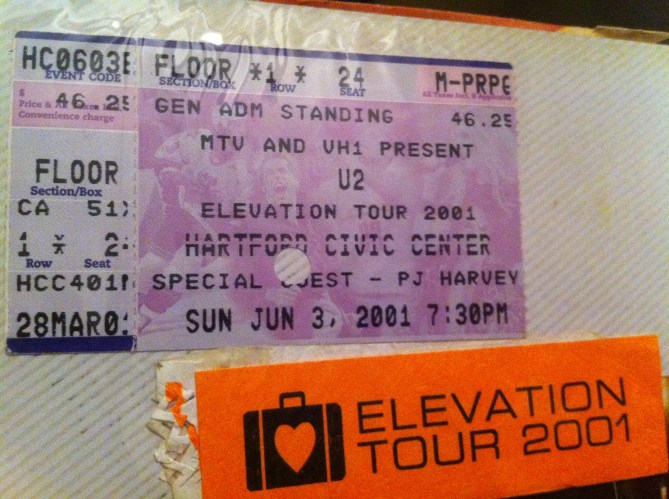
In real life, U2 and PJ Harvey performed at the Civic Center in Hartford on Sunday June 3 2001, so it doesn’t match up with the timeline in Gilmore Girls, but is only two or three weeks out.

During their argument, Tristan makes it clear that he thought PJ Harvey was a man, which lets us know that he has no chance with Rory, either now or in the future.

“We should get married”

MAX: We can’t keep getting this close, just to have something completely derail us again. And frankly there’s only one thing I can think of that could solve it.
LORELAI: Break up.
MAX: Ugh.
LORELAI: Well, I’m not interested in a murder-suicide kind of thing.
MAX: We should get married.

With the honeymoon period already fading, Lorelai and Max are back to squabbling. Max picked up that there was something between Luke and Lorelai (it seemed as if Luke was just about to confess his feelings to Lorelai before Max came in). Then Lorelai got jealous that Max dated other women while they were apart, and told him that she had sex with Rory’s father on her parents balcony.

When Max says only one thing can solve it, Lorelai immediately suggests that they break up. But what Max has in mind is marriage. The fact that the next option on Lorelai’s list was murder-suicide (suicide always seems to be the default option to relationship problems) shows that she was not ready for this at all.

Lorelai says that Max’s proposal was not romantic enough, and only offered as a way to stop them from fighting. She doesn’t mention that they have only been dating a very short time (about three weeks) since they reunited, and that their relationship is based on little more than physical attraction and sexual compatibility. These would be factors of more concern.


Soul Train

LORELAI: Okay, well, did you date like casual nothing type dating, or did you date like get down, Soul Train kind of a dating?
MAX: Well, I wouldn’t have phrased it that way, but to be honest, it was the latter.

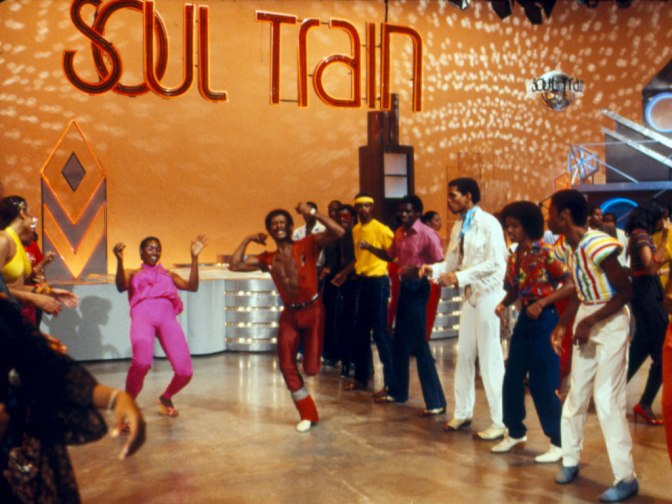
Soul Train is an American dance-music television program which aired from 1971 to 2006. The show mainly featured performances by R&B, soul, dance-pop, and hip-hop artists, but with some funk, jazz, disco, and gospel music as well. The long-running show was extremely influential on the development of African-American musical culture.