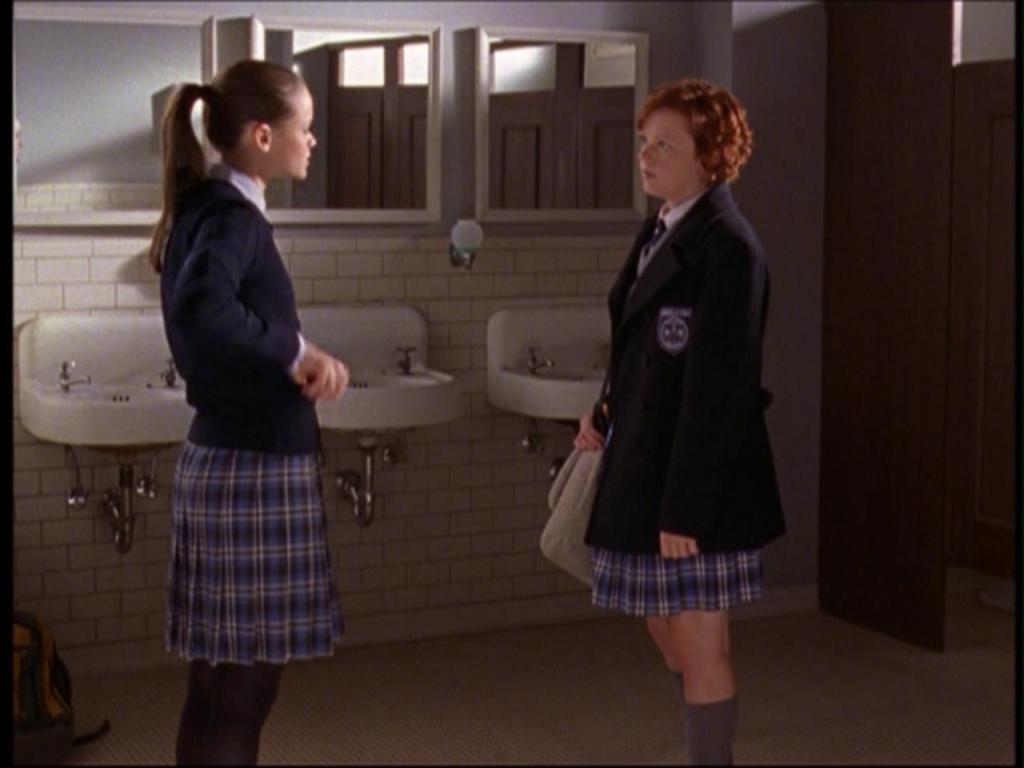
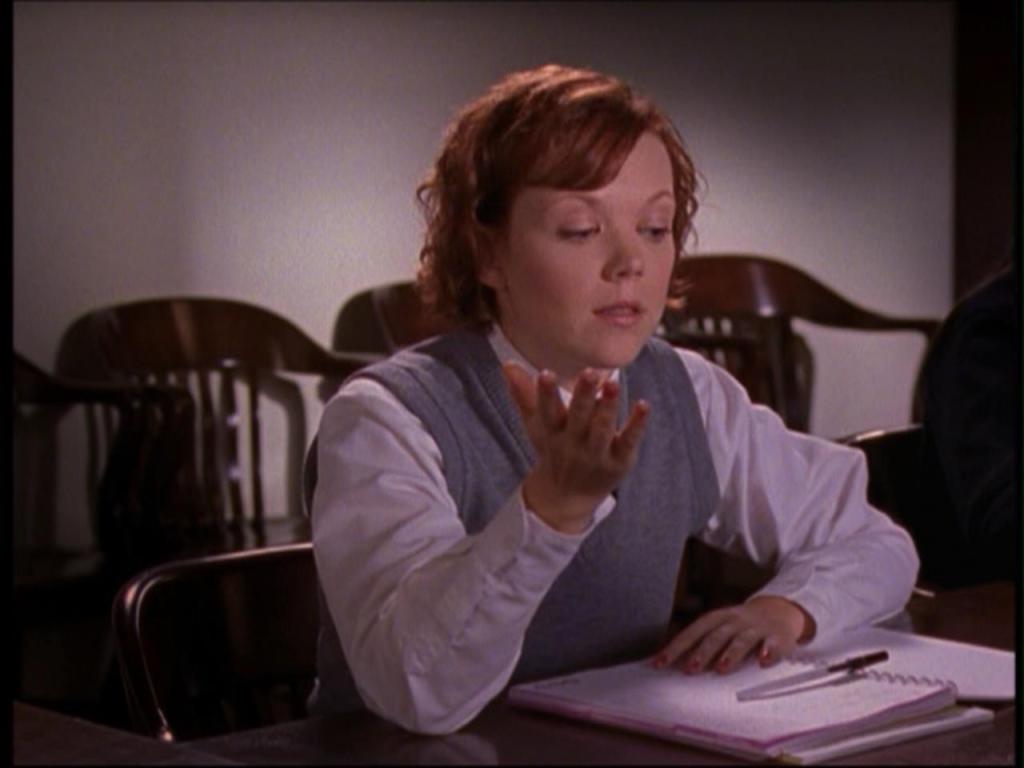
FRANCIE: Hey, no one is denying Gidget a chance to snag Moondoggie for the clambake, but the rest of us have things to accomplish.
A reference to the film Gidget, previously discussed. In the film, Moondoggie (played by James Darren) was Gidget’s love interest and eventual boyfriend. They didn’t really attend a clambake, but a luau. Presumably Francie thinks a clambake is the closest thing to a luau in New England.
FRANCIE: Paris wasn’t around. She was off yet again with the mystery man.
RORY: Jealous?
FRANCIE: Of Paris’s lobotomy victim? I think not.
Lobotomy, or leucotomy, a form of neurosurgical treatment for psychiatric or neurological disorder that involves severing connections in the brain’s prefrontal cortex. The surgery causes most of the connections to and from the prefrontal cortex, the anterior part of the frontal lobes of the brain, to be severed.
In the past, this treatment was used for treating psychiatric disorders as a mainstream procedure in some countries. The procedure was controversial from its initial use, in part due to a lack of recognition of the severity and chronicity of severe and enduring psychiatric illnesses, so it was claimed to be an inappropriate treatment.
The use of the procedure increased dramatically from the early 1940s and into the 1950s; by 1951, almost 20,000 lobotomies had been performed in the United States and proportionally more in the United Kingdom. More lobotomies were performed on women than on men: a 1951 study found that nearly 60% of American lobotomy patients were women. From the 1950s onward, lobotomy began to be abandoned as a psychiatric treatment.
Frontal lobe surgery, including lobotomy, is the second most common surgery for epilepsy to this day, and usually done on one side of the brain, unlike lobotomies for psychiatric disorder which were done on both sides of the brain.
RORY: Francie, so good of you to stop by. I know how busy you are. Gum? [hands her a piece]
FRANCIE: What’s your damage, Gilmore?
A reference to the movie Heathers, previously discussed. In the film, “What is your damage?” was a way to sarcastically ask what sort of mood someone was in. It’s from the 18th century slang “What’s the damage?”, meaning how much does something cost.
There have been several references made to this film in Gilmore Girls to highlight a “mean girl” plot line.
LORELAI: You need to develop a defense mechanism for dealing with Grandma.
EMILY: What are you talking about?
LORELAI: You just need a system, a new mindset.
Faced with Emily’s mounting hysteria at the prospect of Trix seeing Lorelai’s house and workplace, Lorelai gives Emily some advice in dealing with Trix. Instead of feeling hurt and upset by Trix’s criticisms and putdowns, she should find amusement in them – perhaps even encourage them. Lorelai is frank about the fact that it is how she copes with Emily’s criticism and hurtful comments. Although taken aback, Emily does actually take Lorelai’s advice on board, and puts it into practice that very night.
EMILY: I brought flowers over and can’t find a decent vase. All I could find was a ceramic Betty Boop head.
Betty Boop, an animated cartoon character created by Max Fleischer, featuring in theatrical cartoons during the 1930s. A caricature of a Jazz Age flapper, she is is a teenager who is drawn as both child-like and sophisticated. Fleischer said that he wanted her to be based on singer Helen Kane, although she is often said to resemble Clara Bow. She is regarded as the first animated sex symbol, and some see her as a feminist icon.
FRANCIE: The Wadsworth Mansion has just had a cancellation, which means that we can get it for prom, if we move quickly.
The Wadsworth Mansion at Long Hill Estate is a real historic venue in Middletown, Connecticut, about 16 miles north of Hartford. Built in 1911 for businessman Colonel Clarence Wadsworth, it is now owned by the city of Middletown, and is open to the public. After extensive renovations, it became possible to hire it out in 1999, and today it costs around $5000 for an evening, but catering costs extra (about $100 a head). Rory is concerned about it being too expensive, but it is used as a senior prom venue. Perhaps by schools that didn’t blow their budget on an expensive telescope.
FRANCIE: I saw her walking off with . . . who was that, her brother?
LOUISE: Paris doesn’t have a brother.
FRANCIE: Really? Well, she certainly seemed to know him.
Jamie is hanging around Chilton, being a distraction to Paris again and giving Francie an opportunity to take her down a peg. Princeton doesn’t go back after the Christmas break until mid-January, suggesting this episode takes place in the first half of the month.
However, it’s something of a mystery what he is doing in Hartford, which is a fair distance from Philadelphia. Is he staying with Paris, since she spent Christmas with his family? And why is Chilton letting him turn up during the school day? Don’t they have any security? Why are they letting Paris leave with him? What ever happened to Chilton being a really strict school?
FRANCIE: I was just so surprised that Paris was canceling the meeting that it flew right out of my head. It was New York to London in three hours or less.
Francie is referring to the Concorde, previously discussed. A flight on the Concorde from New York to London was billed as taking 2 hours and 59 minutes – a shade less than three hours. It now takes seven hours to take the same flight route. That’s progress!
SOOKIE: Twelve courses, each paired with a specific wine, and for dessert, individual chocolate amaretto mousse cakes in the shape of a G.
Amaretto, sweet Italian liqueur that can be made from almonds, bitter almonds, apricot kernels, or peach stones. It can be drunk neat, added to cocktails or coffee, and is commonly used in cooking, especially desserts. Its name means “a little bitter” in Italian.
RICHARD: Wonderfully. They’re spoiling me rotten. [takes Emily’s hand] Emily got me the most beautiful humidor. It’s from 1917, and was owned by a lieutenant in World War I.
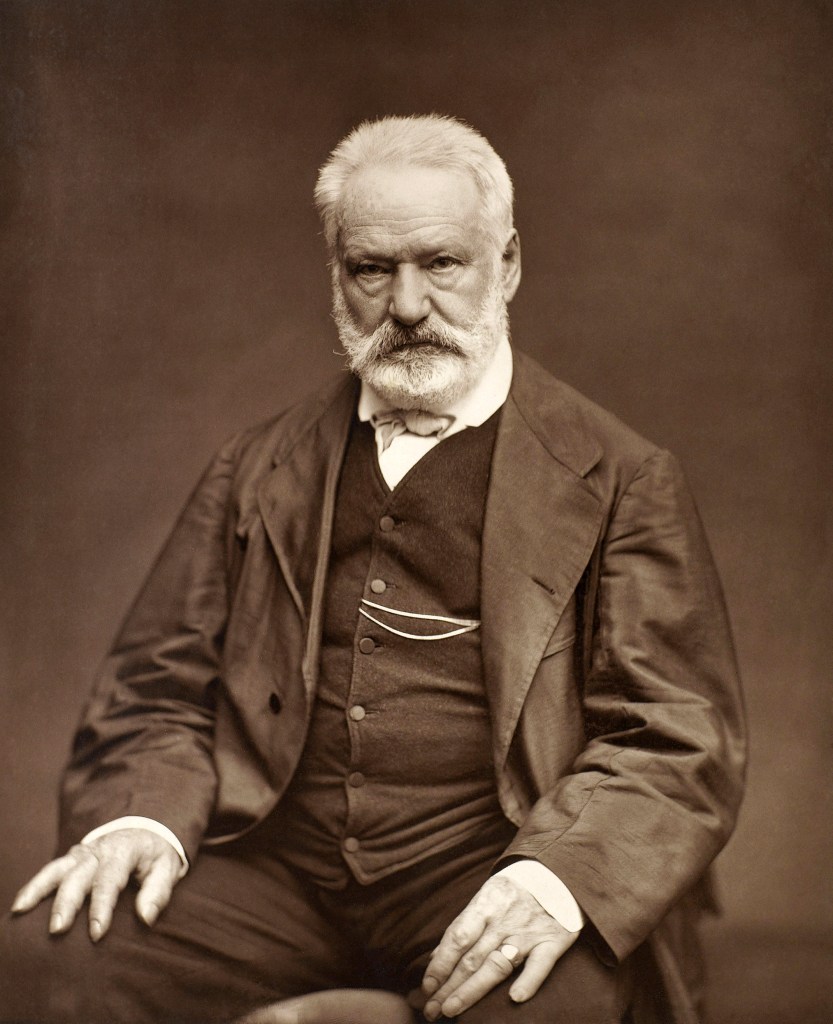
TRIX: You know, your father had a humidor that was owned by Victor Hugo. I still have it if you’d like it.
RICHARD: Well, I’d love it [drops Emily’s hand]
Victor-Marie Hugo (1802-1885), French Romantic writer and politician. During a literary career spanning more than sixty years, he wrote in a variety of genres and forms. He is considered to be one of the greatest French writers of all time. His most famous works are The Hunchback of Notre-Dame(1831) and Les Misérables (1862).
Victor Hugo was a keen smoker, even saying that “Tobacco … converts thoughts into dreams”. I presume he smoked cigars, although it seems pertinent to mention that Victor Hugo is a famous brand of cigars. Is it possible that Richard’s father actually owned a humidor that was made by the company, I wonder? It seems much more likely.
Richard always seems to choose his mother over Emily. Even after he tries to show Trix what a thoughtful gift Emily has chosen for him, he drops her hand and says he’d prefer to have his father’s humidor instead. He can be very hurtful to Emily, and shows her no loyalty when it comes to Trix.