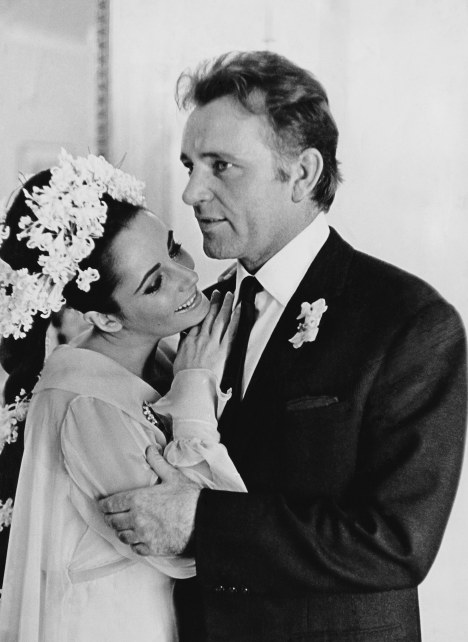
“He was my Burton and I was his Taylor”

EMILY: I must say, I admire your composure. The week before my wedding, I was a wreck.
MISS PATTY: So was I, before all of mine.
SOOKIE: How many was that?
MISS PATTY: Well, uh, there was St John, John, Sergio, St John. Three men, four times.
SOOKIE: Do you regret any of them?
MISS PATTY: Well, St John was a let down the second time, but he was my Burton and I was his Taylor. Just wish I could’ve found a little Mike Todd there in the middle.

Miss Patty is referring to actress Elizabeth Taylor, previously discussed, and her multiple marriages. She married actor Richard Burton in 1964 [pictured], then for a second time in 1975.

Elizabeth Taylor married theatre and film producer Mike Todd in 1957, a third marriage for each of them. Famously, he was her only husband never to be divorced; he was killed in a plane crash in 1958 – Taylor had meant to fly with him, but he told her to stay home as she had a cold. Although they had a tempestuous relationshop, in later life Elizabeth Taylor always claimed that she was happiest with Mike Todd than any other of her husbands.

We learn a little of Miss Patty’s personal life here, that she has been married several times, including a remarriage to her first husband, St. John. She seems to be divorced, as the marriage was a “let down”, and probably for several years at least, from the tone of Sookie’s questions.
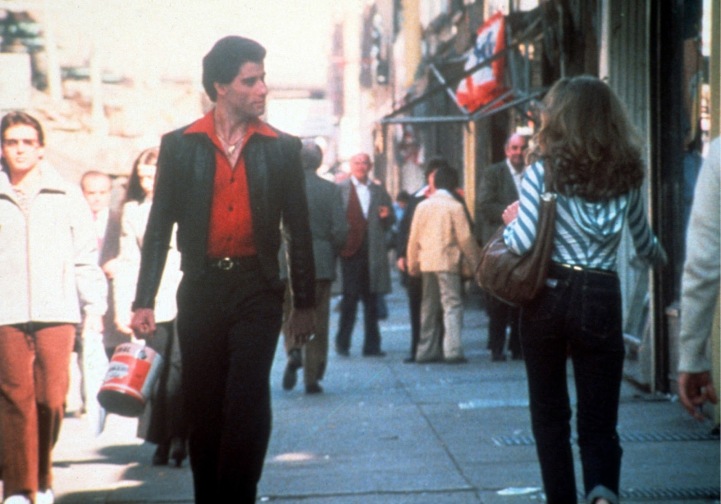
Tony Manero

MICHEL: So, is there no dancing here? I was hoping there’d be dancing.
SOOKIE: You need to strut, Tony Manero?

Anthony “Tony” Manero (John Travolta) is the protagonist of the 1977 musical drama film Saturday Night Fever, directed by John Badham, and based on a 1976 New York magazine article by British journalist Nik Cohn, Tribal Rites of the New Saturday Night. In the 1990s, Cohn admitted he’d faked the article on New York disco culture, basing the main character on a man he had briefly seen in a doorway, and an English mod he’d known in the 1960s.

The film revolves around Tony, a young working-class Italian-American man who spends his weekends drinking and dancing at a local disco in Brooklyn. While in the disco, he is the champion of the dance floor, and this helps him cope with a dead-end job, family squabbles, racial tension in his community, and a general restlessness, while he dreams of a better life.

The film begins with an iconic scene where Tony is strutting down the streets of his neighbourhood with The Bee Gees song Stayin’ Alive playing. Both scene and song are referenced in the film’s less-regarded 1983 sequel, Staying Alive.

Saturday Night Fever was a massive box-office success, and the #4 film of 1977. It received excellent reviews, and critics named it as one of the best films of 1977. It helped to popularise disco music, and made John Travolta a household name. The soundtrack, featuring songs by The Bee Gees, is one of the best-selling movie soundtracks of all time.

“Gay Icon” Waitresses at the Queen Victoria

The waitresses at the Queen Victoria are in drag as popular gay icons. Joan Crawford serves Emily, they walk past Marilyn Monroe on their way to the table, and Mae West takes Lorelai’s order.

Joan Crawford, born Lucille LeSueur (1904-1977), and previously mentioned. Beginning her career as a dancer and chorus girl on Broadway, Crawford signed her first film contract in 1925. She usually played hard-working young women who found romance and success, making her films popular fodder in the Depression era, so that she became one of the highest-paid actresses in Hollywood. Her career foundered, but she made a comeback in 1945 in Mildred Pierce, for which she won a Best Actress Academy Award. She continued acting through the 1940s and ’50s, gaining huge box-office success with the 1962 horror film Whatever Happened to Baby Jane? Crawford has been described as the “ultimate gay icon” for her sex appeal, bitchiness, and complex personal life.

Marilyn Monroe, born Norma Jeane Mortensen (1926-1962), and previously mentioned. Famous for playing comedic “blonde bombshells”, she was one of the biggest sex symbols of the 1950s. After beginning as a pin-up model, she had small parts in films before signing with Fox in 1951. By 1953 she was one of the most marketable Hollywood stars, with leading roles in Niagara, Gentlemen Prefer Blondes, and How to Marry a Millionaire in this year alone. One of her biggest successes of her career was The Seven Year Itch, a 1955 comedy where she wears the iconic white dress that the waitress models. Critically acclaimed in Bus Stop (1956), she gained both critical and commercial success with Some Like It Hot, a 1959 comedy involving cross-dressing. That was a big boost to her as a gay icon, as well as her sex appeal, vulnerability, and tragic demise.

Mary “Mae” West (1893-1980) [pictured] was an an actress and sex symbol whose career in entertainment spanned seven decades. Starting out in vaudeville and the theatres of New York, she moved to Hollywood to become a comedian, actress, and writer, with appearances in film, television, and radio. She is considered one of the greatest female stars of classic American cinema. She was often controversial, having problems with efforts to censor her – she usually found a way for this to bring her greater publicity, such as a brief stint in gaol for writing a play named Sex, which made her a media darling as a “bad girl”. The characters she played in films tended to be sexually secure and liberated women, and by 1935 she was the highest paid woman in Hollywood. West reportedly got her image, style, and famous walk by copying female impersonators, and she could be seen as a “female drag queen”. Brassy, busty, and ballsy, ultra-womanly yet somehow androgynous, with risque wisecracks and impeccable comic timing, Mae West was a lifelong supporter of gay rights, and a natural fit as a gay icon.

Get Happy

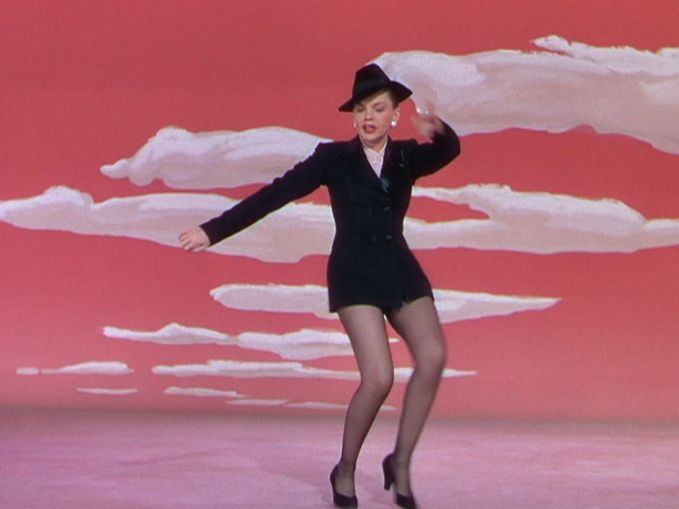
When the company enters the bar for Lorelai’s bachelorette party, a drag queen dressed as Judy Garland is lip-synching on stage to this song.

Get Happy is a song written by Harold Arlen, with lyrics by Ted Koehler; the lyrics mimic gospel and evangelical songs. It was first performed by Ruth Etting in the 1930 Broadway show Nine-Fifteen Revue, and although the musical was a disastrous flop, Get Happy was successful and recorded several times, including by both Benny Goodman and Charlie Parker.

Judy Garland sang the song in the 1950 musical film Summer Stock, her last movie for MGM. In a let’s-put-on-a-show plotline, Garland performs the number wearing a tuxedo jacket, fedora, and stockings and high heels in the movie’s most iconic scene, often copied by other singers and dancers.

Judy Garland had been a gay icon since The Wizard of Oz became popular TV viewing, so having this song playing as they enter is a stereotypical way to signal it’s a gay club.

“Robot kid in A.I.”

MAX: Say you’re not here, I come home, there’s Rory and Dean in the dark all alone after eleven. I mean, how do I handle stuff like that?
LORELAI: Oh, Max, Rory is very low maintenance. Kind of like that robot kid in A.I., only way less mother-obsessed. Oh my God, that kid was so annoying. I would’ve pushed him out of the car while it was still moving.

Lorelai is referring to the 2001 science-fiction film A.I. Artificial Intelligence, directed by Steven Spielberg and partly based on the 1969 short story Supertoys Last All Summer Long by British sci-fi author Brian Aldiss. Development on the film was first started by Stanley Kubrick in the 1970s, but the film was not completed until after his death; the film is dedicated to Kubrick.

Set in the late 22nd century, the film is about an artificial boy named David (Haley Joel Osment), who is programmed to have an enduring love for his human mother, Monica Swinton (Frances O’Connor). The film is primarily about David’s search for reassurance that Monica returned his love.

A.I. Artificial Intelligence was a commercial success, and the 4th highest-selling film world-wide, although it did less well in the US. It received mixed reviews, with most critics seeing it as brilliant, if flawed.

This is the second time Lorelai has called Rory “low maintenance”. The first time was in regard to school, where her “low maintenance” included enormously high school fees that required wealthy family members to chip in. Now she is calling Rory emotionally low maintenance, even though Rory in fact needs her mother to face most challenges. “Low maintenance” can join “sweetest kid in the world” as one of Lorelai’s least convincing descriptions of Rory.

Them!

LORELAI: Our lives as we know them will be over.
RORY: Mom, we’re not dying.
LORELAI: No, we’re not dying. But the life we had is gonna morph into this, like, mutation that we could never possibly have conceived.
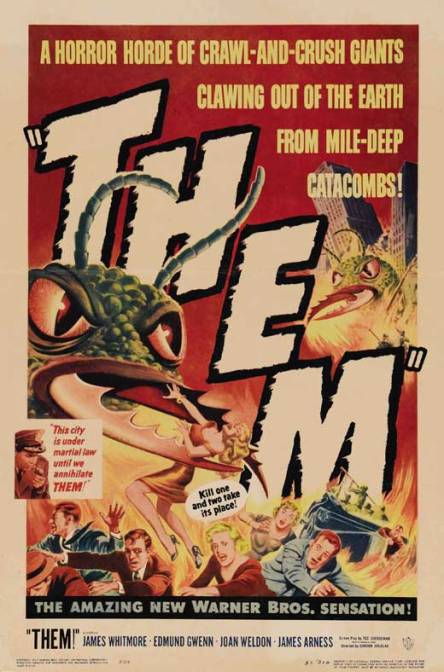
RORY: Like the giant ants in Them!?

Them!, is a 1954 science-fiction monster movie, directed by Gordon Douglas, and made by Warner Bros. In the film, a nest of giant irradiated ants is discovered in the New Mexico desert, and finally culminates in a battle against the ants in the Los Angeles sewers. It was one of the first “nuclear monster” films of the 1950s.

The film was a commercial success, and well-reviewed. It is now regarded as one of the greatest science-fiction films of the 1950s.

“Billy Jack” Movie

This is the movie that Lorelai and Rory watch with Max. It is one of their favourites: they have it on home video, and have watched it more than ten times; Rory says you cannot watch a Billy Jack movie too many times.

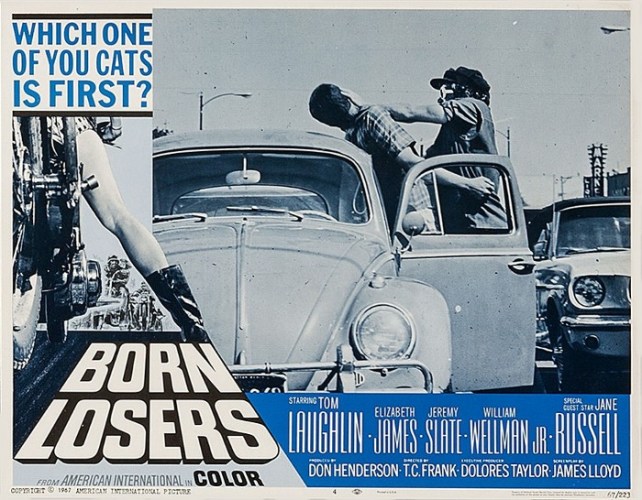
The movie they are watching is The Born Losers, the first of the “Billy Jack” films. It is a 1967 action film which was directed and produced by Tom Laughlin, who also stars in the title role. The film introduces the character of Billy Jack, a mysterious Green Beret Vietnam veteran who is of partial Navajo Indian descent.

The plot involves Billy Jack coming down from his peaceful abode in the Californian mountains to a small town, where he gets into several violent confrontations with the Born Losers motorcycle gang, and must protect others. It is loosely based on a real incident in 1964, when members of the Hells Angels were arrested for raping five teenage girls in Monterey, California.

(Incidentally, this was also the impetus for Hell’s Angels: The Strange and Terrible Saga of the Outlaw Motorcycle Gangs by Hunter S. Thomson, his first book, published in 1966. Could this have been the book that the motorcycle-loving Dean lent to Rory?)

Made on a shoestring budget, the film was a commercial success, and led to several Billy Jack sequels being made. It received generally negative reviews, mostly because of the violence, of which the show gives us a little taste.

The way that Lorelai and Rory watch The Born Losers with Max is a callback to them watching The Donna Reed Show with Dean.

In both cases, the male guest had to provide the food (Max cooked, Dean brought pizza), doesn’t get any choice in what show or movie is watched, and isn’t allowed to comment or voice an opinion on it. He can’t even hear it properly because the Gilmore girls talk all the way through it, which drowns out what they are watching. Any attempt by the male guest to assert his opinions, or even ask what is happening onscreen, is roundly attacked by Lorelai and Rory.

Just as watching The Donna Reed Show led to Rory and Dean having a major argument, watching The Born Losers prefaces a fight between Lorelai and Max.

It demonstrates to us how Lorelai and Rory watch their favourite movies and TV shows – they have a love-hate relationship with the medium, are celebratory and critical at the same time, and both focused on what they are watching, and easily distracted from it. Their viewing style is deeply ironic, taking a pleasure in bad taste which is considered “camp”. They are also highly participatory, giving a running commentatory on the show while adding their own dialogue to it.

You can tell that Lorelai and Rory are used to watching things together, and their viewing habits seem to have been formed as a way to exclude others. They both seem to take a malicious pleasure in forcing Dean and Max into the role of clueless outsider.

Monty Python Movies

RORY: We can watch Holy Grail on tape again.
DEAN: Okay, but I am not talking in an English accent for the rest of the evening.
RORY: No fun. Hey, tomorrow night?
DEAN: Life of Brian?

Rory is referring to the film Monty Python and the Holy Grail, previously discussed. We learn that it is one of the Gilmores’ favourite films, and they have it on home video.

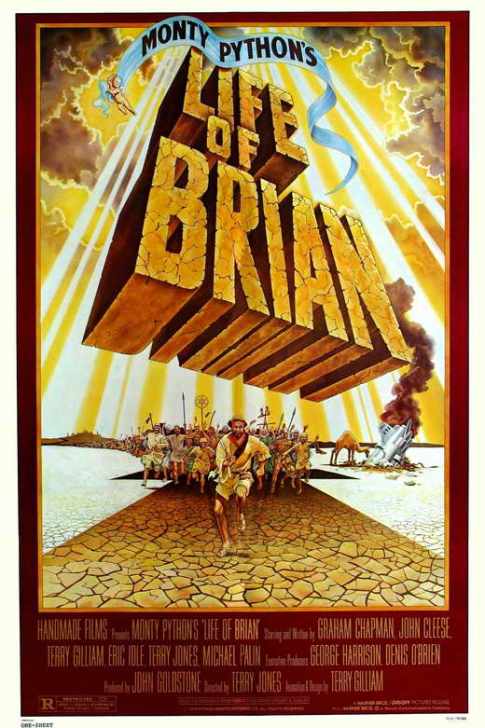
Dean is referring to Monty Python’s Life of Brian, a 1979 British religious satire written by and starring the Monty Python comedy team of Graham Chapman, John Cleese, Terry Gilliam, Eric Idle, Terry Jones, and Michael Palin, and directed by Jones.

It is about a man named Brian Cohen who happens to be born on the exact same day at the same time as Jesus Christ, and in the stable next door to his, and becomes mistaken for the Messiah. Brian is unable to shake off his unwanted disciples, and eventually has to face a similar punishment to Christ.

Life of Brian was a commercial success, and the highest-grossing British film in the US for 1979, and the #4 film in the UK for the year. The film received excellent reviews, and is considered one of the greatest comedy films of all time.

“Disgusting Cow” Movies of 2001

DEAN: Well, what movies haven’t we seen?
RORY: We haven’t seen just about all of them.
DEAN: Yeah, they all stink this year …
RORY: There are at least five of them featuring someone doing something disgusting with a cow.

I’m not actually sure which five or more movies in the first half of 2001 featuring cows Rory might be thinking of, but here are some candidates.

The romantic comedy Say It Isn’t So came out in March 2001, directed by J.B. Rogers, produced by the Farrelly Brothers, and starring Heather Graham and Chris Klein in the lead roles. In one scene, the protagonist punches a cow, only to get his arm stuck in the animal’s rectum.

The romantic comedy Someone Like You came out in March 2001, directed by Tony Goldwyn and based on the novel Animal Husbandry by Laura Zigman. It stars Ashley Judd and Hugh Jackman in the lead roles, and opens with an experiment being done where a bull is observed servicing a herd of cows. The fact that he will only service an individual cow once is significant to the film’s theme.

The adventure comedy Joe Dirt came out in April 2001, directed by Dennie Gordon, and starring David Spade in the title role. In one scene, Joe thoughtlessly ties a bottle rocket to a cow’s tail , and watches the tail spin out of control as the bottle explodes.

The comedy The Animal came out in June 2001, directed by Luke Greenfield, and starring Rob Schneider in the title role. In the movie, the main character’s life is saved by a mad scientist who replaces his critically injured body parts with ones taken from animals. In one scene, the main character has a dream about cows grazing in a field – which isn’t actually disgusting, but it’s implied to be his dream because he wants to attack them (livestock is attacked as part of the plot).

The comedy Dr. Dolittle 2 came out in June 2001, directed by Steve Carr, and a sequel to the 1998 film Dr. Dolittle (vaguely inspired by the Dr. Dolittle children’s books by British author Hugh Lofting). It stars Eddie Murphy as Dr. Dolittle, a doctor who can talk to animals. During the film, the animals organise a strike as a protest; cows refuse to give milk, and several can be heard shouting “Strike, strike!”. This isn’t particularly disgusting though.

It’s not known whether Rory and Dean saw the “disgusting cow” movies themselves, or whether Rory is basing her opinions on reviews, trailers, or what other people told her about the movies. There is a strong possibility she is exaggerating, as I could only think of two films which actually depict a person doing something to a cow on screen (Say It Isn’t So and Joe Dirt).

It is notable that all the “cow movies” I listed are comedy films which received below-average to extremely poor reviews.

Elizabeth Taylor

LORELAI: Hey Mom. I was in the neighborhood, ’cause there’s that wedding dress place on Willow. Elizabeth Taylor bought one of her dresses there.

Dame Elizabeth Taylor (1932-2011) was a British-American actress, businesswoman, and humanitarian. Beginning her career as a child actress in the 1940s, including a part in Lassie Come Home, previously mentioned, she became one of the most popular movie stars of the 1950s. She successfully continued her career in the 1960s, including as the female lead in Who’s Afraid of Virginia Woolf?, previously discussed, for which she won the Best Actress Academy Award. She remained a well-known public figure for the rest of her life, and is regarded as one of the great screen legends.

Elizabeth Taylor was famous for her many marriages, marrying eight times to seven men. Her marriages were to hotel heir Conrad “Nicky” Hilton in 1950, British actor Michael Wilding in 1952, producer Mike Todd in 1957, singer Eddie Fisher in 1959, Welsh actor Richard Burton in 1964, and then again in 1975, Republican politician John Warner in 1976, and construction worker Larry Fortensky in 1991 (ending in 1996). None of her marriages lasted a long time (she was widowed about a year after marrying Mike Todd), and this is another hint to us of the probable fate of any marriage between Lorelai and Max.

Elizabeth Taylor did not buy any of her wedding dresses in Hartford, and only had a traditional white wedding dress for her first wedding to Nicky Hilton [pictured]. It was made by MGM costume designer Helen Rose (who also made Grace Kelly’s wedding dress), and was a gift to Taylor by the studio. Her other wedding dresses were stylish gowns, with the most “wedding like” of them being for her last wedding, to Larry Fortensky. It was a pale yellow floor-length lace gown by the designer Valentino, and given to her by him as a gift.