LORELAI: The Macarena. You and Lane for hours and hours, for weeks on end. RORY: Hey, we were mocking. You can’t mock the mocking.
Macarena is a Spanish dance song by Spanish group Los del Río about a woman of the same name. Appearing on the 1993 album A mí me gusta, it was an international hit and dance craze in the latter half of 1996 and part of 1997.
In mid-1996, the infectious song became a worldwide hit roughly one year after the Bayside Boys (composed of Mike Triay and Carlos de Yarza) produced a remix of the song that added English lyrics. The reworked song spent 14 weeks at #1, and was the #1 song of 1996. The song stayed in the charts for 60 weeks, the longest reign of a hit song at that time. It is often considered one of the greatest of one-hit wonders, and one of the most enjoyable “bad songs”.
In the US, the song, and its corresponding Macarena dance, became popular around the time of the 1996 Democratic National Convention in August that year. C-SPAN filmed attendees dancing to the song in an afternoon session, something which might have attracted the young Rory to the song.
Lorelai gets revenge by mentioning some of Rory’s musical guilty pleasures.
Bryan Adams
Born 1959, Canadian singer, composer, and guitarist who has sold more than 100 million records worldwide. Joining his first band at 15, he released his debut album, Bryan Adams, at 20, and rose to fame with his 1983 album, Cuts Like a Knife. His 1984 album Reckless made him a star, with hits such as Run to You and Summer of ’69. His 1991 song Everything I Do (I Do It For You) went to #1 around the world, and is one of the best-selling singles of all time. He did a 1996 duet with Barbra Streisand, one of Lorelai’s favourites. Rory had a poster of him on her bedroom wall for two years; this doesn’t seem quite believable, as he reached his peak when she was seven, a bit younger than the usual age kids start putting posters of pop stars on their wall. Another case of Rory being a precocious child, or perhaps, like Lorelai, she is fond of the music that was big when she was a small child?
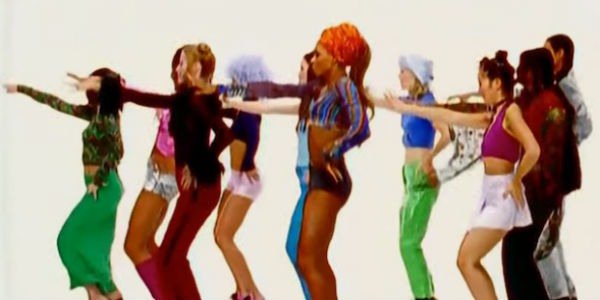
The Spice Girls [pictured]
A British pop group formed in 1994, with a mantra of “girl power”, they are one of the most recognisable acts of the British pop music resurgence of the 1990s. Their 1996 debut single Wannabe went to #1 around the world, the start of their global success as the face of a marketing juggernaut aimed at girls and young women. They went on hiatus in 2000, but have reunited for two concert tours since. The group has sold more than 100 million records worldwide, making them the best-selling girl group of all time, and the biggest British pop success since The Beatles. They became big when Rory was twelve – bang on time for an interest in pop music. Her being a fan of a girl group seems suspiciously like Lorelai’s obsession with girl group The Bangles.
Dido
Born Florian Armstrong in 1971, English singer and songwriter with a distinctive voice. She attained international success with her 1999 debut album, No Angel, which had hit singles such as Here With Me and Thank You. It sold over 21 million copies and won several awards. This seems to be quite a recent guilty pleasure, dating to when Rory was about fifteen.
Rory teases Lorelai about some of her other musical guilty pleasures.
The Bay City Rollers
A Scottish pop group known for their teen idol popularity in the 1970s. They’ve sold more than 120 million records worldwide, and their biggest hit is Bye, Baby, Baby, from 1975. It’s never confirmed that Lorelai ever actually liked them, and Rory seems to mention them as a trick to get Lorelai to confess her real guilty pleasure.
Born 1948, British-Australian singer, songwriter, and actress. Four-time Grammy Award winner with five #1 songs, she has sold 100 million records worldwide. Her biggest hits include I Honestly Love You (1974) and Physical (1981). In 1978, she starred in the musical film Grease, previously mentioned, whose soundtrack remains one of the most successful in history. In 1980 she starred in the musical film Xanadu, which was a box-office disappointment and panned by critics, but has become a cult classic (is this the reason Lorelai likes her?).
LORELAI: All right, I confess, I was hiding Barry Manilow. RORY: You confess! LORELAI: But he was very big when I was very small and it’s the live version where he does a medley of all the commercial jingles he’s written.
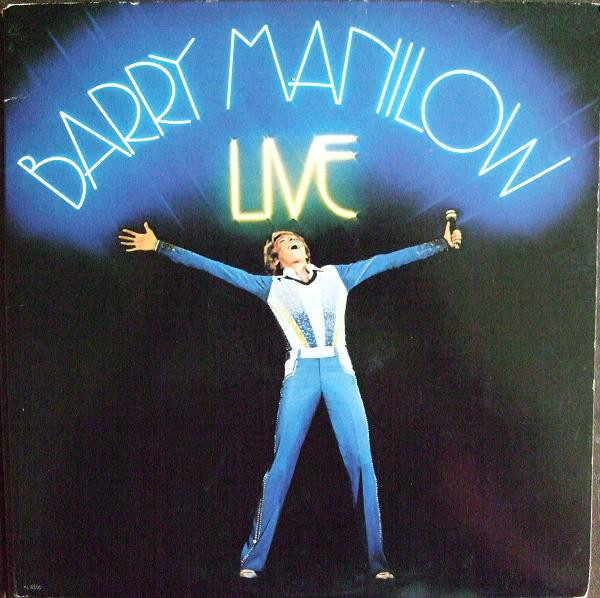
Barry Manilow (born Barry Pincus in 1943) is an American singer, songwriter, musician, and producer who’s had a career spanning more than fifty years. His biggest hits include Mandy (1971), I Write the Songs (1975), Can’t Smile Without You (1975), and the Grammy-winning Copacabana (1978). He has had 51 Top 40 hits, with 13 of them getting to #1, and has sold more than 85 million records worldwide.
Lorelai admits that she has been hiding a Barry Manilow CD under the seat of the car. The album she refers to is his 1977 Barry Manilow Live, recorded at the Uris Theatre in New York. It contains a track which is titled Very Strange Medley, and as Lorelai says, it’s a medley of commercial jingles that Manilow wrote before he became a star. Some of the products promoted are Kentucky Fried Chicken, McDonald’s, Dr Pepper, and Pepsi. Manilow says he included it against the values of his “artsy-fartsy” friends.
Rory teases Lorelai by singing a song which appears on this live album – Looks Like We Made It. It’s from his 1976 album, This One’s For You, released in 1977, and reached #1. People often take the song’s lyrics as being positive, but in fact they’re bittersweet – the narrator of the song and his ex-lover, have finally “made it”, but separately, not together. Only by breaking up have they found success. A possible reminder that, as a mother and daughter, Rory and Lorelai will have to go their separate ways at some point if Rory is to have a future.
LORELAI: Poor girl’s named after a Journey song, that’s gotta be rough.
Lorelai refers to the 1984 song, Oh Sherrie. It’s technically a Steve Perry song rather than one by his band, Journey, taken from his solo album, Street Talk. However, it’s often regarded as an “honorary” Journey song, being credited to the band on compilations of their hits, and played by the band on their 1986 Raised on Radio tour.
Oh Sherrie was Steve Perry’s biggest hit as a solo artist, going to #3 in the charts. It was written about his girlfriend at the time, Sherrie Swafford, who also appeared in the music video. Steve and Sherrie broke up around 1986, after several years of dating, but reportedly remain good friends.
Christopher’s girlfriend can’t really be named after the song – if that was the case, she would be Rory’s age or younger!
DEAN: Tomorrow you start paying. Bye. [leaves] LORELAI: Bye. And then there were three.
A reference to the American counting game, originally called “Ten Little N*iggers”, and later “Ten Little Indians”, and now “Ten Little Soldiers”. A standard of black and white minstrel shows, the original title was used for a 1939 mystery novel by Agatha Christie, now less controversially called And Then There Were None. In the novel, a series of ten murders are planned to fit with the structure of the original black and white minstrel rhyme; the pertinent line is, “Four little n*gger boys going out to sea, a red herring swallowed one, and then there were three”.
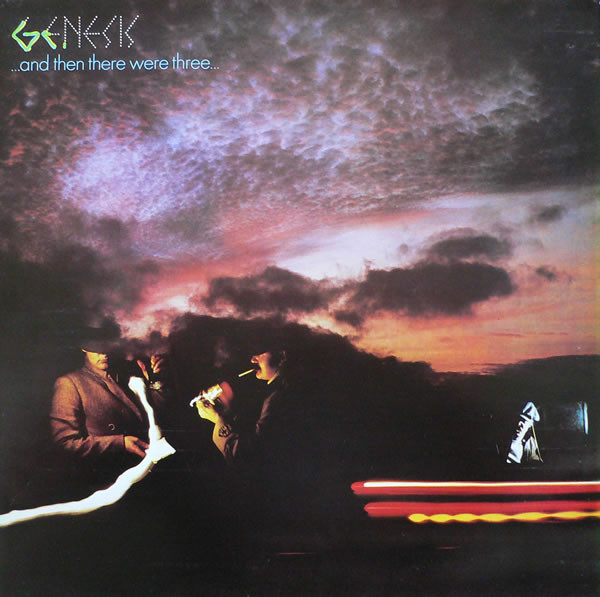
Lorelai may be thinking of the 1978 album … And Then There Were Three, by English rock band Genesis. The title was chosen because it was the first one they released as a trio, following the departure of their guitarist. It reached #3 in the UK and #14 in the US. Its most successful single was Follow You Follow Me, which coincidentally or not, is a title vaguely reminiscent of Where You Lead (I Will Follow), the theme song of Gilmore Girls.
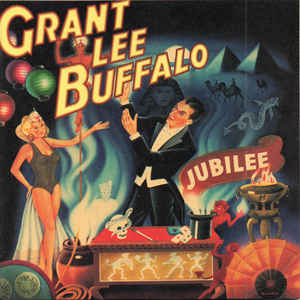
The song playing as Lorelai, Christopher, Rory, and Dean walk down the street on their return to Stars Hollow. It’s the title track from Grant Lee Buffalo’s 1998 album, Jubilee, previously mentioned.
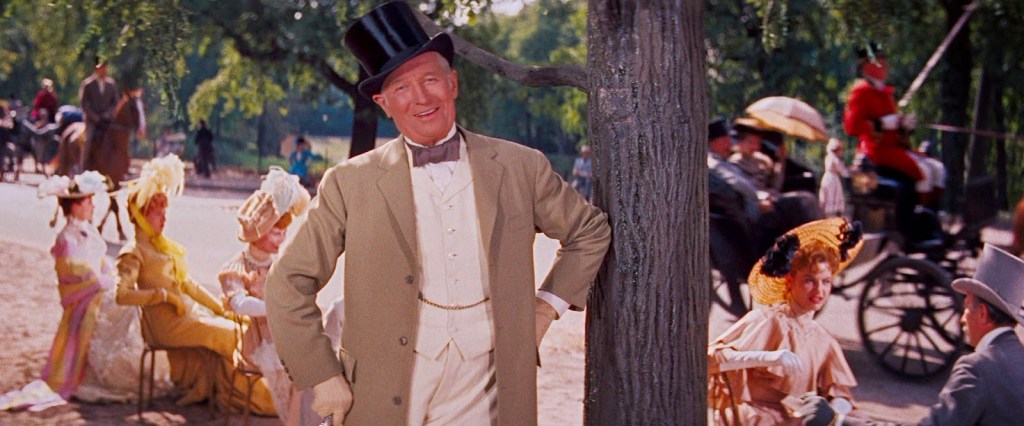
The song which is played while the debutantes perform their “fan dance” – not the burlesque entertainment the name leads you to believe, but a rather tame affair holding small white fans over their heads. Luckily for Rory, little actual dancing ability seems to be required for it.
Thanks Heaven for Little Girls is a 1957 song written by Alan Jay Lerner and Frederick Loewe, performed by Maurice Chevalier in the 1958 musical comedy, Gigi, based on the novelette by French author Colette. The film is about a sixteen-year-old girl being trained to be a courtesan in 19th century Paris, who winds up becoming a wife rather than a mistress.
The lyrics describe the pleasure men derive from little girls of “five or six or seven”, knowing that in a decade or so, they will have developed into bigger girls, who “grow up in the most delightful way”.
As a song about the joys of girls developing into nubile young women so you can marry them, it’s on theme for a debutante ball, but also wildly and hilariously inappropriate. The show does seem to agree with Lorelai (big surprise!) that there’s something pretty creepy about coming out parties and debutante balls.
CHRISTOPHER: Imagine what we could do if we freed up the brain space that holds onto the Viennese Waltz. LORELAI: Yeah, it’s right up there in between old Brady Bunch reruns and the lyrics to Rapture.
Christopher and Lorelai mention things they learned and experienced during their teenage years they can never forget. It’s a none-too-subtle reference to the fact that they can never really forget each other or let each other go.
Viennese Waltz
A type of ballroom dance, the original form of the waltz. It emerged in the second half of the 18th century from a German baroque dance and an Austrian folk dance. The American style of the waltz allows for much greater freedom of movement.
The Brady Bunch
An American sitcom about a large blended family which aired from 1969 to 1974, but is still popular today as re-runs. There are also numerous specials, spin-offs, and television movies based on the show. It later turns out that Lorelai and Rory often watched them.
Rapture
A 1981 Blondie song which combines new wave, disco, and rap. From the album Autoamerican, it went to #1 in the US, and was successful around the world. It was the first song with rapping in it to get to #1, and the first rap song to original music.
The lyrics are:
Toe to toe Dancing very close Barely breathing Almost comatose Wall to wall People hypnotised And they’re stepping lightly Hang each night in Rapture
Back to back Sacroiliac Spineless movement And a wild attack
Face to face Sadly solitude And it’s finger popping Twenty-four hour shopping in Rapture
Fab Five Freddy told me everybody’s fly Dj spinnin’ I said, “My, my” Flash is fast, Flash is cool François c’est pas, Flash ain’t no dude And you don’t stop, sure shot Go out to the parking lot And you get in your car and drive real far And you drive all night and then you see a light And it comes right down and it lands on the ground And out comes a man from Mars And you try to run but he’s got a gun And he shoots you dead and he eats your head And then you’re in the man from Mars You go out at night eatin’ cars You eat Cadillacs, Lincolns too Mercurys and Subaru And you don’t stop, you keep on eatin’ cars Then, when there’s no more cars you go out at night And eat up bars where the people meet Face to face, dance cheek to cheek One to one, man to man Dance toe to toe, don’t move too slow ‘Cause the man from Mars is through with cars He’s eatin’ bars, yeah wall to wall Door to door, hall to hall He’s gonna eat ’em all Rapture, be pure Take a tour through the sewer Don’t strain your brain, paint a train You’ll be singin’ in the rain Said don’t stop to punk rock
Well now you see what you wanna be Just have your party on TV ‘Cause the man from Mars won’t eat up bars when the TV’s on And now he’s gone back up to space Where he won’t have a hassle with the human race And you hip-hop, and you don’t stop Just blast off, sure shot ‘Cause the man from Mars stopped eatin’ cars and eatin’ bars And now he only eats guitars, get up
Lorelai must have sung along to this a lot to have learned all the lyrics off by heart! Maybe this is the song Lorelai was thinking of when she told Max she is into rap music?
LORELAI: So how’s it going? RORY: Actually, I’m not very good [at dancing]. DEAN: Yeah, which is really holding me back, because I’m a natural. LORELAI: Well, maybe you just need a glittery glove and a really freaky face.
A reference to pop singer Michael Jackson (1958-2009), known for being an extraordinary dancer.
He famously wore a “glitter glove” on one hand for the first time he did the “Moonwalk” while performing Billie Jean in 1983. This leather glove studded with diamantes became an iconic look for him.
Jackson was also known for the amount of cosmetic surgery he had on his face – perhaps as many as ten operations by the early 1990s on his nose, cheekbones, chin, forehead, and lips. Over time, his face became more and more unrecognisable.





 The Annotated Gilmore Girls