Taylor Hanson

LORELAI: I’m not even talking specifically about Dean. I mean just generally in life. For example, say you’re dating Taylor Hanson.
RORY: Why am I dating Taylor Hanson?
LORELAI: It’s a hypothetical scenario, go with it. So, uh, you and Taylor have been seeing each other pretty regularly …

(Jordan) Taylor Hanson (born 1983) is a member of the pop group Hanson. He sings lead and back-up vocals, and plays multiple instruments. In 2009 he became a member of the supergroup Tinted Windows.

Rory probably could not have dated Taylor Hanson in 2001, as he had already been dating his future wife for two years at this point. They were married the following year, in 2002, and currently have five children together.

“Mr. Cosell”

EMILY: She [Rory] got home from school, but she just went right upstairs. Now she didn’t want a snack, but I had Rosa make her one anyway. I haven’t checked to see if she’s eaten it. She had a decent breakfast this morning, but she did seem a little tired, and when I went into her bathroom the aspirin bottle was out, so I assume she had a headache. Now, I don’t know if it was last night or …
LORELAI: Excuse me, Mr. Cosell. I appreciate the play-by-play but I just want to talk to my daughter now.

Howard Cosell, born Howard Cohen (1918-1995) was an American sports journalist who entered sports broadcasting in the 1950s, and in the 1970s became the commentator for Monday Night Football on ABC. He completely changed the style of sportscasting towards one of context and analysis, similar to hard news journalism, and is regarded as the greatest American sports commentator of all time. Lorelai compares Emily’s blow-by-blow account of Rory’s activities to Cosell’s in depth analysis of a football game.

Emily’s speech shows her hyper-controlling style of micromanagement. Rory has only been home from school for around an hour, but has had her every move and mood scrutinised, been given a snack after saying she didn’t want one, and had her bathroom searched after leaving it. It’s a telling insight into what Lorelai’s childhood must have been like, and into what Rory’s would have been like if Lorelai had remained living with her parents after becoming a mother.

Emily allows no autonomy, choice, or privacy, and keeps people under surveillance as if they are in prison (remember Lorelai, an adult, could not even say she was going to the toilet without being followed?). It’s really hard to blame Lorelai for fleeing her childhood home because of these circumstances, fearing that Rory would have to endure the same childhood she did.

Fabio

(Lorelai gets Luke to try on the clothes she bought for him with his credit card)
LORELAI: I just wanna make sure it all fits. Turn around. (Luke turns around.) Uh huh, uh huh.
MAN AT COUNTER: Hey Fabio, I need the ketchup.

Fabio (born Fabio Lanzoni in 1952) is an Italian-born American model and actor. He has appeared in several commercials, television shows, and movies, and became recognised as a model of the cover of multiple romance novels in the 1980s and ’90s. He was also famous for appearing in “I can’t believe it’s not butter” commercials. He was once known as “the most beautiful man in the cosmos”, and often considered very vain about his appearance (his catchphrase was, “Don’t hate me for being Fabio!”)

No prizes for guessing why Lorelai is so pleased to see Luke turn around …

The man at the counter is Joe (Brian Berke), who is also the pizza delivery guy in Stars Hollow.

Emma Goldman

LUKE: I hate malls … They underpay employees and overprice merchandise, they contribute to urban sprawl, they encourage materialism, and the parking’s a horror. You drive in, you pay a buck, and even if you’re only there for five …
LORELAI: Okay, Emma Goldman, I’ll tell you what. I’ll go for you.

Emma Goldman (1869-1940) was a Russian-born American anarchist, political activist, and writer. She played a pivotal role in the development of anarchist political philosophy in the early twentieth century, and was strongly influenced by Freidrich Nietzsche, among others. She believed that capitalism was incompatible with human liberty, and in her youth, sanctioned violence and even murder as a legitimate part of the revolutionary struggle.

Anna Nicole Smith and Mary Kay Letourneau

(Older man walks by.)
LORELAI: Pass.
RORY: Why?
LORELAI: Because I’m not Anna Nicole Smith. Next.
RORY: Two.
(Teenage boy on a skateboard goes by.)
LORELAI: Hmm, pass.
RORY: Why?
LORELAI: Because I’m not Mary Kay Letourneau.

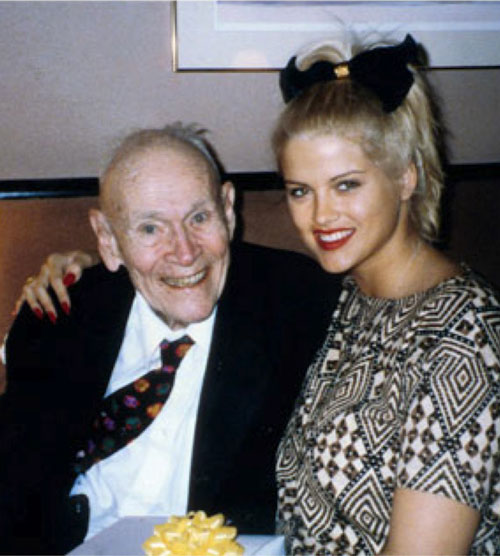
Anna Nicole Smith, born Vickie Lynne Hogan (1967-2007) [pictured] was an American model and actress who first gained fame as a Playboy model, winning Playmate of the Year in 1992. She was perhaps best known for her 1994 marriage to J. Howard Marshall, an 89-year-old petroleum tycoon she had met while working at a strip club. It was speculated that she had married him for his money because of the age difference. Marshall died the following year, and there was a protracted legal case over his will; during it, Smith herself died, gaining no money from his estate.

Mary Kay Letourneau (born Mary Katherine Schmitz in 1962) is an American former schoolteacher who in 1997 pleaded guilty to raping a child, her twelve-year-old student Vili Fualaau, to whose baby she gave birth while awaiting sentencing. Due to a plea agreement, she was sentenced to three months in prison, and was not allowed contact with Fualaau for life. She broke the no-contact order soon after being released from prison, and was imprisoned again, this time for seven years, giving birth to another child in prison. After Letourneau was released in 2004, Vili Fualaau, now an adult, asked that the no-contact order be revoked, and they married in 2005. They legally separated in 2017, although they apparently still live together and are still in a relationship.

Steven Tyler

RORY: Can I ask you a question?
LORELAI: Yes, I would date Steven Tyler.
RORY: Can I ask you a question whose answer wouldn’t horrify me?

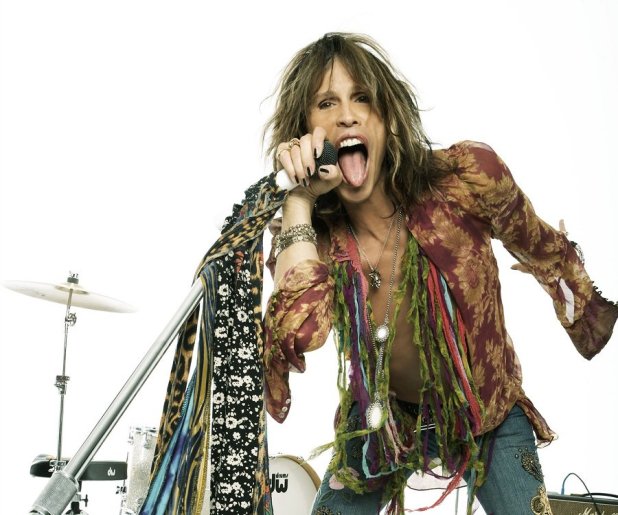
Steven Tyler (born Steven Tallarico in 1948) is an American singer, songwriter, and musician, best known as the lead singer of the rock band Aerosmith. He is known for his high pitched screaming and wide vocal range, on stage acrobatics, and colourful stage outfits, including his trademark scarves (this may have appealed to Lorelai, as scarves are among her favourite accessories).

Tyler gained fame during the 1970s, which waned in the early 1980s due to his drug use. After receiving treatment, he staged a remarkable comeback in the mid-1980s, and Aerosmith reached the peak of their success during the 1990s. He is now regarded as an enduring rock icon.

Prince

LORELAI: I sat her [Emily] down to listen to a Prince song once, and she looked like she was having a stroke.

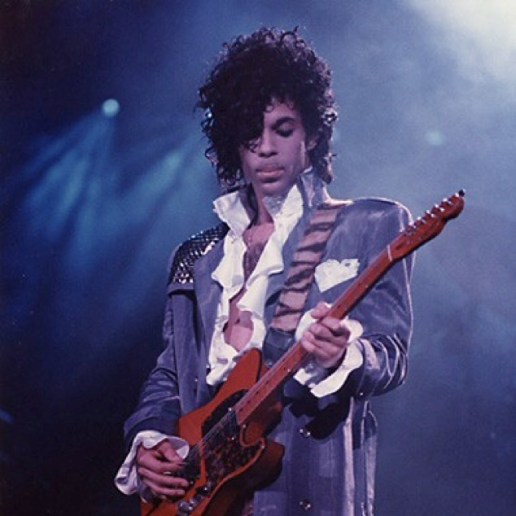
Prince, born Prince Nelson (1958-2016) was an American singer, songwriter, and musician, previously mentioned. His first album, For You, was released in 1978, and his breakthrough was the 1982 double album, 1999, with hit singles such as his signature song 1999, and Little Red Corvette. His most successful album is the 1984 Purple Rain, the soundtrack to the musical film of the same name. When Doves Cry, the first single from the album, became his first #1 hit.

It is unclear which of Prince’s songs the teenaged Lorelai might have played for Emily, but it’s most likely one from 1999, which came out when Lorelai was fourteen (it was possibly the title track). By the time Purple Rain was released in late June 1984, Lorelai would have been six months pregnant, and probably past the point of trying to bond with Emily over pop music.

The incident is one based on Amy Sherman-Palladino’s own life – her mother was likewise horrified when Amy played a Prince song for her.

Gloomy Music

LANE: Like Joy Division gloomy? Nick Cave gloomy? Robert Smith gloomy?
RORY: Johnny Cash gloomy.
LANE: So kind of like a “San Quentin-y, it’s a long road home and my horse just got shot but I’ve still got my girl by my side” gloomy?
RORY: You read my mind.
LANE: I’m deep in a Charlie Parker gloomy … Now I’m a Lou Reed gloomy.

Joy Division were an English rock band formed in 1976 by Ian Curtis, Bernard Sumner, Peter Hook, and Stephen Morris. Inspired by a Sex Pistols gig Curtis and Hook attended, they became pioneers in the 1970s post-punk movement. Their 1979 debut album, Unknown Pleasures, was released to critical acclaim. As the band’s popularity grew, singer-songwriter Ian Curtis suffered an array of personal problems, including depression, severe epilepsy, and a failing marriage. He found it increasingly difficult to perform live, as he sometimes had seizures while on stage. In 1980, just before the band’s first American tour, Curtis took his own life, aged 23. The band’s final album, Closer, was released two months later; the single Love Will Tear us Apart became their most successful release. The remaining members continued on under the name New Order, achieving further critical and commercial success.

Nicholas “Nick” Cave (born 1957) is an Australian singer, songwriter, musician, author, screenwriter, composer, and actor, best known as the front man for the rock band Nick Cave and the Bad Seeds. Based in England since 1980, Cave is pale and emaciated with longish dark hair, and described as a poster boy for Gothic rock. Most of Nick Cave and the Bad Seed’s early material is set in a mythical American Deep South, and draws on biblical themes. His 1997 melancholic love ballad Into My Arms is one of his best known songs, and his 1996 duet with Kylie Minogue, the murder ballad Where the Wild Roses Grow, his most commercially successful single.

Robert Smith (born 1959) [pictured] is an English singer, songwriter, and musician, best known as the lead singer, lyricist, and lead guitarist for the rock band The Cure, previously mentioned, and founded in 1976. He was also lead guitarist for Siouxsie and the Banshees, earlier discussed, from 1982 to 1984. He is known for his distinctive singing style and trademark stage image of pale complexion, eyeliner, smeared red lipstick, dishevelled black hair, and black clothes, which became iconic in the Goth subculture, and highly influential on popular culture in general, such as the films of Tim Burton. It’s become almost a cliche in pop culture for a teenager to like The Cure as a sign of them being “troubled”; Gilmore Girls averts this, as both Rory and Lane are fans, while not being Goths or having significant personal problems (although Lane did play The Cure as a sign something was wrong in her life).

John “Johnny” Cash (1932-2003) was an American singer, songwriter, guitarist, actor, and author. He is one of the best-selling music artists of all time, and is best known as a country music icon, although he has embraced multiple genres – this has led to him being inducted into the Country Music Hall of Fame, Rock and Roll Hall of Fame, and Gospel Music Hall of Fame. His trademark all-black stage ensemble earned him the moniker of “The Man in Black”, and his songs tend to have themes of sadness, suffering, and redemption. His signature song was the 1953 Folsom Prison Blues, which is probably what Lane is thinking of by “San Quentin-y” – San Quentin is the largest prison in California, and Johnny Cash performed there a couple of times, including singing a song named San Quentin. The rest of her line is a collection of sad country music tropes.

Charles “Charlie” Parker, also known as “Yardbird” Parker and “Bird” Parker (1920-1955) was an American jazz saxophonist and composer. A highly influential jazz soloist, and leading figure in bebop, he was a hipster and Beat Generation icon, personifying the jazz musician as an artist rather than an entertainer. He suffered from depression, heroin addiction, and alcoholism, and twice attempted suicide; however only some of his pieces are sombre in tone.

Lewis “Lou” Reed (1942-2013) was an American singer, songwriter, and musician. He was the lead guitarist, singer, and main songwriter for the rock band The Velvet Underground, previously discussed as one of Lane’s favourite musical artists. He had a solo career spanning five decades, with the 1972 album Transformer bringing him mainstream recognition, and his 1989 album New York regarded as his greatest work. He has a gloomy singing style, and many of his songs feature themes of grief, horror, and fear.

Martha Washington

RORY: So, what do you think? [of the Independence Inn]
EMILY: Well, I think it’s very nice.
RORY: Mom’s office is right back there. Oh, and you have to see the dining room. They got the chandeliers from one of Martha Washington’s houses.

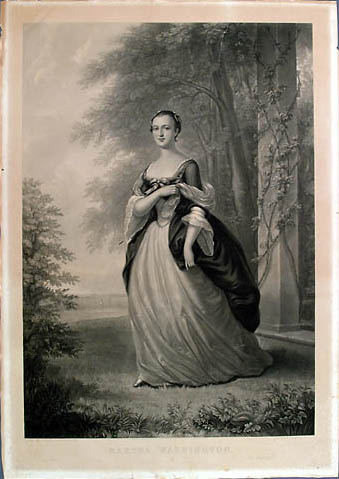
Martha Washington, born Martha Dandridge (1731-1802) was the wife of President George Washington, and First Lady of the United States (although the title was not coined until after her death, she is considered to be the first First Lady). The couple married in 1759.

Martha married the politician Daniel Custis in 1750, and after his death in 1757 she inherited his considerable estate, becoming a very wealthy widow while still a relatively young woman. Her houses included The White House, a plantation house in Virginia which was the main family home, and a house in Williamsburg, Virginia, which was later named Six Chimneys. Besides these, she was also left in possession of five plantations.

The White House burned down during the American Civil War, and Six Chimneys fell into disrepair and was eventually torn down. Of the five plantation houses, I can discover nothing, but it seems most likely that the chandeliers either came from one of these, or just possibly, from Six Chimneys; if so, the chandeliers may have been removed around the late 18th century or very early 19th century.