Squeaky Fromme

TRISTAN: Uh-huh. Well, look, Okay, I’ll confess something to you. I don’t have a date.
RORY: Well I hear Squeaky Fromme is up for parole soon. You should keep a good thought.

Lynette “Squeaky” Fromme (born 1948) was a member of the infamous Manson Family. She was sentenced to life imprisonment in 1975 for the attempted assassination of President Gerald Ford, and was released on parole in 2009; she now lives in a small town in New York state. She is one of only two former followers of Charles Manson who never renounced the cult leader and continued to profess her allegiance to him.

Susan Faludi

TRISTAN: The guy’s supposed to buy the tickets.
RORY: Really. Does Susan Faludi know about this?

Susan Faludi (born 1959) is an American feminist, Pulitzer prize-winning journalist, and author. Rory may be interested in her work partly because she is a Harvard graduate who became a journalist. During the 1980s she wrote for The New York Times and Wall Street Journal, among others, often writing articles on feminism.

Her book Backlash: The Undeclared War on American Women was published in 1991, and has become a classic feminist text. In 1999 she followed it up with Stiffed: The Betrayal of the American Man, which looks at how traditional views of masculinity have led to poorer outcomes for many men.

Rory has probably read both books, but may be thinking of Stiffed when she makes her comment to Tristan, as he is espousing a stereotyped view of male gender roles.

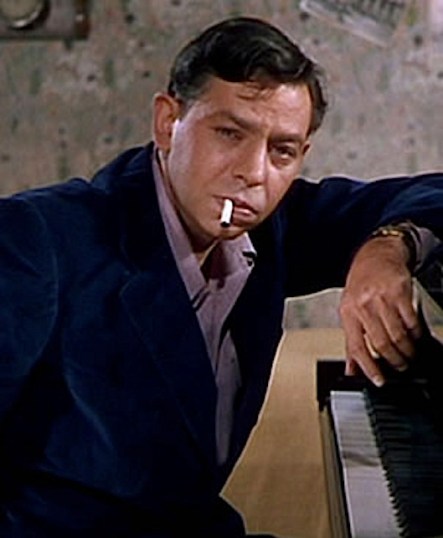
Oscar Levant

Lorelai jokingly tells Emily that if Rory grows up bitter and filled with regrets, she could become a crazy Oscar Levant type of celebrity.

Oscar Levant (1906-1972) was an American pianist, composer and comedian. A serious composer who wrote numerous film scores for Hollywood and appeared in several films as a pianist, he was famous for his eccentricity and acid wit. He was a panellist on radio and TV for many years, and was open about his many neuroses.

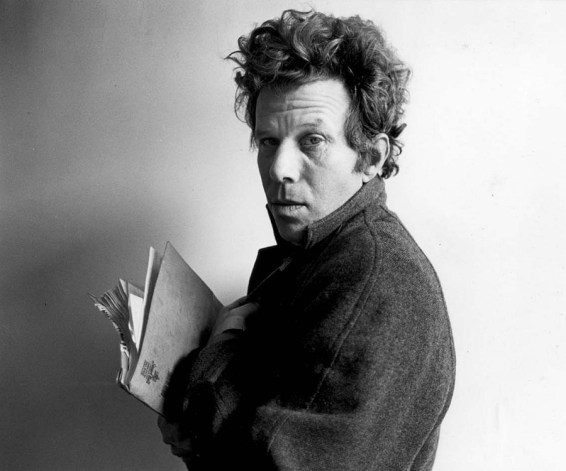
Tom Waits

LORELAI: Or it’ll be all sparkly and exciting and you’ll be standing on the dance floor listening to Tom Waits with some great-looking guy staring at you so hard that you don’t even realize that Paris and Tristan have just been eaten by bears.

Tom Waits (born Thomas Waits in 1949) is an American singer, songwriter, and musician with a distinctive gravelly voice. His first album came out in 1973, and his most recent album in 2000 was Mule Variations, which came out in 1999, and was his most commercially successful album at that time; it won a Grammy Award. Waits has gained critical acclaim and a cult following over the years, and was inducted into the Rock and Roll Hall of Fame in 2011.

Václav Havel

RORY: Did you know the cell that Václav Havel was held in is now a hostel? You can stay there for like $50 a night.

Václav Havel (1936-2011) was a Czech statesman, author, and former dissident. He was the last president of Czechoslavakia from 1989 to 1992, then the first president of the Czech Republic from 1993 to 2003.

Havel was a playwright in Prague who rose to prominence with anti-communist works such as The Garden Party. After participating in the Prague Spring, he became more politically active, and played a major role in the Velvet Revolution that ended communism in Czechoslavakia in 1989. A popular president and major intellectual figure of the twentieth century, he was awarded multiple international awards for peace and freedom.

During his period of political activism against communism, Havel was under the surveillance of the secret police, and sent to prison several times, the longest period being from from 1979 to 1983. Havel was held in a prison opposite the police station in Prague; it was a basement cell in a building that had once been a convent run by the Franciscan Grey Sisters (religion was banned under communism, and all church property siezed by the state).

Once communism had ended and the nuns were allowed to have their convent back, they turned part of it into a hostel for budget travellers and called it Pension Unitas; it generated enough funds to rebuild the convent, the church, and other buildings owned by the Grey Sisters.

Pension Unitas closed in 2006 after hosting 150 000 guests, and was relaunched as the Unitas Hotel. You can stay at the hotel for about $180 a night, and it receives excellent reviews.

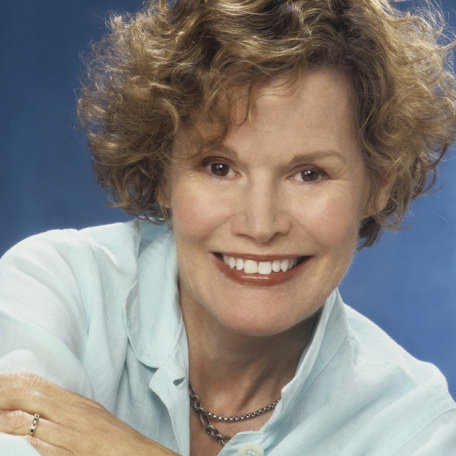
Judy Blume

LORELAI: Oh, Lane is gonna stay here tonight. She had a really bad teen day and she needs to crash someplace sympathetic … I swear to God, if this wasn’t a major Judy Blume moment, I would kick her cute little butt right out of here.

Judy Blume (born 1938) is a popular award-winning American writer best known for her children’s books and young adult fiction. First published in 1969, she was one of the first writers to cover topics such as racism, religion, masturbation, menstruation, teenage sex, birth control, divorce, and death in order to address common worries for young people that often aren’t openly talked about. Because of this, many people remember the Judy Blume books they read as a child with fondness and gratitude.

Like Lane’s situation, Judy Blume characters often end up at a crisis point of shame or social anxiety where they wonder how they can continue living as they did before.

Errol Flynn

RICHARD (to Emily): You also knew that you wanted to marry Errol Flynn.
RORY: Really? Grandma had a thing for the pirate guy?

Errol Flynn (1909-1959) was an Australian-born American actor. First appearing in the 1933 Australian film In The Wake of the Bounty as mutineer Fletcher Christian, he got his first leading role in Hollywood in the 1935 film Captain Blood, where he played the rebellious buccaneer Peter Blood. After this he tended to be cast in romantic swashbucklers, often opposite Olivia de Havilland.

Flynn had a reputation as a womaniser and a voyeur, and in 1942 he was accused of statutory rape. Even though he was acquitted, his reputation was damaged. (Flynn actually picked up a teenage girl at the trial, and ended by marrying her; later he had a serious relationship with a 15 year old girl, adding some weight to the statutory rape accusations).

Emily’s attraction to a star seen as a hell-raiser and a rogue, dangerous for girls to be around, hints at a rather steamy side to her own sexual nature.

Charlotte Bronte


DEAN: Wow, she brings me cookies. How can I repay her?
RORY: How about a little Charlotte Brontë?

Charlotte Brontë (1815-1855) was an English novelist whose works have become literary classics. Her best known novel is Jane Eyre (1847).

It might seem natural to go from Jane Austen to Charlotte Brontë, as they are both 19th century female authors – it almost seems as if Rory is devising a reading programme for Dean. They are quite different in style and approach though, so Rory shouldn’t assume that just because Dean liked Emma he would enjoy reading Charlotte Brontë.

Charlotte Brontë herself disliked Jane Austen, although she was probably justifiably prejudiced from having her own works compared to Austen’s.

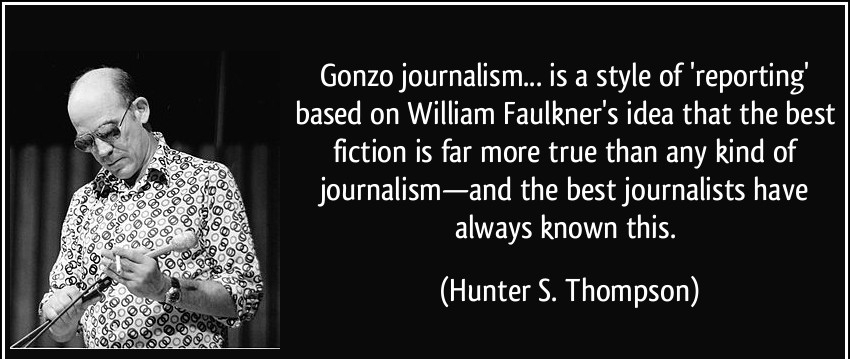
Hunter Thompson

RORY: I told [Dean] he would [like Jane Austen], but he was all, “Forget Jane Austen, you have to read Hunter Thompson.”

Hunter S. Thompson (1937-2005) was an American journalist and author. He became a countercultural icon, and founded what he called “Gonzo Journalism”, where the reporter involves themselves in the action to such an extent that they become a central part of the story. His best known work is Fear and Loathing in Las Vegas (1972), an autobiographical novel about the failure of the 1960s countercultural movement. His output declined as he became so famous that he could no longer insert himself into events without being recognised.

The Rory and Dean who can happily swap book suggestions for each other don’t seem to last long. Maybe Dean only had the one writer to recommend, or simply couldn’t keep up with Rory’s reading.