Writing Letters to Jodie Foster

LUKE: You know what people told me when I said you were coming here to live with me? They told me I was crazy, they told me I was insane, they told me to start writing letters to Jodie Foster.

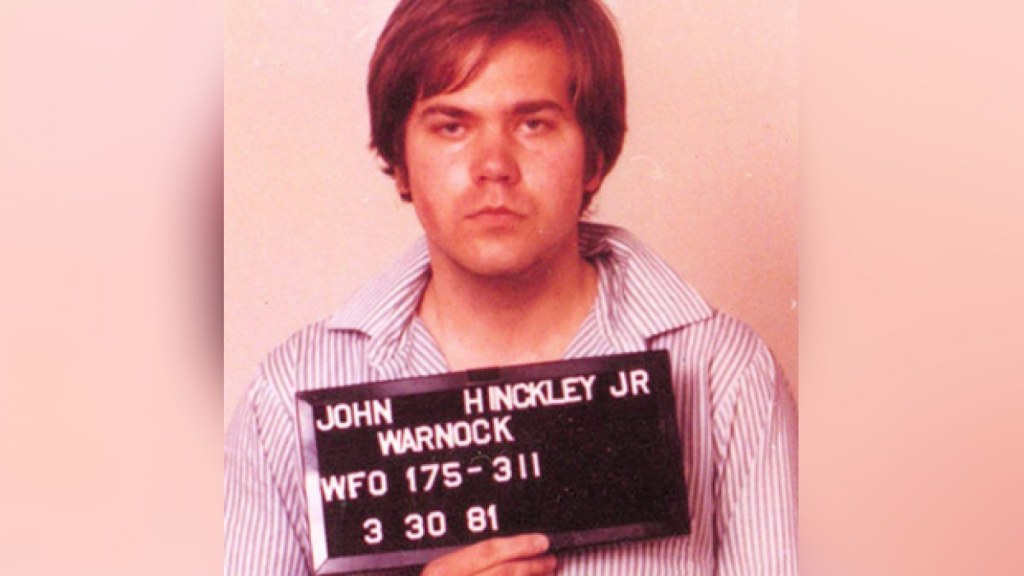
Luke references John Hinckley Jr. (born 1955), a college drop-out from a wealthy family who attempted to assassinate president Ronald Reagan. Hinckley was reportedly seeking fame in a misguided effort to impress actress Jodie Foster (born Alicia Foster in 1962), with whom he had been obsessed since the 1976 film Taxi Driver, where Foster plays a sexually-trafficked twelve-year-old child – in the film, the disturbed protagonist plots to assassinate a presidential candidate (it’s based on a true story).

When Jodie Foster began attending Yale University, Hinckley moved to New Haven in order to stalk her, sending her dozens of letters and poems, and leaving messages on her answering machine. Believing that assassinating the president would somehow make him Foster’s equal, Hinckley fired a revolver six times at Ronald Reagan on March 30 1981, as he left the Hilton Hotel in Washington DC. Although Hinckley did not hit Reagan, he was wounded when a bullet ricocheted and hit him in the chest. He also wounded a police officer and a Secret Service agent, and critically injured a press secretary, who died from his wounds in 2014.

John Hinckley Jr. was found not guilty by reason of insanity in 1982, and transferred to psychiatric care. He was released from hospital in 2016 into his mother’s care under numerous restrictions. As of June 2022, Hinckley will be living freely in the community. He has a YouTube channel, where he self-publishes his own songs; they are also available on Spotify and other streaming sites.

Girl, Interrupted

RORY: I’ll tell you what, Sookie. How about Lane and I come up with a few more suggestions for you? Still melodic, but not quite as Girl, Interrupted.

Girl, Interrupted, a 1999 psychological drama film directed by James Mangold, and based on the 1993 memoir of the same name by Susanna Kaysen. The memoir’s title comes from the Vermeer painting, Girl, Interrupted at Her Music. The film is set in New England in the 1960s, and follows a young woman, played by Winona Ryder, who spends 18 months in a psychiatric facility after a suicide attempt.

The film received only lukewarm reviews, with most of the praise for the performance of Angelina Jolie, who plays a sociopath. Jolie won the Academy Award for Best Supporting Actress. The author, Susanna Kaysen, didn’t like the film, accusing James Mangold of adding too many invented, melodramatic scenes. Mangold rewrote the story as a parallel to The Wizard of Oz.

It seems possible that Rory could have read the book, either before or after the film came out. Not only does she enjoy female memoir and autobiography, but Susanna Kaysen was admitted to the same private psychiatric hospital where Sylvia Plath and Anne Sexton were treated, as well as John Nash.

John Nash

RORY: That diploma hanging on the wall is going to make this all worthwhile, trust me.

LORELAI: I guess, unless I turn into John Nash and start drooling on people.

John Nash (1928-2015), mathematician who made fundamental contributions to game theory, differential geometry, and the study of partial differential equations. His theories are widely used in economics. Nash is the only person to win both the Abel Prize and the Nobel Memorial Prize in Economics Sciences.

In 1958, Nash began showing clear signs of mental illness and spent several years in psychiatric hospitals being treated for schizophrenia. His condition slowly improved in the 1970s, allowing him a return to academic work by the mid 1980s.

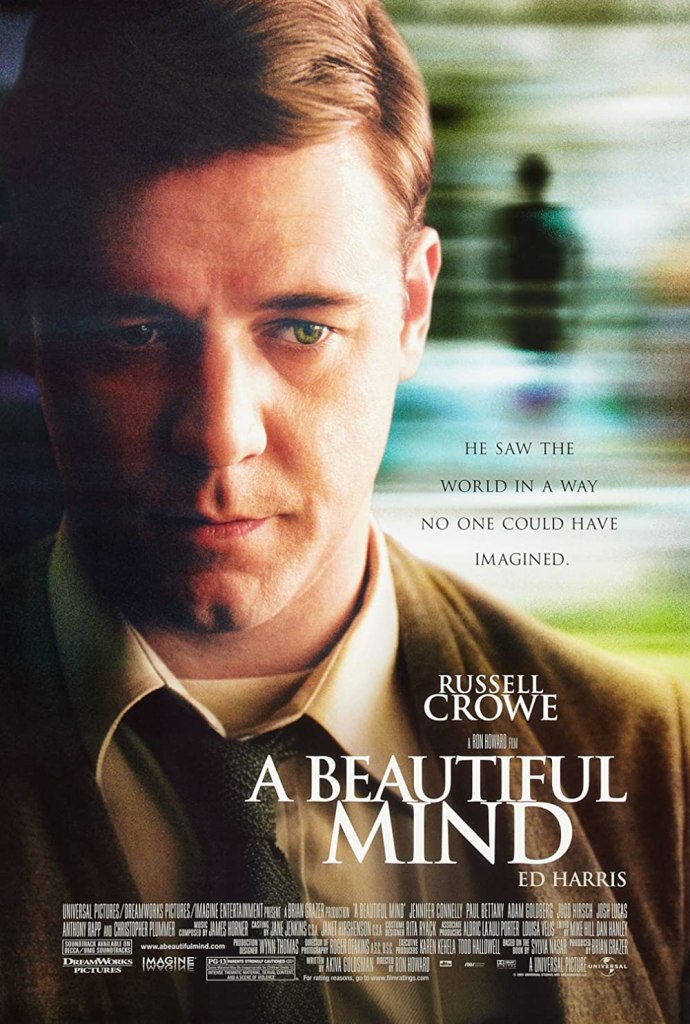
John Nash’s struggles with mental illness and his recovery were highlighted in the 2001 biographical film, A Beautiful Mind, directed by Ron Howard and based on the 1997 best-selling Pulitzer-winning biography of the same name by Sylvia Naser, with Russell Crowe starring as Nash. A Beautiful Mind was a commercial and critical success, winning four Academy Awards, including Best Picture and Best Director.

Michael Landon

LANE: [runs up behind them] Hey, wait, stop!

LORELAI: Oh look, it’s Michael Landon.

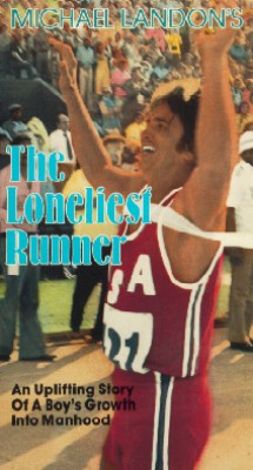
Michael Landon, born Eugene Orowitz (1936-1991), actor and filmmaker best known for his roles in the television series Bonanza (1959-1973), Little House on the Prairie (1974-1982), and Highway to Heaven (1984-1989).

Michael Landon made an autobiographical television film in 1976, called The Loneliest Runner. The story is about a teenage boy named John Curtis, based on Landon himself, who still wets his bed. His mother publicises his problem by hanging the stained sheets from his bedroom window for all to see.

Every day, John runs home from school to take the sheets down before his friends see them. He starts running with the junior track team to channel his anger and forget the shame and hurt of his dysfunctional family life. Ten years later, he is a gold-medal winning Olympic champion, who credits his mother for his athletic success. Landon plays the adult Curtis himself.

Like John Curtis, Michael Landon wet the bed until he was 14, and his mother Peggy hung the sheets out to shame him. He had Olympic ambitions as a javelin-thrower, but a shoulder injury ended his athletic career, which propelled him into acting.

His unauthorised 19991 biography by Aileen Joyce, Michael Landon: His Triumph and Tragedy, relates that the bedwetting was brought on by the stress of having a suicidal mother. As a child, Michael Landon had to save his mother from drowning herself during a beach vacation.

Bunny Carlington-Munchausen

EMILY: I’m so sorry Rory isn’t feeling well. Is it that flu that’s been going around? … Horrible strain. Bunny Carlington-Munchausen has been bedridden for two straight weeks.

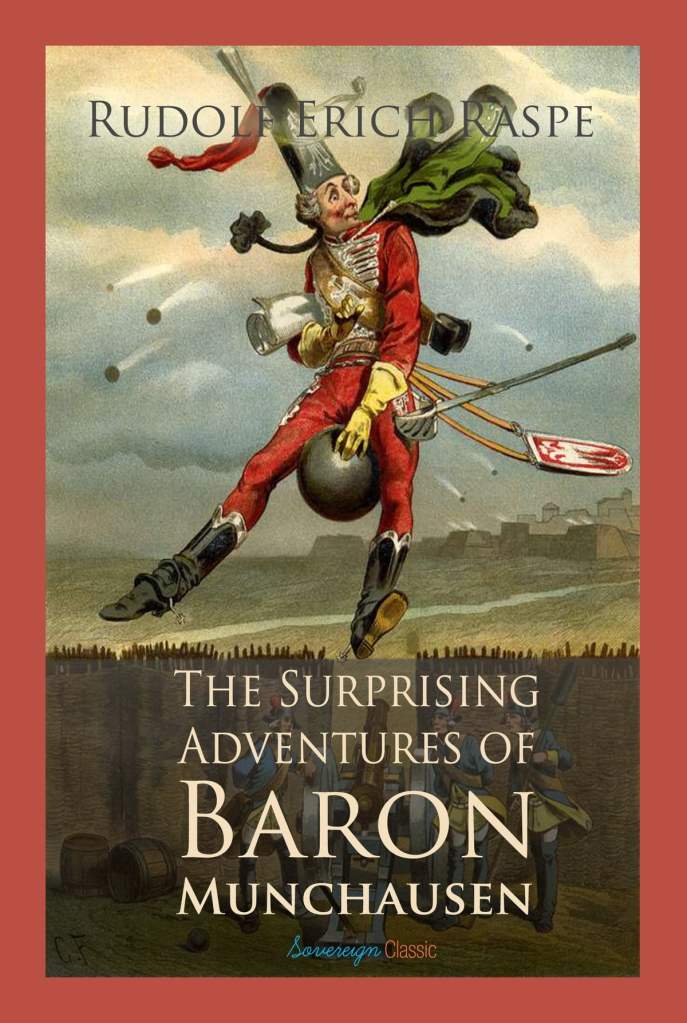
The show loves giving outrageous names to Emily’s society friends, and this one is pretty flamboyant. Bunny’s name seems to be an allusion to Munchausen Syndrome, a psychological disorder where people fake illnesses or deliberately make themselves sick in order to receive attention.

The name comes from the fictional character Baron Munchausen, created by German writer Rudolf Erich Raspe, in his 1785 book, Baron Munchausen’s Narrative of his Marvellous Travels and Campaigns in Russia. The Baron’s story of his exploits focuses on his supposed fantastical and impossible achievements, and the Baron himself is modelled on a real person, the German nobleman Hieronymus Karl Friedrich, Freiherr von Münchausen, known for his tall tales of derring-do. The book was turned into a 1988 film, The Adventures of Baron Munchhausen.

The name of the illness came to seem flippant and rather heartless, and it is now known, less colourfully, as factitious disorder imposed on self.

There may be a suggestion that Bunny is likewise exaggerating her flu symptoms for sympathy and attention, but it is almost certainly highlighting the factitious nature of Rory’s illness! This is the second person named Bunny in the show, the first one was a Gilmore relative who passed away.

David Letterman’s House

LORELAI: Honey, you gotta ease up on that love potion you’ve been giving him or he’s gonna start showing up at David Letterman’s house soon.

In May 1988, David Letterman was stalked by a mentally ill woman named Margaret “Peggy” Ray, who stole his car, camped on his tennis court, and repeatedly broke into his house. Her exploits gained national attention, and Letterman joked about her on his show sometimes, but without ever naming her. Ray served 34 months in prison and psychiatric hospitals for stalking Letterman, but refused to continue her medication upon her release, and went on to stalk astronaut Story Musgrove. She killed herself in 1998. Both Letterman and Musgrove expressed sympathy for her – “A sad ending to a confused life”, said a spokesman for Letterman.

Another rather distasteful joke about mental illness and suicide, and the implication that it is somehow Rory’s “fault” that Dean is behaving so obsessively. There does seem to be a slight acknowledgement here from Lorelai that Dean’s behaviour is abnormal and unhealthy.

Brad Returns to Chilton

RORY: So you’re back at Chilton now?

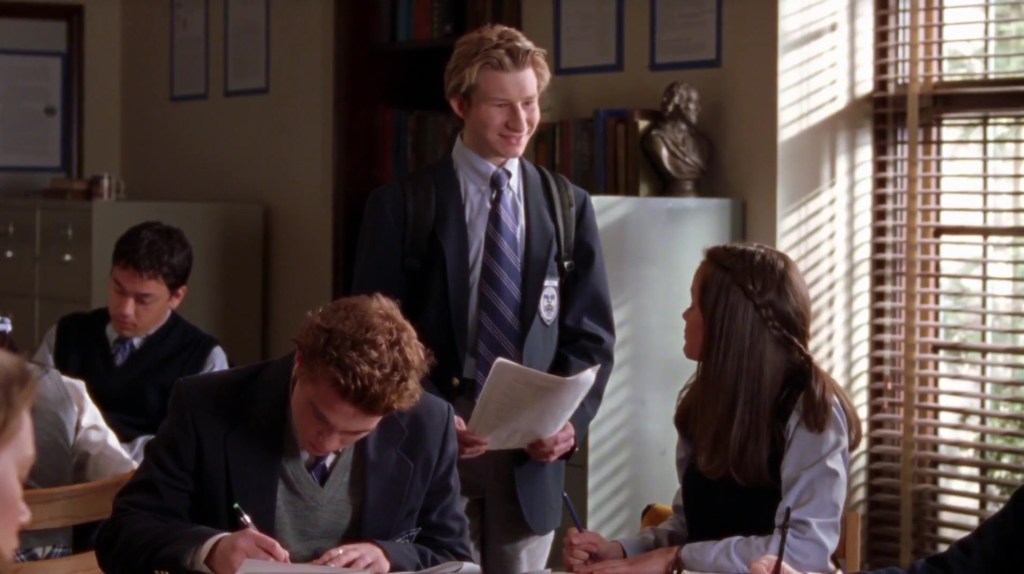
BRAD: Oh, yeah. My psychiatrist convinced my parents that I should face my fears instead of running away from them and my rabbi agreed, so here I am.

Brad is now back at Chilton, after transferring to Hillside Academy five months ago, due to being bullied by Paris. He told Rory that Hillside Academy was much more relaxed than Chilton, and he’d made tons of friends there.

If that’s true, what kind of sick psychiatrist would tell a teenager they should return to a stressful school environment where they were bullied, rather than one where they supposedly have friends, and are thriving enough to be on the debate team? And what kind of rabbi would back that decision up? And what kind of parents would agree to it, rather than sacking the psychiatrist at once and moving to another synagogue? Poor Brad. I don’t think Paris is his only problem in life.

Patricia Hearst and the SLA

LORELAI: She’s brainwashed. She’s Patricia Hearst and my mother is the SLA.

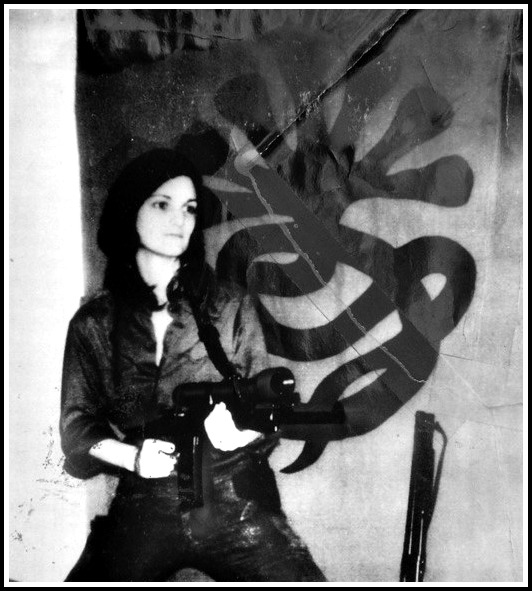
Patricia Hearst (born 1954), author and actress, the granddaughter of publishing magnate William Randolph Hearst, previously mentioned. She is best known for being kidnapped from her Berkeley apartment in February 1974, when she was 19, by an urban guerilla left-wing group called the Symbionese Liberation Army. The kidnapping was partly opportunistic, as Hearst lived near the SLA hideout.

According to Hearst’s testimony, she was kept locked in a closet for weeks, given SLA literature to read by flashlight. Offered the choice between joining the SLA or being killed by them, she joined them, and was given daily weapon drills. Over the next 18 months, she took part in high-profile robberies and kidnappings as a member of the SLA.

Patricia Hearst was arrested in September 1975, her defence arguing that she had been brainwashed and was acting under duress. She was convicted in March 1976 and sentenced to seven years in prison. Her sentence was commuted by President Jimmy Carter, and she was released in February 1979. After release, she married a policeman who had been part of her security while on bail, brought out a memoir in 1981, and appeared in several films by John Waters.

David and Lisa

TAYLOR: Let go of me!

TROUBADOUR #2: Don’t like to be touched, that’s cool. Got a little David and Lisa thing happening?

David and Lisa, 1962 drama film directed by Frank Perry. It is based on the second story in the 1961 novella Lisa and David by a psychiatrist named Theodore Isaac Rubin; the screenplay is written by Rubin’s wife, Eleanor Katz. The story is about a bright young man named David (played by Keir Dullea) who cannot bear to be touched; while in a mental health treatment facility, he befriends a girl named Lisa (played by Janet Margolin) who has a split personality.

David and Lisa received positive reviews from critics. It was made into a stage play in 1967, and into a television film in 1998, produced by Oprah Winfrey.

David and Lisa is one of the DVDs we can see at Stars Hollow Video in “Richard in Stars Hollow”.

Note the implication from the Second Town Troubadour/Second Market Guy that Taylor must have serious mental health problems if he doesn’t want to be hugged. It’s just the start of the trolling that Taylor is about to be subjected to!

Cult Deprogrammers

LORELAI: I’m gonna have to be deprogrammed by cult deprogrammers to get that Tuesday out of my brain.

Cult deprogramming claims to assist people who have been “brainwashed” by new religious movements. Deprogramming was introduced in the 1970s by a high school dropout named Ted Patrick, who, despite having no qualifications or training, convinced people that he could rescue their loved ones from organisations and groups for $10 000. He had experience, having already removed his own son from the Children of God.

Essentially, deprogramming involves abducting the new convert, isolating him, physically restraining him and hitting him with a barrage of continuous arguments and attacks against his new religion, threatening to hold him forever until he agrees to leave it. Ted Patrick was tried and convicted of multiple felonies, such as kidnapping and unlawful imprisonment.

There is no evidence that deprogramming works – in fact, there is a higher rate of success from people naturally getting bored and dropping out of religious movements than there is from deprogramming. Members of the Church of Unification were particularly targeted by deprogramming efforts in the 1980s.

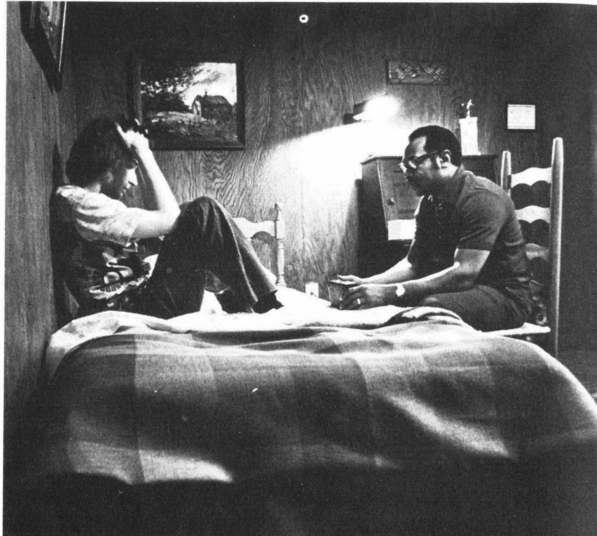
[Picture shows Ted Patrick trying to deprogram a young member of the Children of God].