Lorelai’s Teenage Posters

There are four Duran Duran posters on the wall in Lorelai’s childhood bedroom, in the scene where Lorelai and Rory talk. Duran Duran are an English new wave band formed in 1978, with their classic line up being Nick Rhodes, John Taylor, Roger Taylor, Andy Taylor, and Simon le Bon. Their first album came out in 1981, and they found mainstream success by 1984. They are most famous for their 1980s hits such as Hungry Like The Wolf, Rio, and The Reflex.

There is a large Echo & The Bunnymen poster over the bed. Echo & The Bunnymen [pictured] are an English post-punk rock band founded in 1978, with the original line-up being Ian McCulloch, Will Sergeant, and Les Pattinson. Their first album came out in 1980 to critical acclaim, and they found mainstream success by 1983. Although a hit in the UK, they were not so well known in the US in the 1980s, perhaps suggesting that despite her Duran Duran mania, teenage Lorelai’s musical knowledge was a cut above her peers.

One wonders why Emily has left the posters up, or why Lorelai has asked that they be left up – her comment that time has stood still in the room makes it sound as if she hasn’t up here since she left home, which seems a bit unlikely. It is almost as if Emily has kept Lorelai’s (eerily untouched) room like a shrine, as if she died rather than ran away as a teenager.

Christopher

LORELAI: He calls like once a week and we see him at Christmas, sometimes Easter. It’s all very civil.

This is the point where we discover that Rory has had some contact with her father throughout her life, seeing him at least once a year and sometimes twice a year. The weekly phone call, like the one to Emily, seems something of a polite fiction – it seems greatly out of character for Christopher to phone so regularly. Most likely he phoned whenever he thought of it, which probably wasn’t that often.

Cinderella

LORELAI: Let me see. Maybe we should really embrace the whole tulle thing. Go totally modern Cinderella.

Lorelai is referring to the 1950 animated Disney film Cinderella, based on the French fairy tale by Charles Perrault. Cinderella was a massive critical and commercial success for Walt Disney, and was the #3 film of 1950. It is considered one of the greatest animated films of all time.

In the film, Cinderella wears a silver-white ballgown which is made blue in promotional materials; reproductions of the dress made for children and teens tend to be made from tulle.

Neither Lorelai nor Rory ends up wearing a tulle dress to Rory’s first birthday party, so I’m not sure what happened to the dresses Emily bought them. As Lorelai tells Emily they wore them to the party, maybe she tore all the tulle off and they wore the slip dresses that were underneath? Or perhaps Lorelai is simply lying.

At the very least, the lacy green cardigan that Rory wears wasn’t made by her mother – Lorelai wore it to Friday Night Dinner in Kill Me Now, and Rory must have borrowed it.

Rory’s Birthday Present from Emily

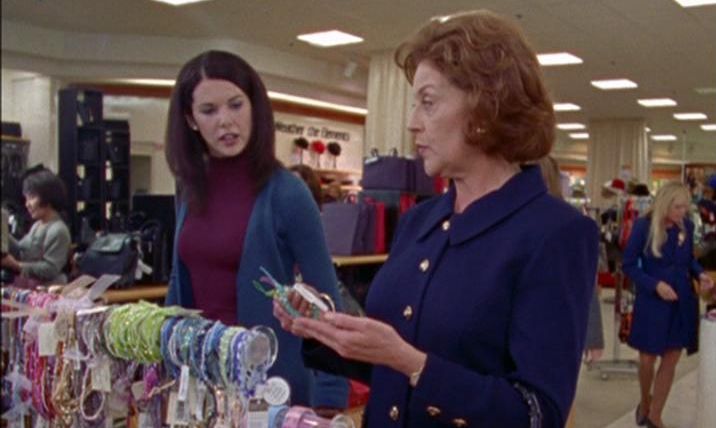
Lorelai claims that she’s helping Emily pick out the “perfect present” for Rory during their joint shopping trip. Given how expensive her own gift to Rory is, does anyone else think that Lorelai is actually (consciously or unconsciously) sabotaging Emily’s gift-buying so that she can’t compete with Lorelai? Instead of something valuable, she ends up with a cheap, tacky name bracelet that doesn’t really seem like something Rory would appreciate.

On the other hand, the bracelet does seem like something Lorelai would have liked as a teenager. The shopping trip becomes the kind of outing that she and her mother might have learned to enjoy together if Lorelai hadn’t got pregnant. Through it she can vicariously experience what it would have been like to have her mother buy her the things that she valued, such as junk jewellery and celebrity tee-shirts, instead of the pearls and cashmere that Emily would have given her as suitable gifts for a young girl of good family.

It is another sign of Lorelai’s immaturity and ego, and also how deep down she still longs for a relationship with her mother. If not deliberate sabotage, it’s a hint that she may not know Rory as well as she thinks she does.

Filofax

EMILY: You wanted me to get her a Filofax and a mermaid eraser.

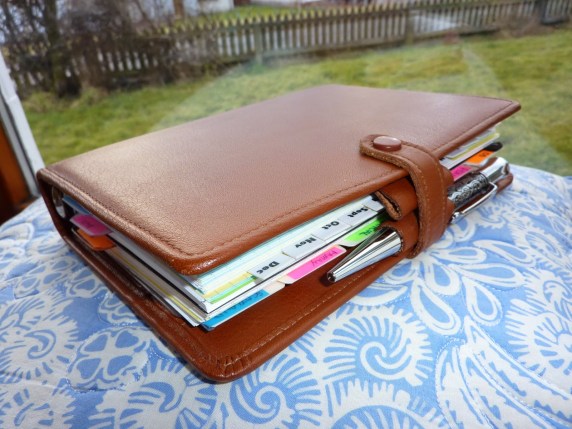
A Filofax is a personal organiser in a large leather wallet with a six-ring loose-leaf binder; the name comes from the phrase “file of facts”. They were popular during the 1980s as an accessory for yuppies. Filofax is a UK company founded in 1921, and originally known as Norman & Hill.

This seems to be the “funky dayplanner” that Lorelai suggested that Emily buy Rory (or maybe to Emily, all dayplanners are Filofaxes). Either way, it actually seems like a good compromise between the mother’s and daughter’s tastes, as well as being useful to Rory who loves being organised. It seems a bit odd that Emily didn’t agree to it.

Jane

EMILY: This isn’t funny. I hardly get to see the girl and we only get to talk at dinner once a week and then it’s all about school and Jane.
LORELAI: Lane, Mom.

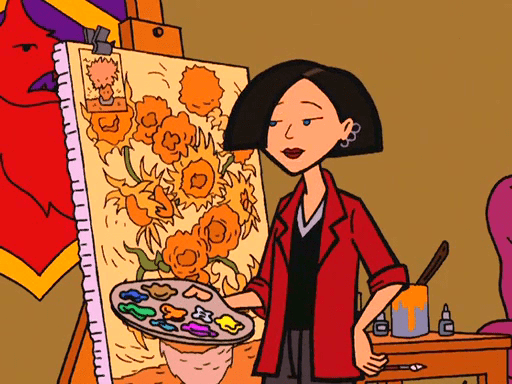
The fact that Emily mixes up Lane’s name and calls her Jane is a probable allusion to the MTV cartoon Daria (1997-2002), in which protagonist Daria Morgendorffer’s best friend is Jane Lane (I believe this to be source of Lane Kim’s rather unlikely first name).

Jane Lane is not Asian-American like Lane Kim, but her voice actress is Malaysian-born, and the character is drawn with some slight Asian characteristics, so that casual viewers sometimes assume she has Asian heritage. Besides both having black hair and being the less academic sidekick to an intellectual bestie, Jane Lane was a gifted artist, as a parallel to Lane Kim’s musical talent.

(By the way, if Emily only hears about Rory’s doings at Friday Night Dinner, whatever happened to that weekly phone call where she could catch up on Lorelai and Rory’s lives?)

“They grow up so fast”

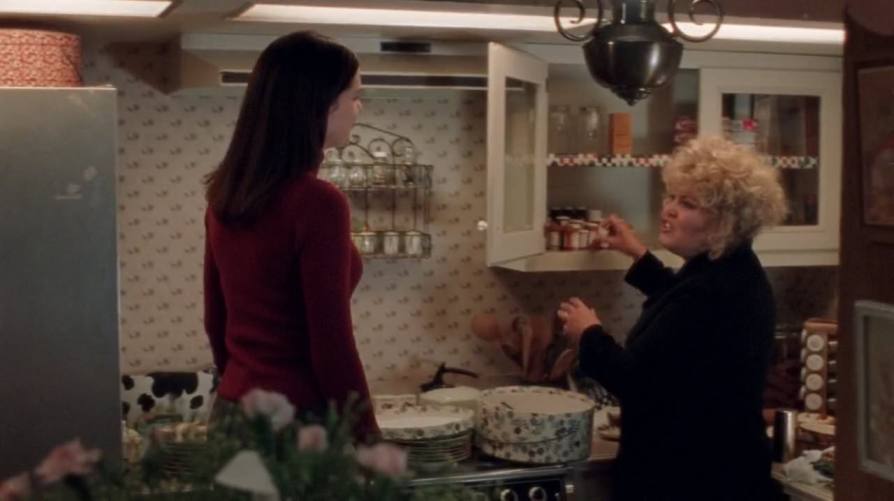
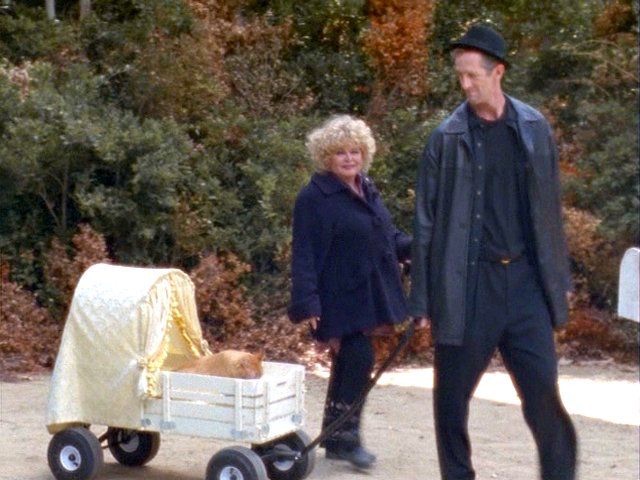
While talking with Lorelai, Babette mourns the death of her elderly cat Cinnamon, remembering the time when she was a tiny kitten. As she and Morey are a childless couple, Babette speaks of Cinnamon’s passing as if she and Morey have lost a child, even mentioning an Oprah episode about bereaved parents whose marriages didn’t survive.

Babette’s feelings for Cinnamon serve as a parallel to Lorelai’s for Rory’s (the cat and the girl are probably even of similar ages). I believe Cinnamon was changed from a male cat to a female one to make this parallel more obvious.

Lorelai must also face “losing Rory” one day – not to death, but to adulthood. She knows that Rory is growing up, and that she has to learn to let her go, and to find a way to make a life for herself that isn’t based around caring for Rory.

This helps to inform her decision about dating Max: Rory is growing up, and Lorelai can’t put her own life on hold forever.

French Tourists

MAN: Bonjour Monsieur. Vous êtes francais? Vous parlez francais? … Parlez vous fracais?
….
MICHEL: Bonjour messieurs. Je m’appelle Michel. Ce soir pour vous aider.
MAN: (laughs) Vous avez faît un blague. Très drole! Très drole Michel!

The man says, “Hello sir. You are French? You speak French? … Do you speak French?”. After pretending he doesn’t and arguing with Lorelai, Michel eventually replies, “Hello sirs. My name is Michel. I am here to assist you this evening”. The man says, “You have made a joke. Very funny! Very funny, Michel!”.

The fact that Michel loathes French people seems to be another hint that he is not actually from France – the actor playing Michel, Yanic Truesdale, is a Canadian-American from Montreal. Truesdale has noted that the accent he used on Gilmore Girls is certainly not French, although readily accepted as such by Americans.

Passegiatta

BABETTE: Cinnamon’s not walking good these days but she still likes her passeggiatas. That’s Italian for “a nice walk.”

In Italian, passeggiata means “a leisurely walk, a stroll”. In southern Italian culture especially, the passeggiata is a tradition whereby people go for an evening stroll or promenade between 5 and 8 pm, perhaps through the main street of a town, the town square, or along the sea front. People dress up for the passeggiata, and it’s a social event, a chance to catch up with friends and the local gossip at the end of the day. Babette and Morey are taking their passeggiata early in the day after breakfast, rather than in the evening before dinner.

It is interesting that Morey knows a little Italian – could he be of part-Italian heritage, or have spent time travelling in Italy?