Mr Freeze

LORELAI: You’re pulling a Mr. Freeze on me.

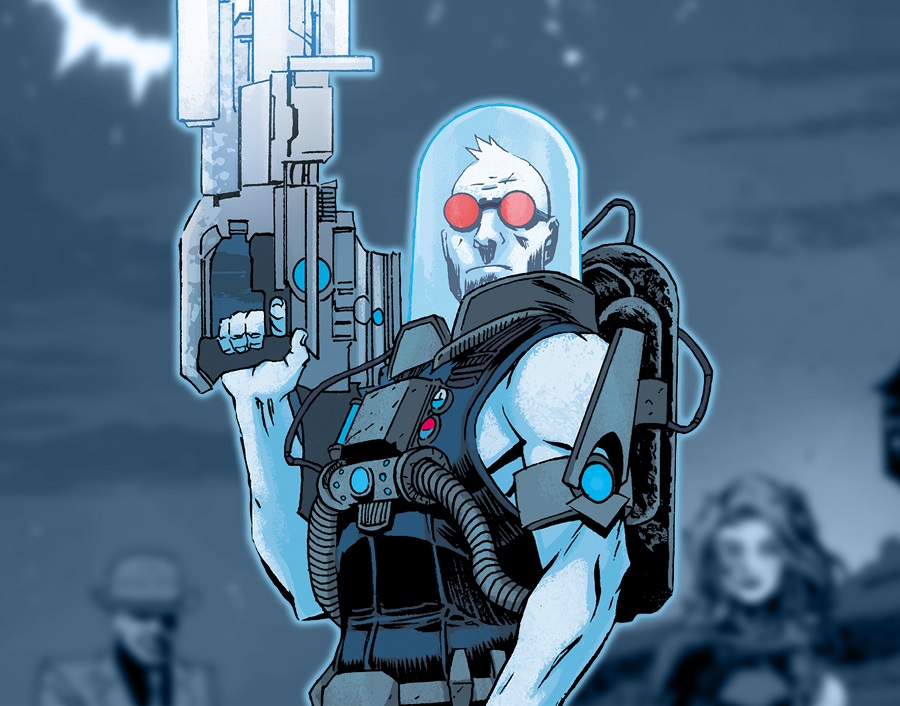
Mr Freeze (Dr Victor Fries) is a supervillain from the Batman comics, created by Dave Wood and Sheldon Moldoff in 1959, and originally called Mr Zero. Mr Freeze was a rogue scientist whose design for an ice gun backfired, spilling cryogenic chemicals on himself, so he needed sub-zero temperatures to survive. The Batman television series gave him a more sympathetic back story, making him a complex, tragic character. He was portrayed by Arnold Schwarzenegger in the 1997 Batman film.

Another example of Lorelai using comic books as a reference point.

Mac and Tosh

LORELAI: We certainly are entertaining, Mac.

RORY: Indubitably, Tosh.

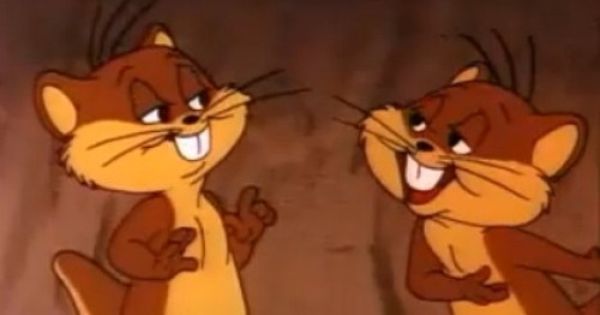
Mac and Tosh are the names of the two Goofy Gophers in the Warner Bros cartoons, created by Bob Clampett, and originally appearing in the 1947 short film The Goofy Gophers. The cartoon features the two gophers making frequent raids on a vegetable garden while tormenting the guard dog. They both speak in high-pitched stereotypical upper-class British accents.

They may have been intended as a spoof on the Disney chipmunk characters, Chip ‘n’ Dale, and their mannerisms and speech were patterned after the 1900s comic strip characters Alphonse and Gaston, drawn by pioneering cartoonist Frederick Burr Opper, where the jokes came from the ridiculous over-politeness of the French characters as they got on with each task. Another suggestion is that they were influenced by the British film Great Expectations, based on the Dickens novel, which was released in 1946, the year before the Goofy Gophers were created.

The pair’s dialogue is peppered with such over-politeness as “Indubitably!”, “You first, my dear,” and, “But, no, no, no. It must be you who goes first!”. They also tend to quote Shakespeare and use humorously long words.

The gophers only received names in a 1961 episode of the TV show, The Bugs Bunny Show – an obvious pun on the word mackintosh, meaning a raincoat.

“Maybe I’ll turn into a superhero”

LORELAI: Maybe our rain gutters are radioactive or made out of some kind of alien metal so that when I cut my hand I got infected with an extraterrestrial substance which is altering my internal makeup. Uh, maybe I’ll turn into a superhero.

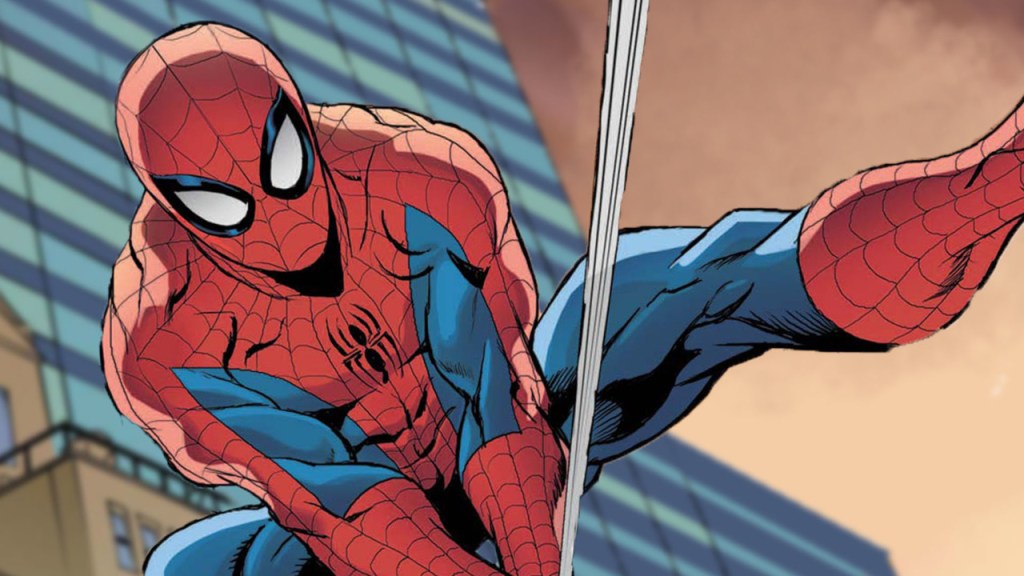
Lorelai refers to two different ways that comic book superheroes gain their superpowers. Two notable examples of superheroes who received their superpowers through radiation are Spider-Man, who was bitten by a radioactive spider, and The Incredible Hulk, who subjected himself to vast amounts of gamma radiation.

Other superheroes gain their superpowers from extraterrestrial bodies, such as meteorites, comets, and asteroids. Examples include Marvel’s Black Panther and DC’s Vandal Savage, who are a Neanderthal and a caveman, respectively. Objects fashioned from alien substances that bestow superpowers include the Green Lantern’s power ring.

Barbarella

RORY: Long day. Long long day.
DEAN: The day is over. Let’s talk about the night. Uh, there’s a 7:30 showing of Barbarella, and I thought you can bring your mom’s purse, you know the one with that monkey face and we’ll sneak in some burgers and …

Barbarella is a 1968 science-fiction film directed by Roger Vadim, based on the comic series of the same name by Jean-Claude Forest, and starring Jane Fonda in the title role. The story is about a space adventurer named Barbarella finding a scientist named Durand Durand, who has created a weapon that could destroy humankind.

Barbarella was especially popular in the UK, and received mixed reviews from critics because of its lush cinematography and weak story. The film has become a cult classic, and Barbarella herself  an iconic sex goddess.

Books, Periodicals, and Comics Referenced in Season One

Novels

Emma by Jane Austen

Alice’s Adventures in Wonderland by Lewis Carroll

Don Quixote by Miguel de Cervantes

Timeline by Michael Chrichton

David Copperfield by Charles Dickens

Great Expectations by Charles Dickens

Little Dorrit Charles Dickens

A Tale of Two Cities by Charles Dickens

Madame Bovary by Gustave Flaubert

Mistress of Mellyn by Victoria Holt

The Hunchback of Notre Dame by Victor Hugo

Finnegan’s Wake by James Joyce

Ulysses by James Joyce

The Metamorphosis by Franz Kafka

The Witch Tree Symbol by Carolyn Keene

On the Road by Jack Kerouac

To Kill a Mockingbird by Harper Lee

The Group by Mary McCarthy

Moby Dick by Herman Melville

Gone With the Wind by Margaret Mitchell

The Bell Jar by Sylvia Plath

Swann’s Way by Marcel Proust

Harry Potter and the Goblet of Fire by J.K. Rowling

Chikara!: A Sweeping Novel of Japan and America by Robert Skimin

The Grapes of Wrath by John Steinbeck

Anna Karenina by Leo Tolstoy

War and Peace by Leo Tolstoy

Adventures of Huckleberry Finn by Mark Twain

Short Stories

Fairy Tales by Hans Christian Anderson

Grimm’s Fairy Tales by Jakob and Wilhelm Grimm

Poetry

Mother Goose Nursery Rhymes

Poems, Chiefly in the Scottish Dialect by Robert Burns

Complete Poems by Emily Dickinson

An Essay on Criticism by Alexander Pope

Shakespeare’s Sonnets by William Shakespeare

New Poems of Emily Dickinson edited by William Shurr et al

Drama

Love for Love by William Congreve

The Mourning Bride by William Congreve

The Crucible by Arthur Miller

The Comedy of Errors by William Shakespeare

Hamlet by William Shakespeare

Macbeth by William Shakespeare

Measure for Measure by William Shakespeare

Richard III by William Shakespeare

Romeo and Juliet by William Shakespeare

The Glass Menagerie by Tennessee Williams

A Streetcar Named Desire by Tennessee Williams

Non-Fiction

Tuesdays With Morrie by Mitch Albom

The Second Sex by Simone de Beauvoir

Kitchen Confidential by Anthony Bourdain

Mommie Dearest by Christina Crawford

Out of Africa by Isak Dinesen

Women Who Run with the Wolves by Clarissa Pinkola Estés

Stiffed: The Betrayal of the American Man by Susan Faludi

The Art of Eating by M.F. K. Fisher

James Joyce’s Ulysses by Stuart Gilbert

The Walter Hagen Story by Walter Hagen

Partial Portraits by Henry James

The Unabridged Journals of Sylvia Plath edited by Karen V. Kukil

To the Christian Nobility of the German Nation by Martin Luther

John Adams by David McCullough

The Days of H.L. Mencken by H.L. Mencken

A Mencken Chrestomathy by H.L. Mencken

The Total Woman by Marabel Morgan

Who’s Who and What’s What in Shakespeare by Evangeline M. O’Connor

The Portable Dorothy Parker by Dorothy Parker

The Republic by Plato

Etiquette by Emily Post

Everybody’s Autobiography by Gertrude Stein

Hell’s Angels by Hunter S. Thompson

Walden by Henry David Thoreau

Secrets of the Flesh: A Life of Colette by Judith Thurman

A Room of One’s Own by Virginia Woolf

Reference

The Bible

The Compact Edition of the Oxford English Dictionary

The Oxford Shakespeare

Webster’s Dictionary

Newspapers

Barron’s

The Financial Times

The Hartford Courant

The New York Times 

The Wall Street Journal

Magazines

CosmoGirl

Cosmopolitan

Glamour

GQ

Highlights for Children

InStyle

Ms.

The New Yorker

Playboy

Comics

Archie

Mister Miracle

Superman

Authors

Francis Bacon

Honore de Balzac

Elizabeth Barrett Browning

Judy Blume

Charlotte Bronte

Colette

Dante

Fyodor Dostoevsky

Sigmund Freud

Václav Havel

Homer

Ben Jonson

Stephen King

Christopher Marlowe

John Muir

Friedrich Nietzsche

Edna O’Brien

George Sand

Jean-Paul Sartre

John Webster

Edith Wharton

Walt Whitman
Stretch Cunningham and Dick Tracy

LORELAI: Hey, who was the guy who used to run the auto body shop?
(We pan up to see Luke lying on the roof with a hammer.)
LUKE: The Stretch Cunningham guy?
LORELAI: No, the Dick Tracy guy.

Jerome “Stretch” Cunningham was a recurring character on the 1970s sitcom All in the Family, played by James Cromwell. Stretch was a friend and co-worker of main character Archie Bunker. (Both Sally Struthers, who played Babette, and Liz Torres, who played Miss Patty, were also in All in the Family; possibly why it was referenced several times on Gilmore Girls).

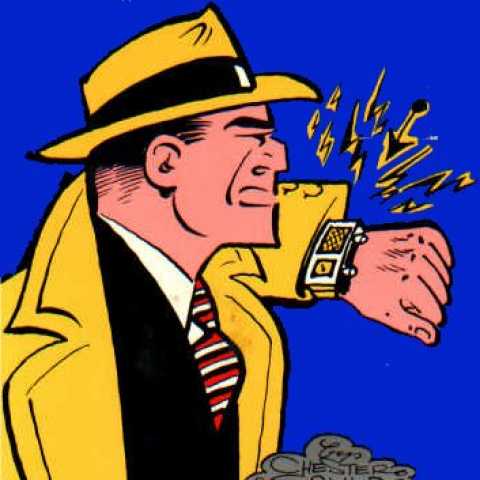
Dick Tracy is a fictional police detective who first appeared in the Dick Tracy comic strips created by Chester Gould in 1931. The Dick Tracy stories have been adapted into radio serials, comic books, novels, and films – most recently in 1990, with Warren Beatty in the title role.

There is a real mystery as to what the barely-remembered auto mechanic actually looked like. Lorelai first says he is tall and skinny, then corrects herself to say he was short and fat, and that the tall, skinny guy was actually his employee. Then she decides that he looked like Dick Tracy, who isn’t short and fat. Did the auto mechanic (who we learn was named Jim Dunning) look like a short, stocky version of Dick Tracy?

“Dear God Almighty”

The episode begins with Lorelai asleep in bed, only to be suddenly awoken by a loud banging noise. She cries out something that sounds like, “Dear God Almighty, Mister Mirkel!”. Closed captioning suggests that Lorelai says, “Dear God Almighty Mr. Mirkle”, which is of little help.

It is possible that Lorelai actually says, “Dear God Almighty, Mr. Miracle“, and the last word comes out in a hurried screech because she has been startled awake.

If so, this could be a reference to the comic book superhero Mr. Miracle, who appears in DC Comics. First appearing in 1971, he was created by Jack Kirby. It doesn’t seem unbelievable, as Lorelai has made several references to comic book characters – particularly DC ones, such as Superman and Wonder Woman. DC is owned by Warner Bros., who made Gilmore Girls.

Interestingly, Mr. Miracle is a member of a fictional race called The New Gods, and is the son of the Highfather, the chief of the gods. It’s possible that Lorelai is using his name as a euphemism for Jesus Christ, and giving it her own geeky spin.

Lorelai and Christopher’s Childhood Duet

CHRISTOPHER: Lucy, Schroeder, you laying on the coffee table.
LORELAI: You pretending it was a piano. God, why is that remembered?
EMILY: Because it was such a wonderful production.
LORELAI: I don’t know if it was a production, Mom. It was just one song.
CHRISTOPHER: Suppertime.
RICHARD: Did you write that? That was really very good.
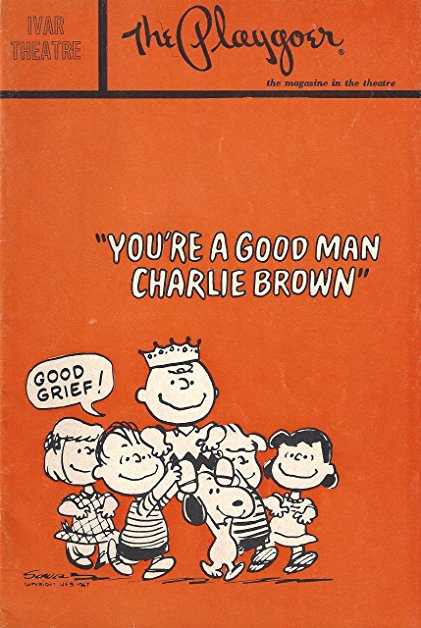
LORELAI: Dad, that’s from You’re a Good Man, Charlie Brown. It’s a famous musical.

At the age of ten (around 1978), Lorelai and Christopher sang a song for at least Richard and Emily, and possibly Christopher’s parents as well.

The song was Suppertime, from the 1967 musical comedy You’re a Good Man, Charlie Brown by Clark Gesner, based on the characters from the Peanuts comic strip drawn by Charles M. Schulz. The show premiered off-Broadway in 1967, went to London’s West End in 1968, and opened on Broadway in 1971. It had a Broadway revival in 1999.

The show was adapted for television in 1973, when Lorelai and Christopher were about five. This might be where they knew of the musical from, although it’s a favourite for amateurs to perform, and they might have seen a local production, or even been in a school production. The musical was adapted for TV again in 1985.

Suppertime is a song sung by the dog Snoopy, about his excitement in being fed after waiting hopelessly for the food to arrive. It’s a strange song to choose as a duet, because Snoopy sings almost the entire song, with only a few interjections from Charlie Brown. I presume Lorelai sung Snoopy’s part, and Christopher sung Charlie Brown’s – it seems like her to hog the limelight, and like him to do only minimal work. Possibly they chose that song because they were performing it just before dinner was served.

Lorelai and Christopher recall playing the roles of Lucy and Schroeder, in the iconic pose of Lucy lying on the piano while Schroeder plays it. It isn’t clear how this fitted in with the song by Snoopy. In the musical, Lucy and Schroeder have a scene together where he plays Beethoven’s Moonlight Sonata on the piano while Lucy expresses her love for him and asks about marriage, while Schroeder remains detached. This is ironic considering what comes later.

“Fly the invisible plane over”

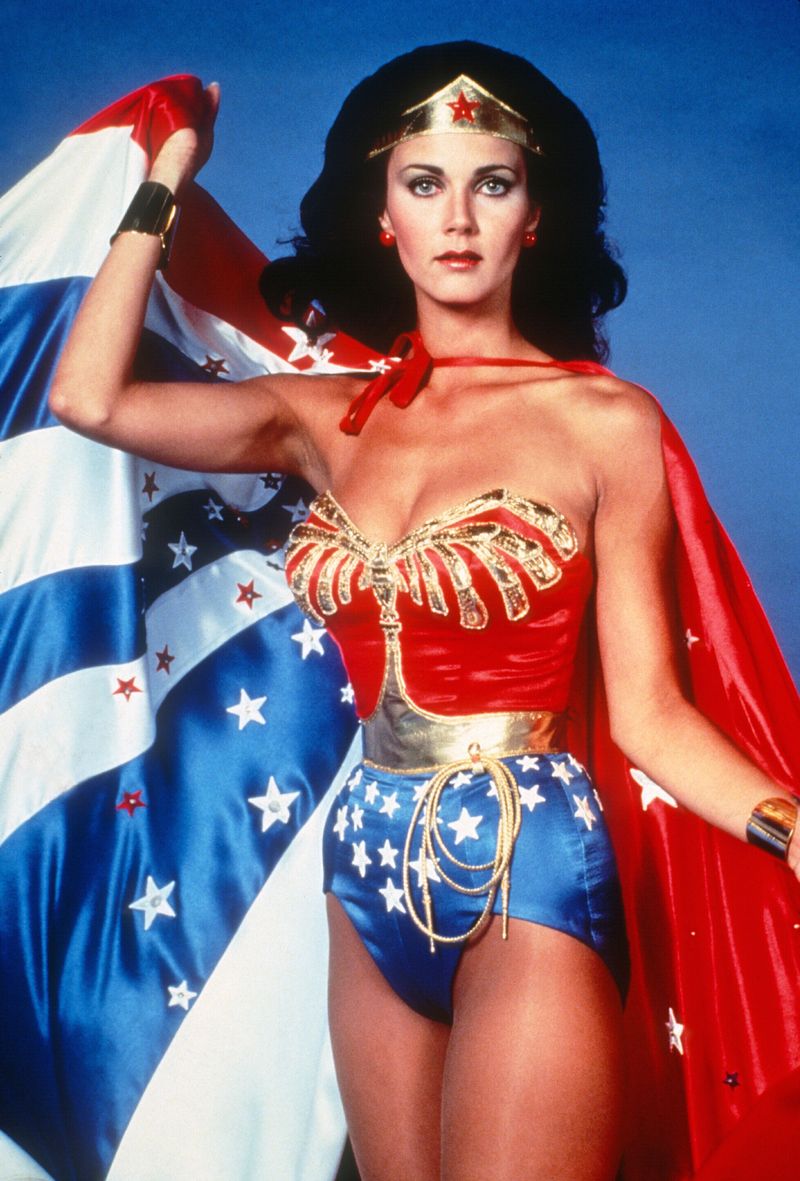
LORELAI: Well, uh, gee, Mom, I don’t know, let me see. Black ice, treacherous roads . . . I guess I’ll just put on my red, white, and blue leotard, grab my golden lasso and fly the invisible plane on over.

Lorelai is referring to the character of Wonder Woman, a DC Comics superhero who is a goddess and princess of the all-female Amazon warrior people. Named Princess Diana, her civilian name when blending in with everyday humans is Diana Prince.

Wonder Woman wears a red, white, and blue costume, and has a magic golden Lasso of Truth, which forces people into submission, and makes them tell the truth. Her mode of transport is the Invisible Plane that can travel at 2000 miles per hour.

Wonder Woman first appeared in All Star Comics #8 in 1941. However, Lorelai probably remembers the character best from the Wonder Woman television show, which ran from 1975 to 1979 (when Lorelai was aged seven to eleven); for the second season the title became The New Adventures of Wonder Woman. The title role was played by Lynda Carter.

I can imagine the young Lorelai enjoying a story based on a strong, beautiful woman with superhuman powers. The show was still on TV in re-runs during the 1990s and early 2000s, so she might have watched it even as an adult.